
Vintage Paraffin Table Light
A vintage paraffin table light brings warm, glowing illumination to a room, combining heavy metal bases with colourful glass shades.
Vintage Paraffin Table Light
When you search for a vintage paraffin table light, you find nineteenth and early twentieth century lighting pieces designed to burn oil for illumination. These domestic items span the Victorian, Edwardian, and Art Nouveau periods, appearing frequently in brass and ceramic configurations.
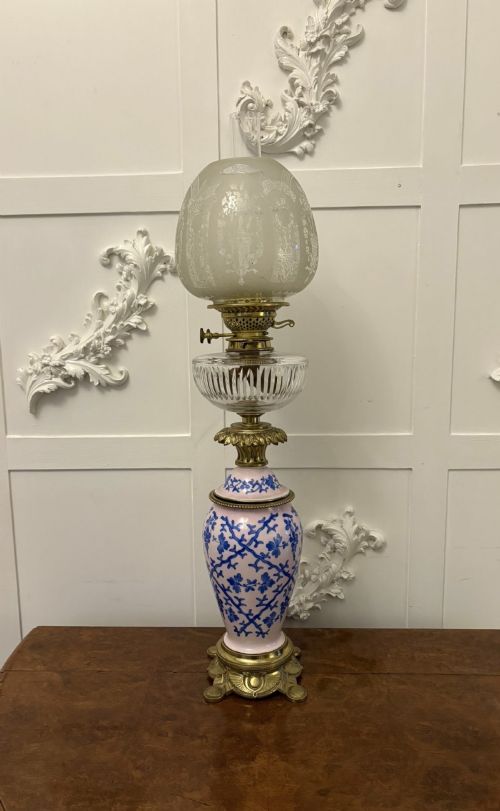
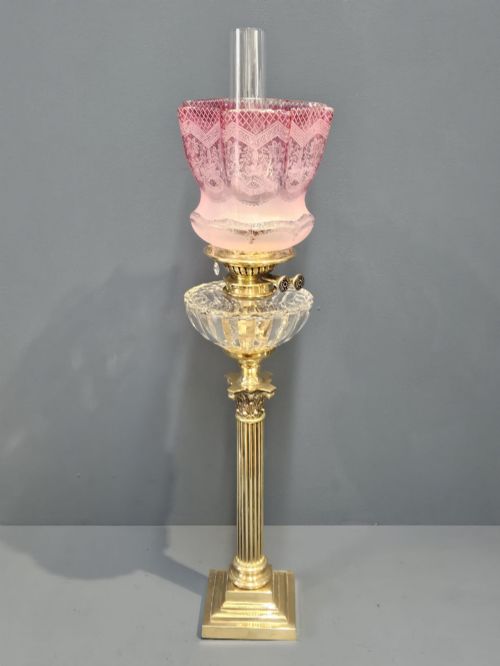
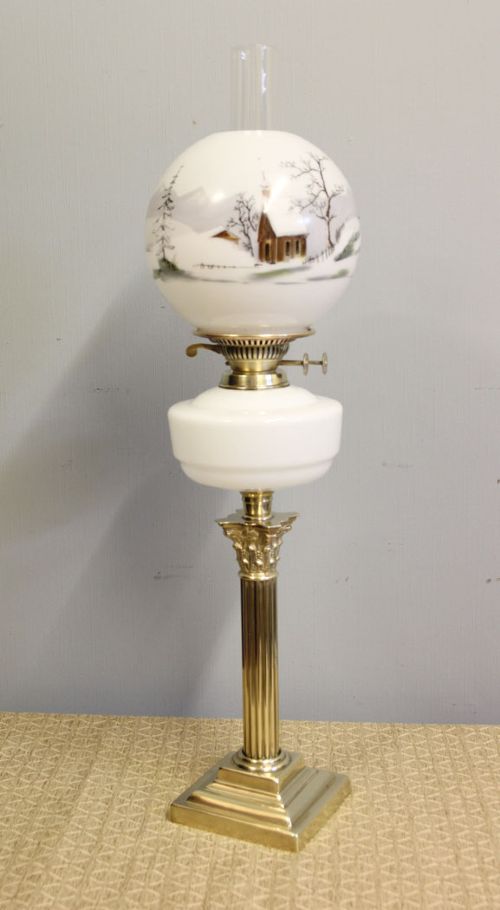
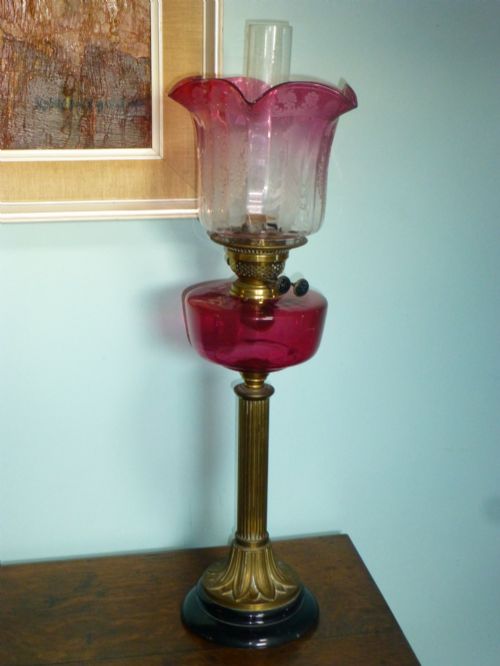
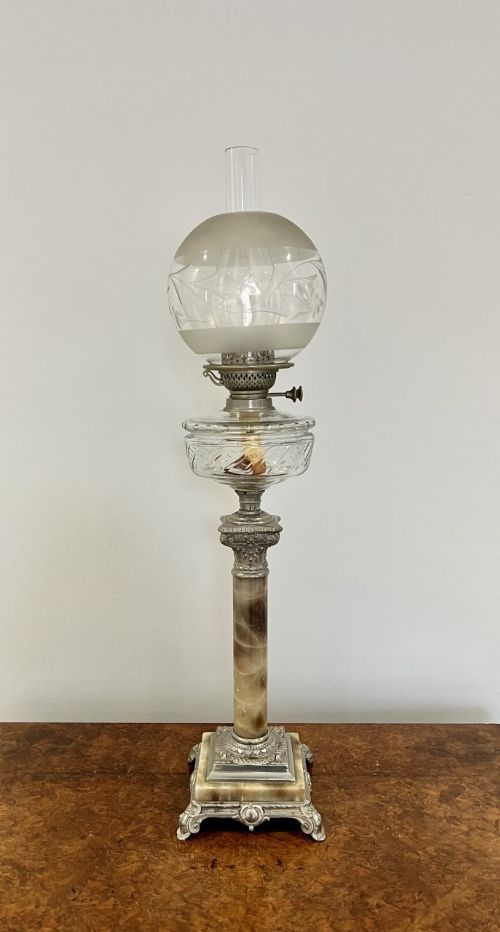
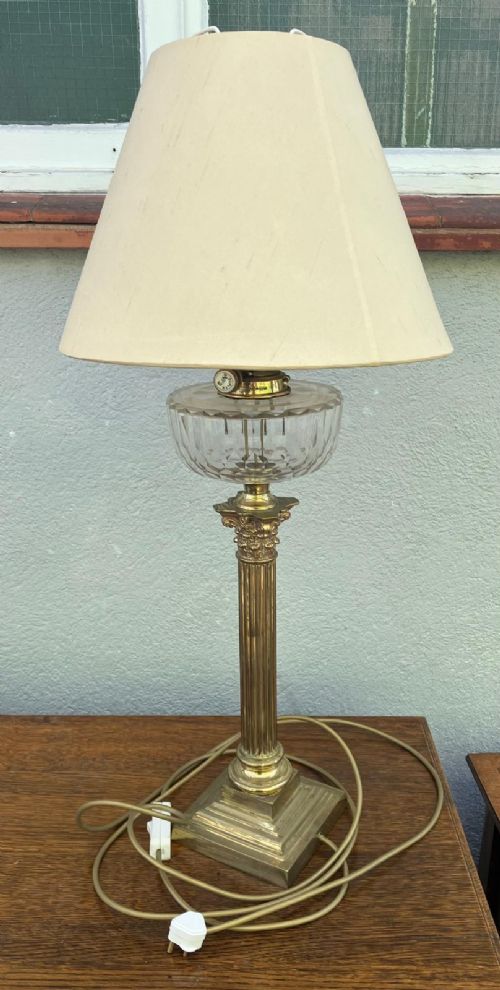
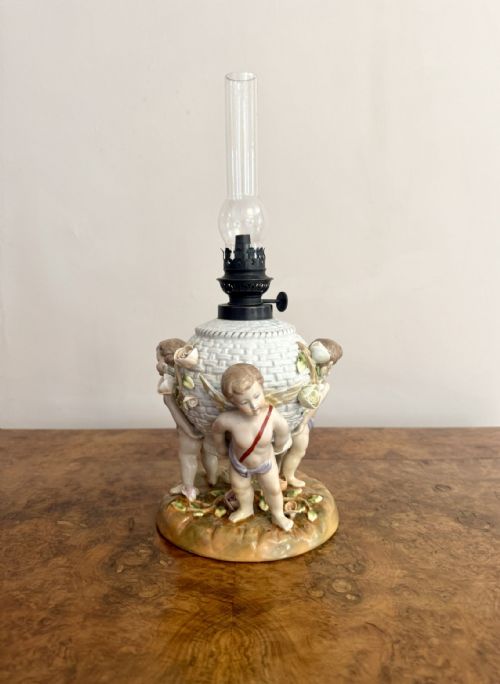
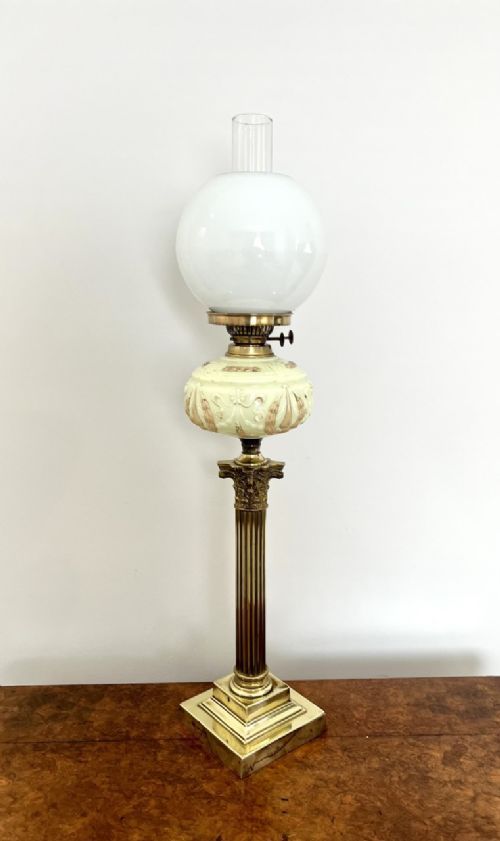
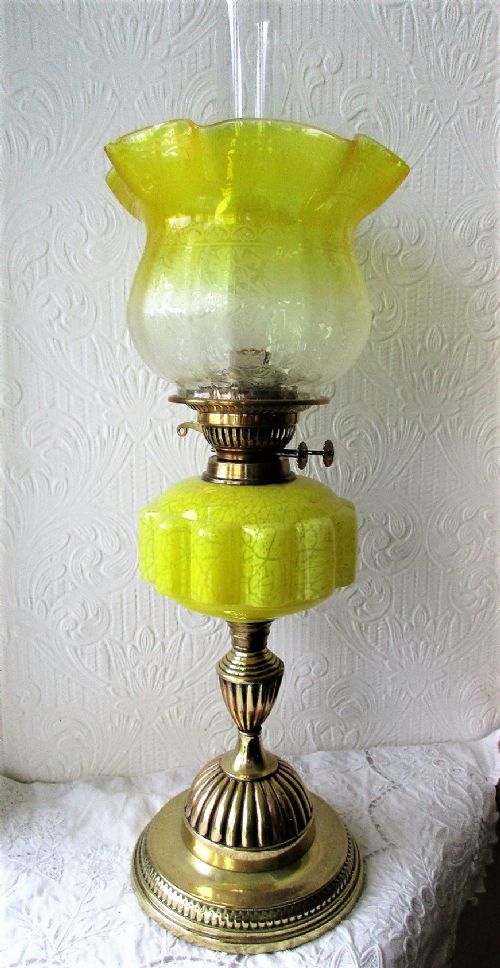
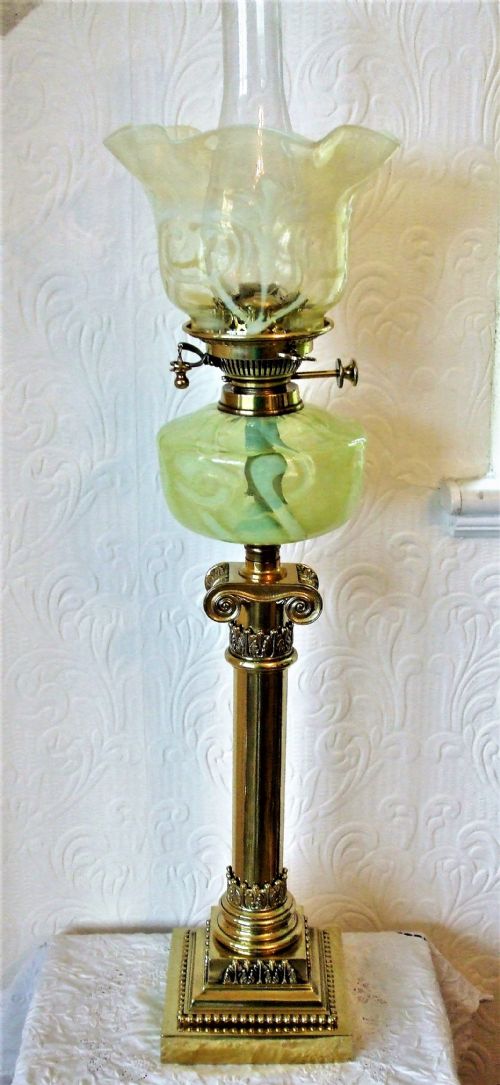
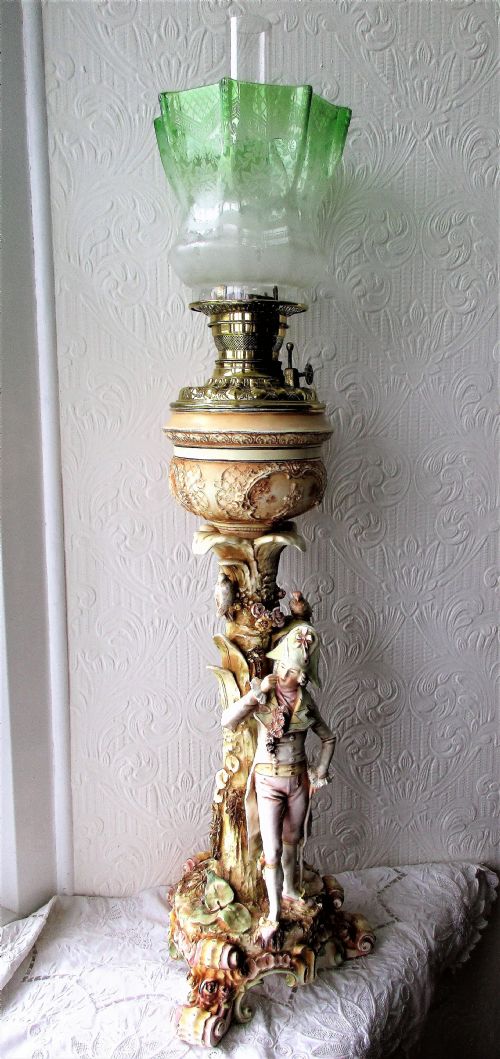
The most common examples on this page are tall column lamps featuring Corinthian or Ionic capitals, often paired with contrasting glass fonts and matching shades. Makers such as Hinks and Sitzendorf produced notable variants, ranging from simple brass standards to elaborate figural and porcelain designs.
How they were made
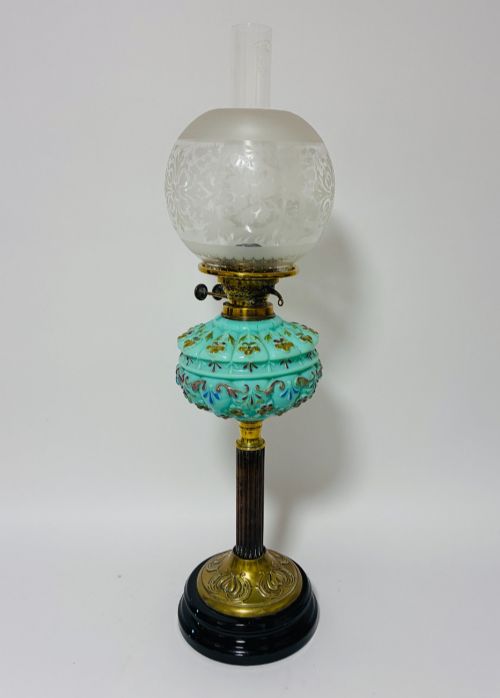
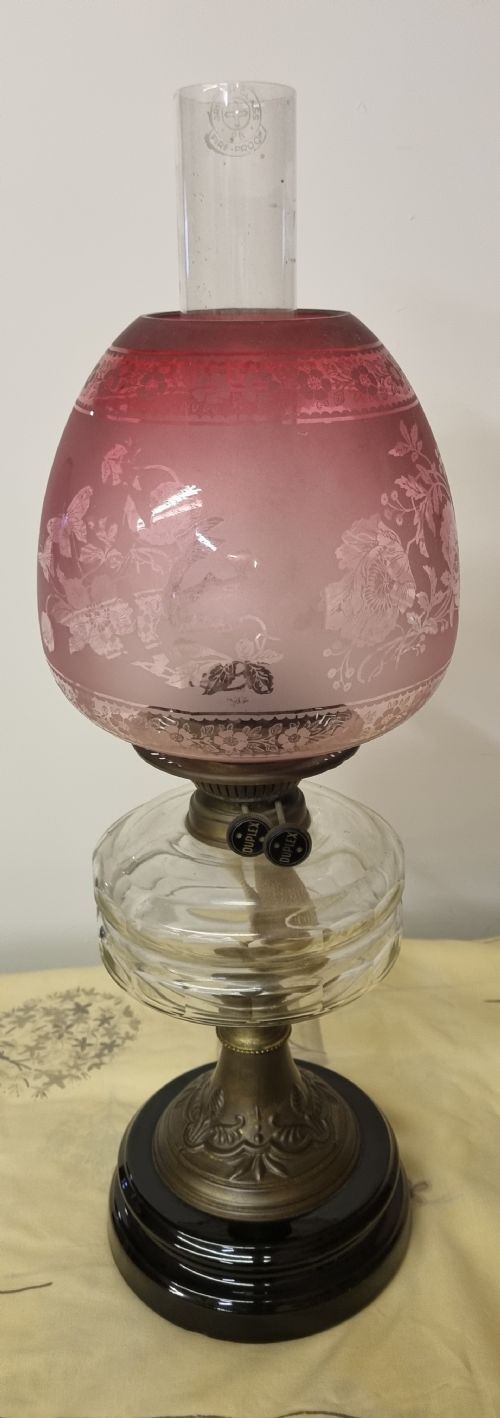
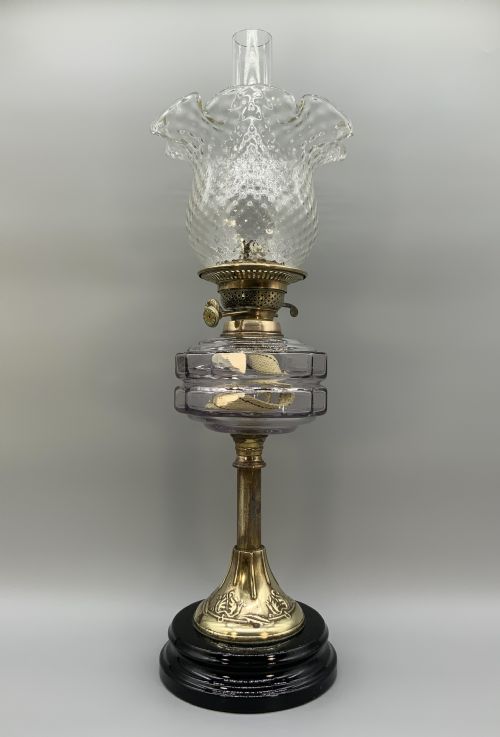
Manufacturers built these lamps using cast and turned brass for the structural columns and bases, sometimes mounting them on ceramic or black glass plinths. The metalwork provides the heavy weight necessary to balance the upper burner and shade assemblies securely.
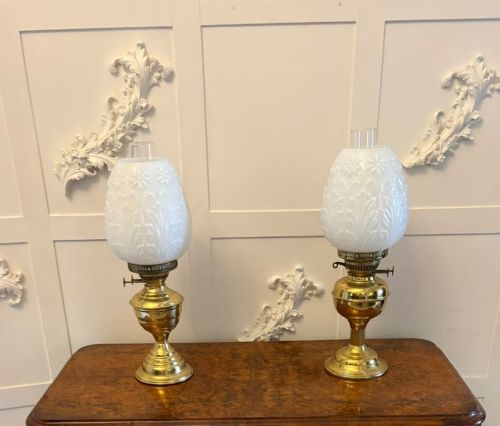
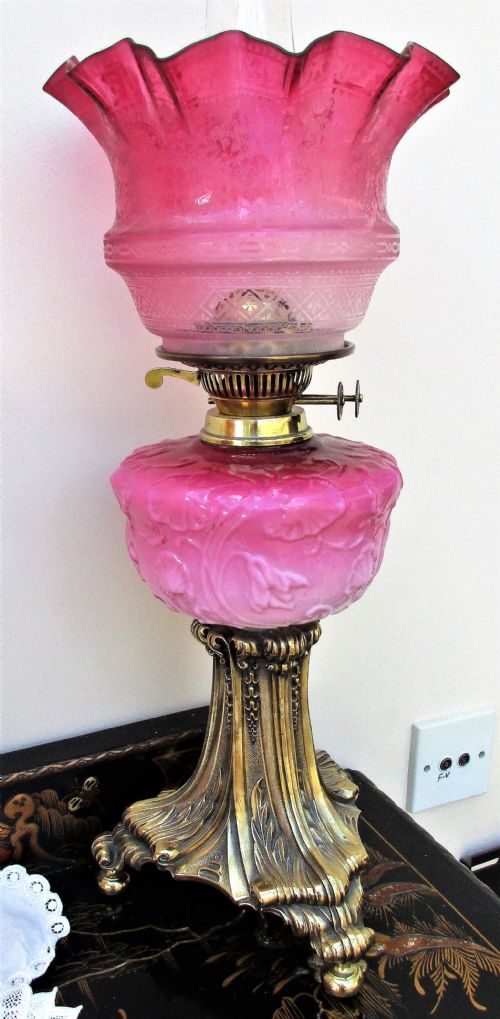
Fonts and shades utilise blown glass techniques, including cranberry glass, opaline glass, and etched clear crystal. Artisans decorated these glass elements with hand-painted botanical motifs, winter scenes, and gilt detailing before mounting them onto the metal reservoirs.
Corinthian column standards paired with coloured glass shades represent the most frequent furniture form recorded.
What varies in quality
The distinction between standard domestic lighting and superior examples lies in the heft of the brass casting and the crispness of the column fluting. Higher tier pieces incorporate complex double burners such as duplex systems alongside hand-blown coloured glass shades rather than plain pressed variants.
Porcelain elements and figural components demonstrate varying artistic skill, with finer items featuring detailed hand painting and maker attribution. The integration of contrasting materials, such as onyx bases or copper accents, elevates the execution of the piece.
Hinks of Birmingham·Sitzendorf·Gustave Serrurier Bovy·Wild and Wessel
The Vintage Paraffin Table Light Glossary
- Duplex burner
- A twin-wick mechanism that produces a significantly brighter flame than single-wick designs. It usually requires a wider chimney and shade gallery.
- Font
- The reservoir container that holds the paraffin oil beneath the burner. These components appear in brass, ceramic, and coloured glass.
- Corinthian column
- An architectural column style featuring ornate acanthus leaf decoration on the capital. This classical motif proved popular for Victorian brass lamp standards.
- Opaline glass
- A translucent, milky white glass developed during the nineteenth century. It diffuses the lamplight into a soft, even glow.
- Gallery
- The metal ring at the top of the burner that holds the glass shade in place. Proper sizing ensures the shade remains secure during use.
Vintage Paraffin Table Light: Frequently Asked Questions
How do I operate a vintage paraffin table light?
Fill the reservoir with clean paraffin oil and allow the cotton wick to absorb the liquid thoroughly before lighting. Adjust the thumb screw to raise or lower the flame height once the glass chimney is secured in place.
Keep the wick trimmed flat to prevent smoking and ensure steady illumination. Extinguish the flame by turning the wick down completely or using a dedicated snuffer.
Were these lamps used for main lighting?
Victorian and Edwardian households relied on these portable lights to illuminate specific task areas or reception rooms before electricity became common. Their heavy brass bases allowed them to stand securely on dining tables and sideboards.
They provided the primary source of evening illumination in domestic settings. Servants regularly filled, cleaned, and trimmed the burners as part of daily household maintenance.
How do I date a brass and glass lamp?
Examine the burner mechanism and collar construction for manufacturer patents or stamped names, which often provide clues to the production era. Stylistic indicators, such as the transition from heavy Victorian classical revival columns to flowing Art Nouveau and Secessionist curves, also help narrow the timeframe.
The choice of glass colour and shade decoration reflects prevailing aesthetic shifts between the 1860s and the 1930s. Cranberry glass and etched patterns typically point to the nineteenth century, while simpler forms often suggest later periods.
Can I convert a paraffin lamp to electricity?
Many collectors choose to run a discreet electrical cord through the central column to convert the lamp for modern domestic use without altering the exterior metalwork. This modification allows the antique base and shade to serve as a functional desk or table light.
Original burners and collars can usually be preserved alongside the conversion to maintain the piece's historical integrity. Professional rewiring ensures the older metal components meet current safety standards.