


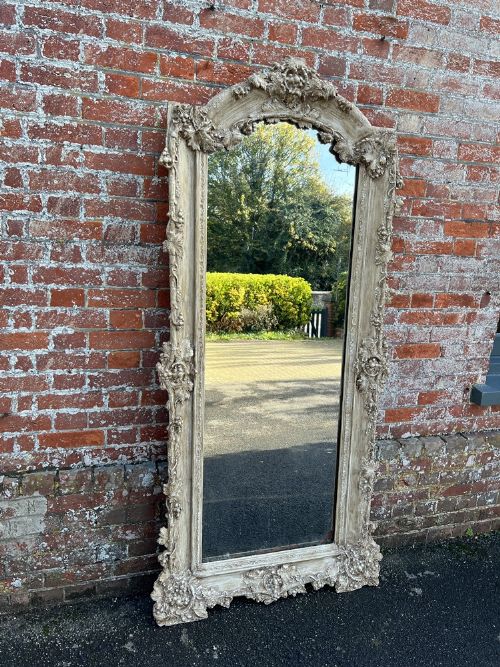


Vintage Painted Floor Mirror
A vintage painted floor mirror brings scale and soft light to a room, offering both full-length reflection and decorative presence.
Vintage Painted Floor Mirror
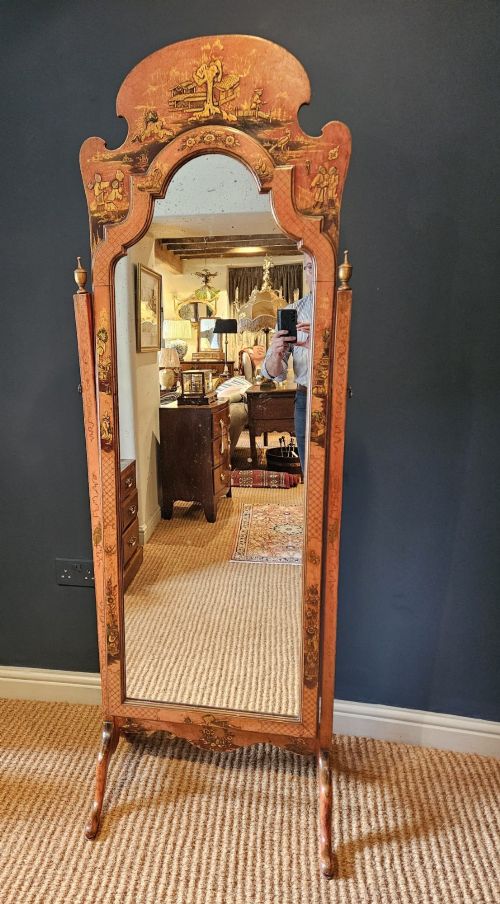
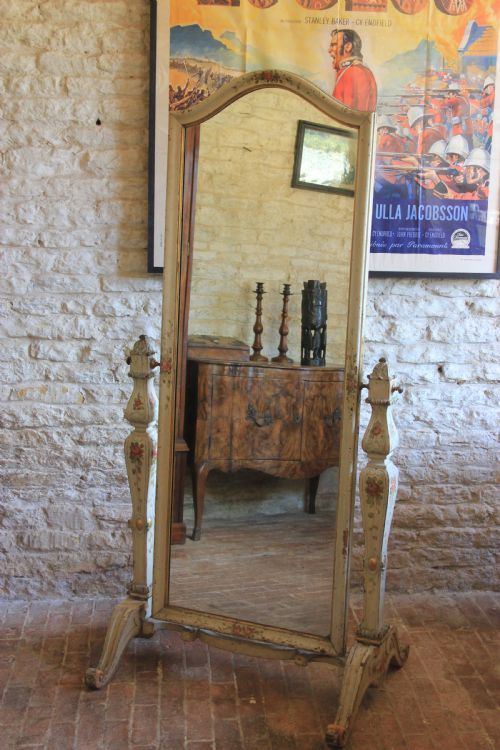
When you search for a vintage painted floor mirror, you encounter large scale items designed to stand directly on the ground or tilt within a frame. The most common version met on this page is the nineteenth century French cheval mirror or tall dressing glass, frequently displaying an arched or shaped top.
Many examples originate from French provincial workshops or urban ateliers, bearing the hallmarks of nineteenth century cabinet making. Pieces span from eighteen fifty through to the nineteen twenties, encompassing styles such as Louis Philippe, Rococo and Chinoiserie.
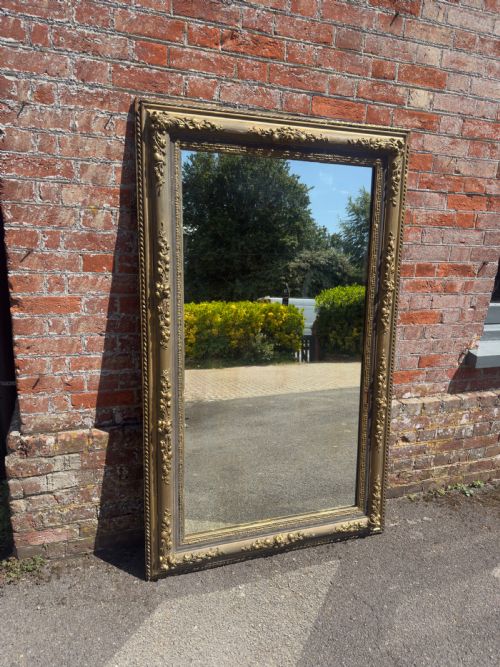
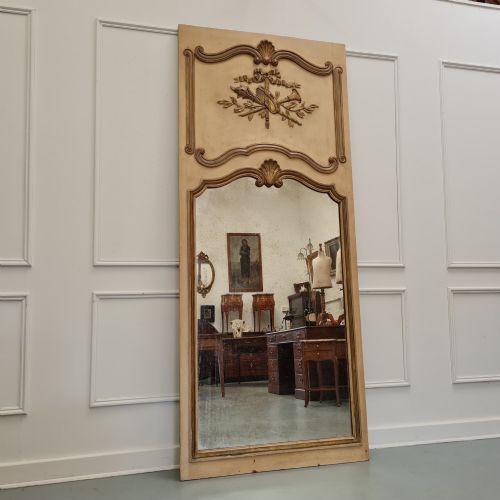
The selection ranges from simple bistro glasses to ornate architectural forms. Alongside dedicated cheval mirrors, tall wall mirrors and trumeau panels adapted for floor placement appear regularly.
Materials and construction methods
Makers constructed the structural frames from solid wood, applying layers of gesso to build up decorative moulding and relief work. Artisans then finished these surfaces with hand applied paint, frequently complemented by gold leaf or parcel gilt highlights.
Carved wooden details adorn the crests and borders, utilising traditional joinery to support heavy glass plates. The paint finishes range from distressed cream to elaborate Chinoiserie motifs executed on coloured grounds.
Several mirrors retain the honest dust of French attics, waiting patiently for a new home.
Factors influencing quality
Quality rests primarily in the depth and execution of the carved wood and gesso ornamentation. Finer examples display crisp, hand carved detail on the crest and frame rather than simplified moulding.
The integrity of the original paint finish dictates much of the character, with layered patination holding greater visual weight than flat modern repainting. Heavier frames with original mercury glass or early replacement plates show superior balance and presence.
The Vintage Painted Floor Mirror Glossary
- Cheval mirror
- A freestanding full length mirror mounted in a frame with pivots, allowing the glass to tilt. This form became popular during the eighteenth century and remained a staple of nineteenth century bedroom furniture.
- Gesso
- A plaster based mixture applied to wood frames to create a smooth surface for gilding or painting. Artisans could carve and model this material while pliable.
- Trumeau
- An architectural mirror or panel designed to fit into the wall space between windows or above a fireplace. Many antique examples are subsequently adapted for floor standing use.
- Louis Philippe
- A mid nineteenth century French style characterised by restrained curves and simple architectural lines, often featuring a gently arched top. It avoids the heavy ornamentation of earlier rococo revivals.
Vintage Painted Floor Mirror: Frequently Asked Questions
How do I secure a floor mirror safely?
Large mirrors benefit from tethering to the wall behind them using discreet brackets, particularly when placed on deep pile carpets or uneven floorboards. This prevents accidental toppling while allowing the frame to retain its traditional upright stance.
Positioning the base squarely distributes the substantial weight of the wood and glass safely across the floor surface.
What is a cheval mirror?
A cheval mirror is a freestanding glass held within a pivoting wooden frame supported by four legs. This design lets the user tilt the mirror angle to adjust the reflection.
Originating in France, the style provides full length utility without requiring permanent wall mounting.
How do I clean an antique mirror glass?
Glass cleaner should be applied sparingly to a cloth rather than sprayed directly onto the glass, preventing liquid from seeping behind the silvering or into the wooden rabbet. Gentle wiping preserves both the historic glass plate and the surrounding gesso frame.
Avoid harsh chemical ammonia products which can degrade nineteenth century silvering over time.
Are these mirrors suitable for bathrooms?
High humidity rooms can damage nineteenth century gesso and nineteenth century wooden frames, making dry living areas or bedrooms a safer environment for antique painted mirrors. Moisture causes the wood to swell and accelerates the degradation of old paint and leaf.
Placement away from direct steam sources ensures the structural integrity of the frame remains intact.