
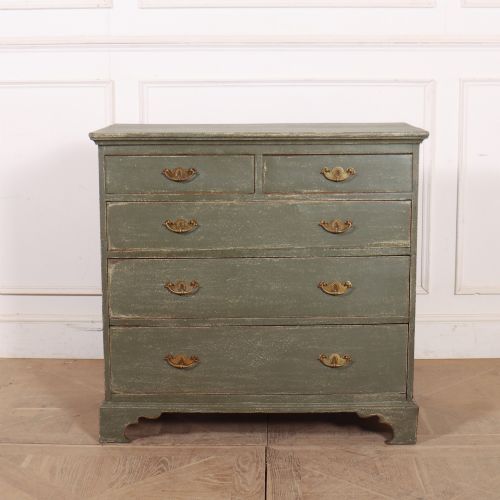
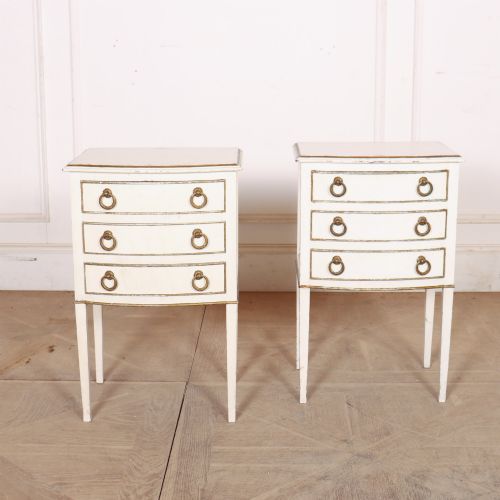

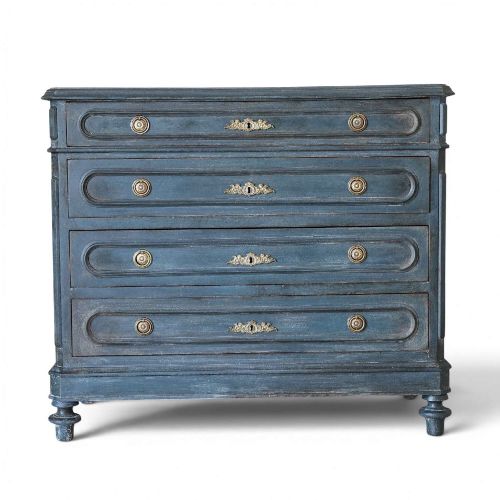
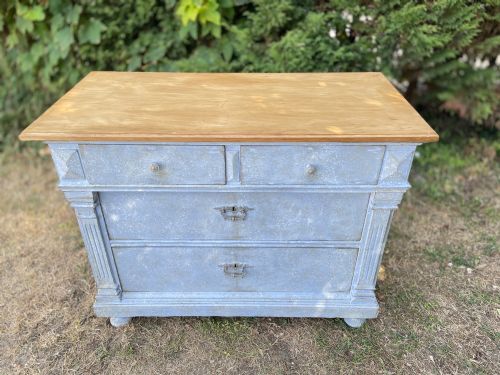
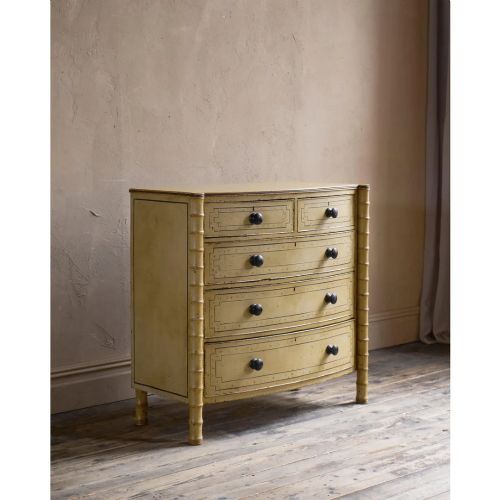
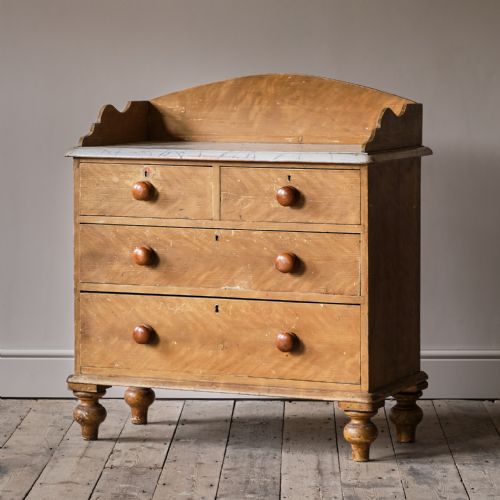
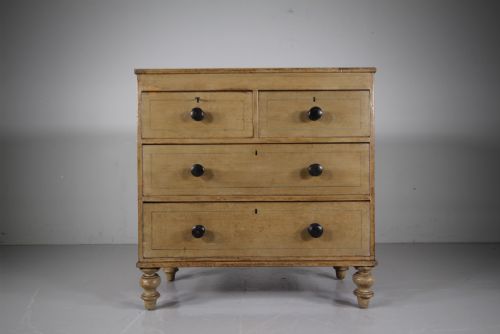
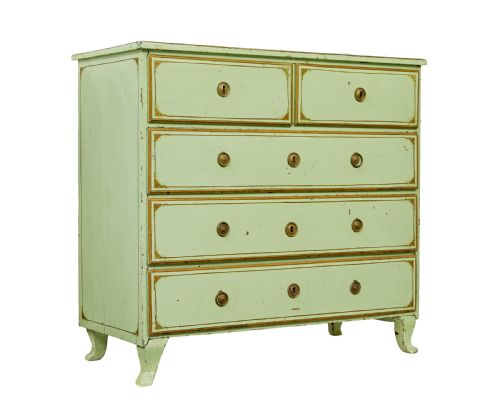
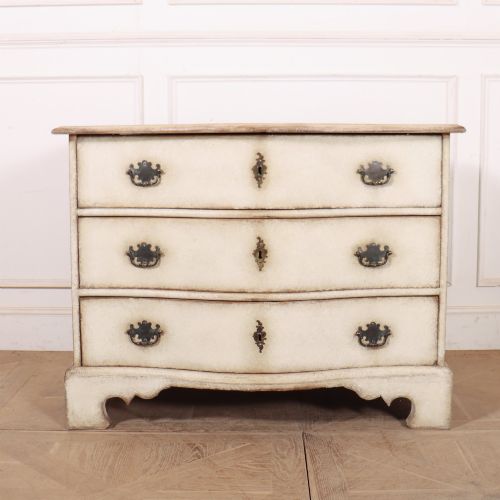
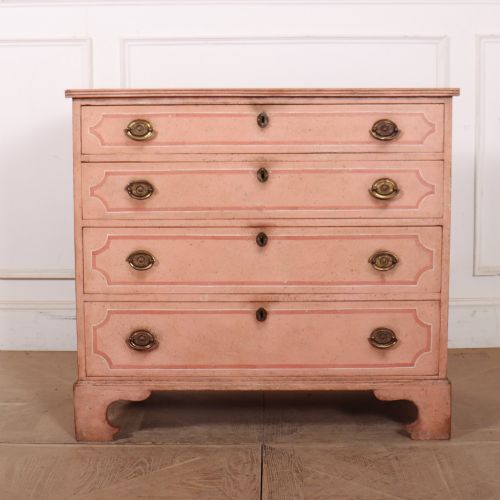
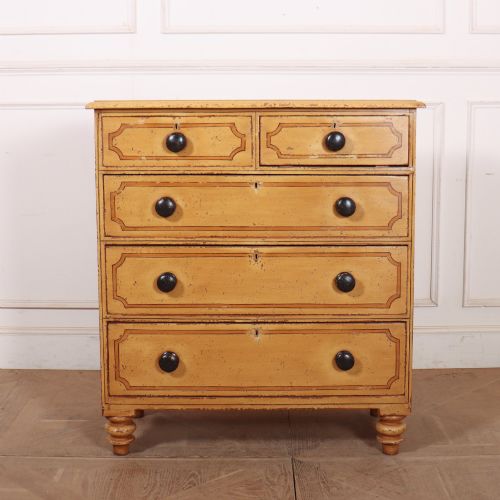
Vintage Painted Commode Chest
A vintage painted commode chest brings colour and utility to a room, offering surface space and deep drawers in one timber piece.
Vintage Painted Commode Chest
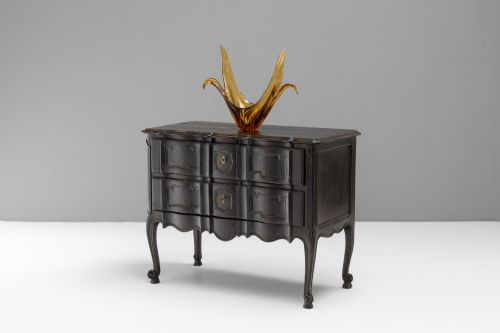
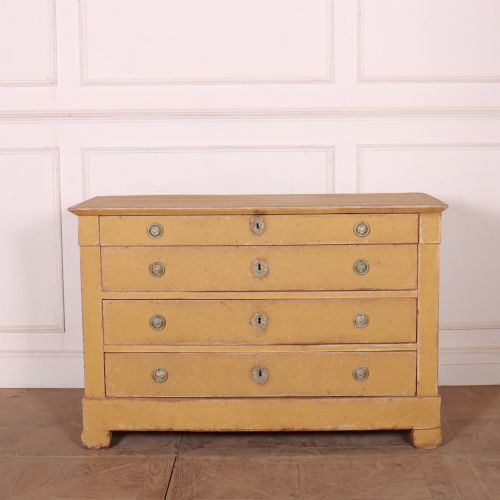
A vintage painted commode chest is a functional storage unit defined by its decorative surface treatment and timber construction. These items span European and English workshops, appearing as chests of drawers, bedside tables, side cabinets and commodes.
The most common examples on this page are nineteenth century pieces drawing on French Provincial, Swedish, Gustavian and Victorian country styles. Makers applied coats of paint over pine, oak and mixed woods, often employing decorative techniques to alter the visual weight of the furniture.
Regional variations dictate the silhouette, ranging from the straight lines of English country pieces to the curved fronts of Dutch bombe commodes and Swedish serpentine designs. Buyers encounter everything from small bedside chests to massive five-drawer storage units.
How they were made
Carpenters constructed the carcase and drawers primarily from solid pine, oak and general wood stock, utilising traditional joinery such as dovetails for the drawer construction. Brass hardware, ceramic pulls and metal fixtures served as functional and decorative accents.
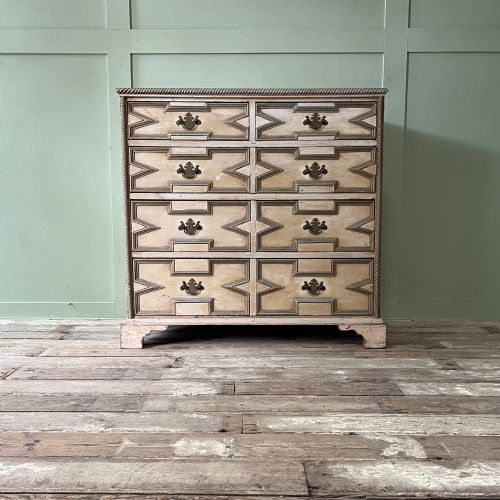
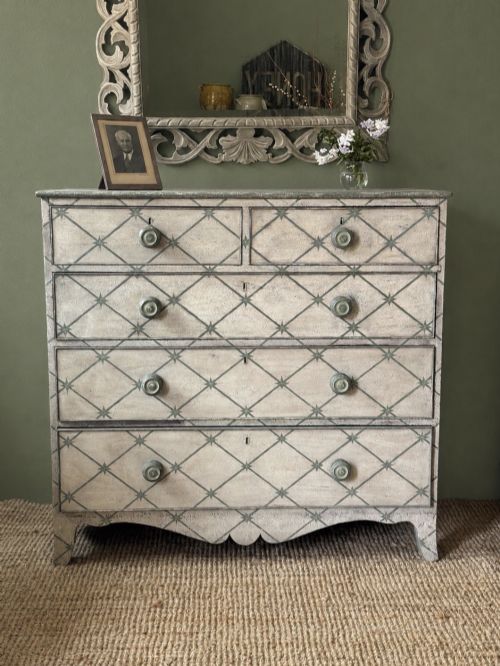
Makers applied lead-based or oil paints directly to the timber, often building up multiple layers of pigment in colours like grey, black, blue and white. Surface treatments included hand-painted motifs, simulated wood grains and diamond-point carvings to mimic more expensive materials.
Styles represented include French Provincial, Gustavian, Regency and Victorian Country, utilising brass and ceramic hardware.
What varies in quality
Quality rests in the integrity of the original paint surface and the stability of the underlying timber carcase. Pieces retaining their initial pigment without excessive modern overpainting command greater interest from collectors.
The sophistication of the form dictates distinction, separating straightforward utility chests from elaborate serpentine, bombe or fluted-drawer models with sculptural carved details. Maker attribution, visible in documented pieces by firms such as Edwards and Roberts or Gemla Fabrikers, elevates the standing of a commode.
Sir Clough Williams-Ellis·Edwards and Roberts·Gemla Fabrikers
The Vintage Painted Commode Chest Glossary
- Commode
- A low chest of drawers or cabinet, originating in France during the seventeenth century. The term applies to various decorative drawer units built for domestic storage.
- Bombe
- A swollen, bulging contour found on the front and sides of continental furniture. This curving shape requires advanced cabinet-making skill to execute in solid wood.
- Serpentine
- A furniture front or top shaped with a convex centre flanked by concave curves, or the reverse. This flowing profile defines finer eighteenth and nineteenth century commodes.
- Gustavian
- The Swedish neoclassical style dating from the late eighteenth century, characterised by pale painted finishes, fluted columns and restrained classical ornamentation.
- Faux bamboo
- A decorative finish where wood is carved or painted to imitate natural bamboo stalks. This style gained popularity during the Regency and Victorian periods.
Vintage Painted Commode Chest: Frequently Asked Questions
What is a commode chest?
A commode chest is a freestanding storage unit featuring multiple horizontal drawers, often raised on short legs or a plinth base. These pieces functioned primarily to hold clothing, linens and personal items in bedrooms and private chambers.
Over centuries, regional cabinet-makers adapted the form from simple pine utility pieces to decorative statements featuring curved fronts and painted surfaces. They bridge the gap between functional storage and ornamental furniture.
Where were painted commodes made?
Painted commodes originate from workshops across Britain, France, Sweden, Germany, Hungary and the Netherlands. Each region developed distinct aesthetic preferences, from Swedish Gustavian greys to Dutch bombe silhouettes and English country pine.
Local timber availability dictated the construction wood, with pine dominating Scandinavian and Hungarian pieces while oak and mixed hardwoods appeared more frequently in English workshops.
How do I date a painted chest?
Dating relies on examining the construction methods of the drawers, the hardware fixings and the composition of the timber carcase. Hand-cut dovetails, handmade nails and the patina of the underlying wood indicate age.
Paint analysis helps determine whether the pigment dates to the original period of manufacture or represents a later decorative layer applied during subsequent decades.
How do I style a painted commode?
A painted commode serves as an anchor piece in a bedroom, hallway or living room, providing a flat top surface for lamps, mirrors and decorative objects. The painted finish allows the piece to introduce soft colour or contrast against neutral walls.
Pairing these chests with simpler modern furniture or placing them alongside complementary antiques highlights their painted surfaces and regional proportions.