

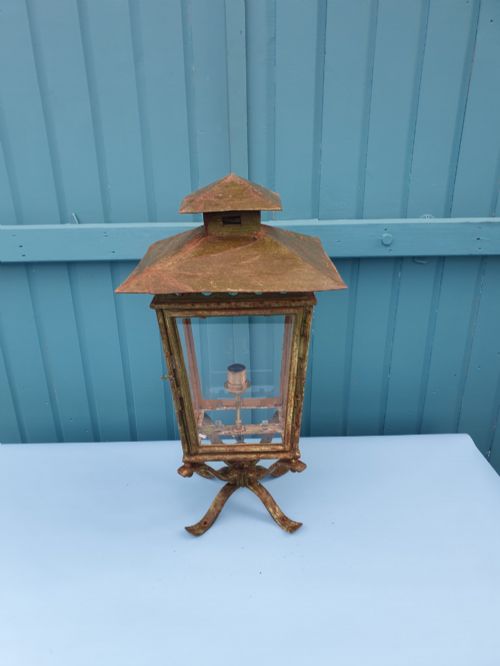
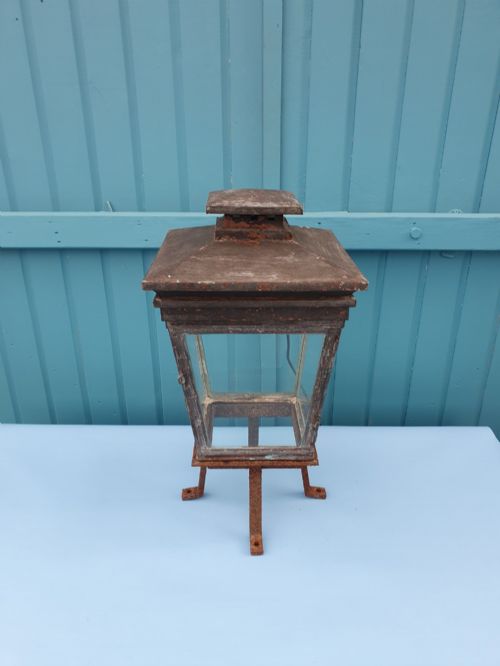


Vintage Outdoor Lantern
These vintage outdoor lanterns bring industrial weight and architectural history to exterior walls, gate posts and garden pathways.
Vintage Outdoor Lantern
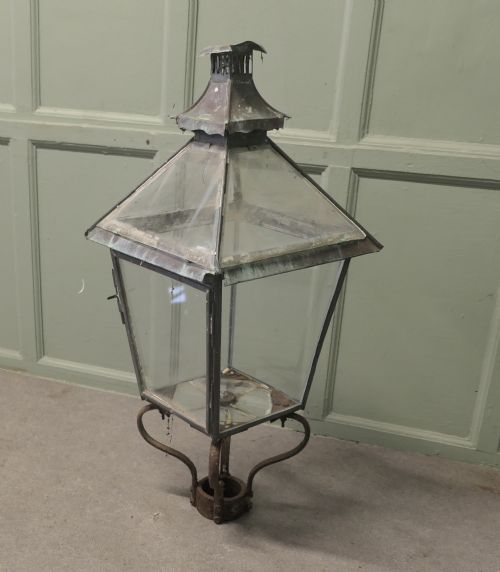
When you search for vintage outdoor lantern pieces, you encounter heavy duty exterior lighting originally built for streets, coach houses and porches during the nineteenth and early twentieth centuries. These fixtures transition between functional municipal hardware and decorative architectural statements designed to withstand the elements.
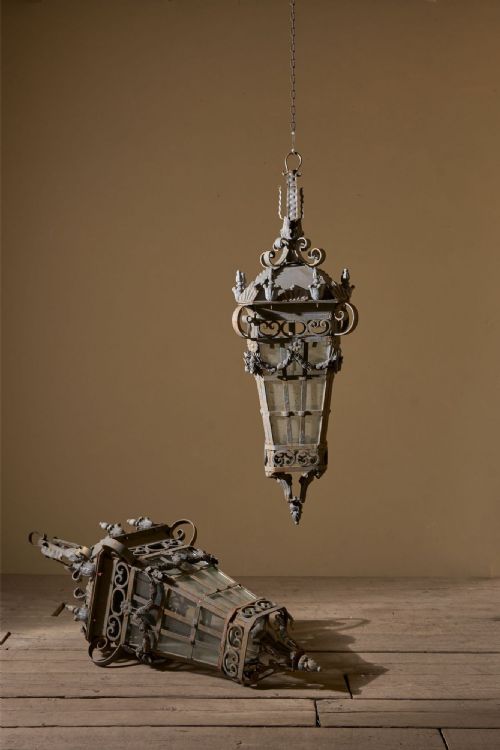
You are most likely to meet copper and iron wall lights, hanging lanterns and post mounted fixtures originating from the Victorian period through to the 1930s. Many examples reflect industrial, Gothic Revival or neo-classical design influences, often adapted from earlier gas burning systems to modern electrical wiring.
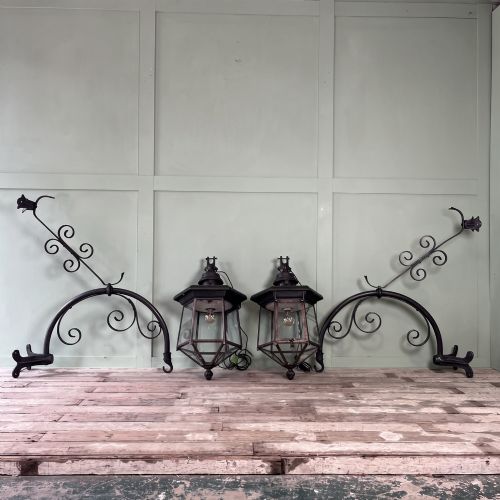
The selection ranges from large street lamps and bracket supported fixtures to smaller porch lights and carriage lamps. Makers such as Revo and Foster & Pullen produced utilitarian pieces alongside ornate French styles featuring verdigris patinas and decorative metalwork.
How they were made
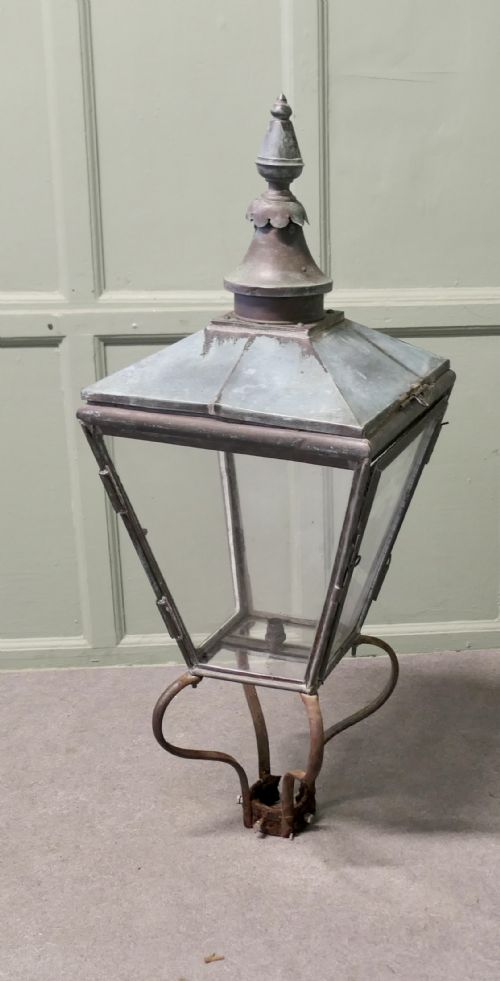
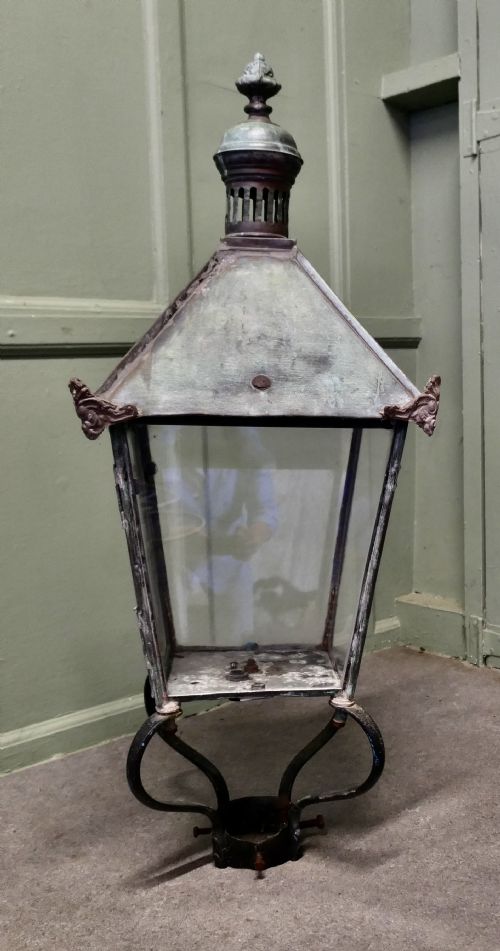
Makers constructed these lanterns using durable metals such as copper, cast iron, wrought iron, brass, zinc and steel to ensure longevity in open air environments. Sheet copper and heavy iron frameworks were soldered, riveted or cast, often incorporating specialised brackets and swan neck poles.
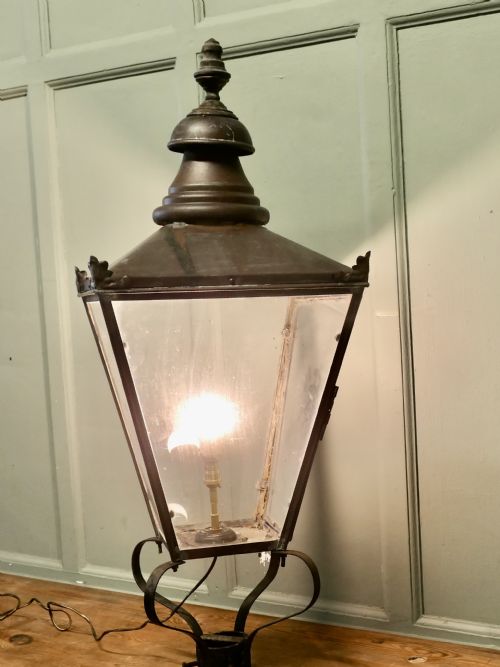
Panels of clear, frosted or textured glass were fitted into the metal frames to diffuse the light while protecting the burner or bulb from wind and rain. Protective finishes including green paint and verdigris patination were applied to the surfaces, while conversions from gas to electricity altered the internal fittings over time.
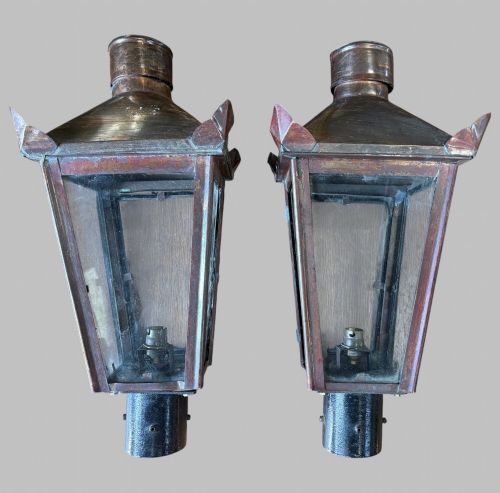
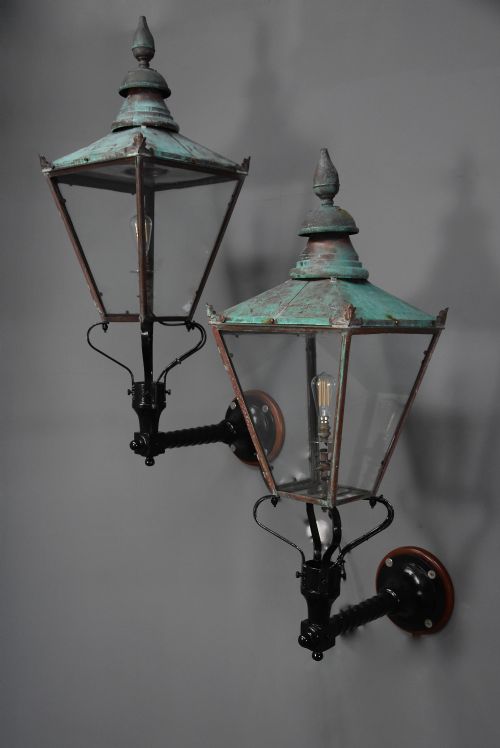
The selection includes single wall sconces, paired coach house lanterns, and municipal lamp posts equipped with frosted and clear glass panels.
What varies in quality
Quality in these exterior lights depends on the heft of the metalwork, the structural integrity of the original joints and the survival of makers' marks or specific regional casting details. Heavier copper gauges and robust cast iron mounts indicate higher municipal or substantial residential grade production.
The presence of original mounting brackets, unaltered gas conversion components and matching pairs elevates the desirability of a fixture. Superior examples retain their authentic patination, undamaged glass panels and intact decorative elements such as shamrock motifs or spiral twist supports.
REVO Leicester·Foster And Pullen Bradford·Revo Tipton·Daris
The Vintage Outdoor Lantern Glossary
- Verdigris
- A green patina that forms naturally on copper, brass or bronze through prolonged exposure to weather. This surface reaction provides historical depth and character to exterior metalwork.
- Swan Neck
- A curved metal arm or bracket that suspends a lamp away from a wall or pole. This shape directs light outward over paths and doorways.
- Cloche
- A bell shaped protective covering originally used in gardening for plants. In metal lighting terms, it refers to similar domed architectural forms.
- Gas Conversion
- The historical adaptation of an exterior light fixture from town gas piping to electrical wiring. This process often involves retaining the original burner housing while updating the internal socket.
- Post Lantern
- A light fixture designed to mount directly onto the top of a gate pier, garden pillar or dedicated lamp post. These pieces frequently feature large octagonal or square glazed bodies.
Vintage Outdoor Lantern: Frequently Asked Questions
Can these outdoor lanterns be wired for modern electricity?
Most surviving lanterns have already undergone conversion from their original gas systems to standard electrical wiring during their long working lives. Any remaining adjustments for contemporary outdoor use can be completed by a qualified electrician using weatherproof components.
Because these fixtures were built with durable metals and heavy glass, they readily accommodate modern internal bulb fittings while preserving their historical exterior appearance.
How do I mount a heavy wall lantern safely?
Due to the substantial weight of cast iron, thick copper and steel frames, these lanterns require secure anchorage into solid masonry or reinforced timber backing. Wall brackets and swan neck arms must be fixed with appropriate structural bolts to bear the cantilevered load.
Professional installation is strongly recommended for larger street lights, pairs of post lanterns and heavy bracketed fixtures to ensure stability against strong winds.
How do I identify a Victorian lantern from a 1930s piece?
Victorian and nineteenth century pieces often display heavier cast iron components, hand soldered copper construction and decorative flourishes like Gothic Revival tracery or shamrock motifs. They frequently show evidence of early gas piping and hand worked metal details.
Pieces from the 1920s and 1930s tend to reflect industrial standardisation, featuring cleaner lines, stamped manufacturing parts and branded municipal plates from makers such as Revo.
Are these lanterns suitable for coastal gardens?
Copper, brass and bronze naturally develop protective surface layers like verdigris that withstand harsh outdoor climates very well. Iron and steel components require periodic maintenance and appropriate exterior coatings to prevent active corrosion in salt air environments.
Checking the existing metal thickness and treating any exposed surfaces helps preserve these architectural antiques through decades of continued outdoor exposure.