


Copper Street Light
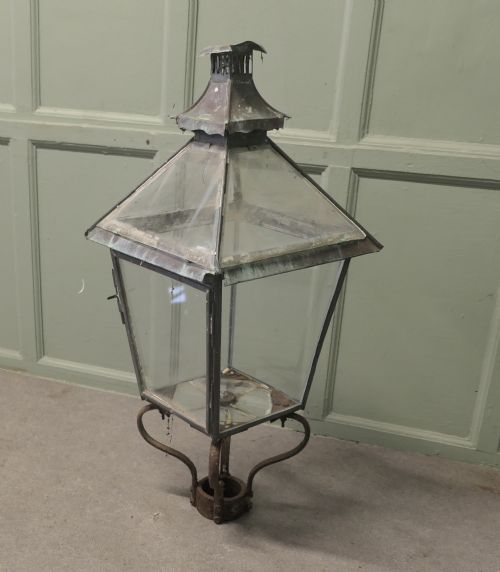
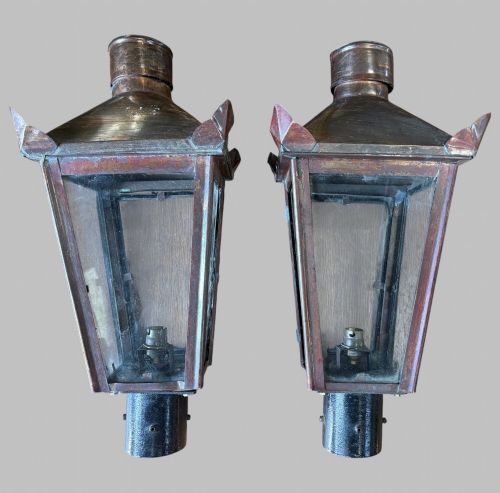
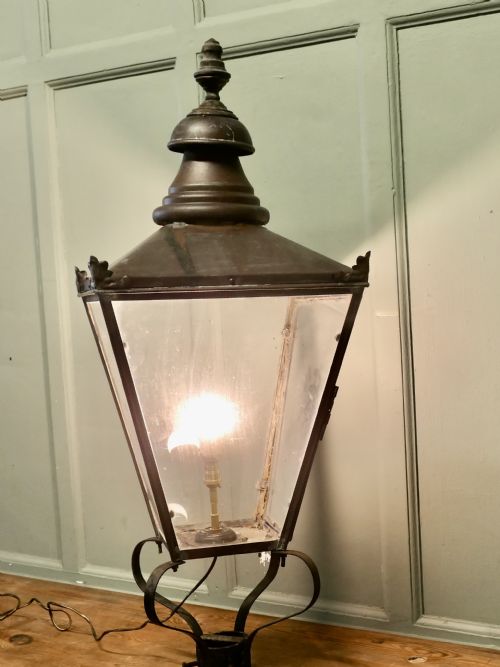
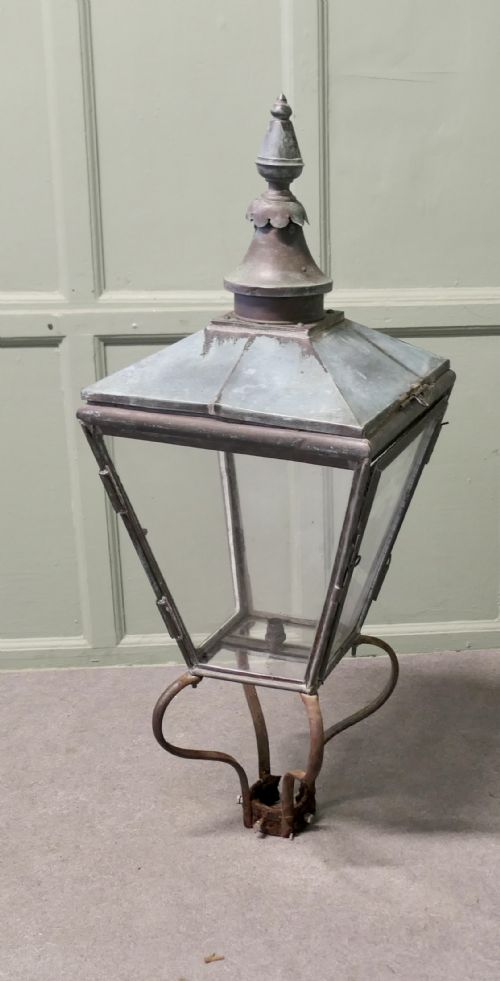
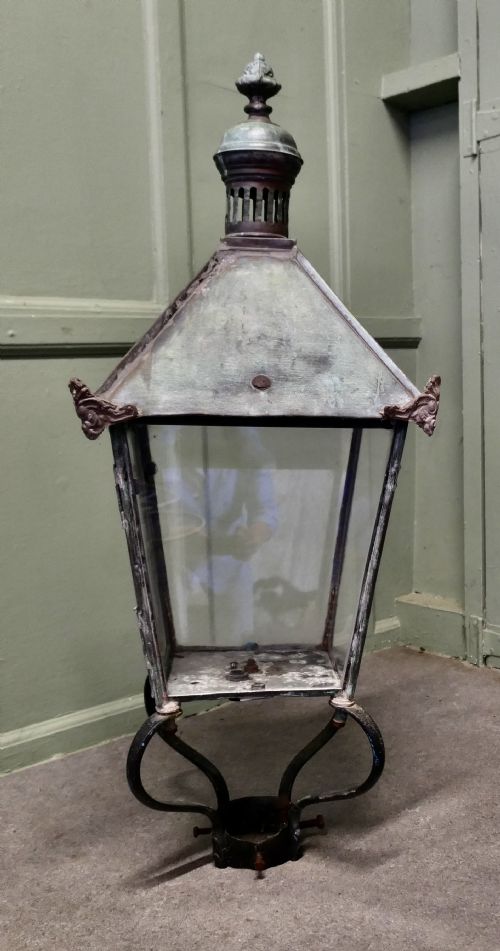
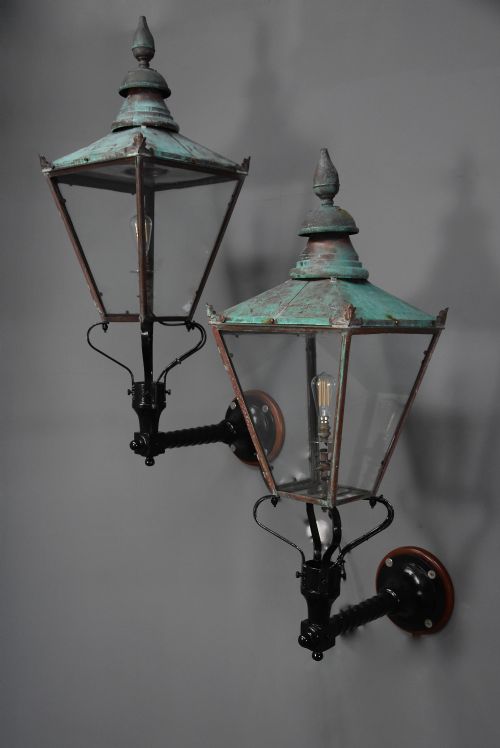
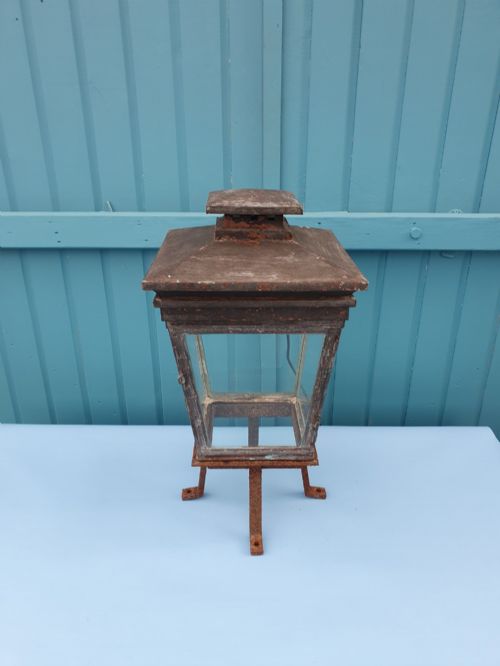
A copper street light brings architectural presence to an exterior wall or gateway, combining heavy metalwork with large glass panels.
Copper Street Light
When you search for a copper street light, you are looking at substantial outdoor illumination designed for mounting on walls, posts, or gates. These fixtures draw upon Victorian and Edwardian street lighting traditions, often carrying the robust character of industrial installations.
The pieces you are most likely to meet on this page span from the nineteenth century into the mid twentieth century. They appear as wall lanterns, post lights, and hanging outdoor lamps, frequently adapted from their original gas or oil burning systems to modern electric wiring.
Materials and construction methods
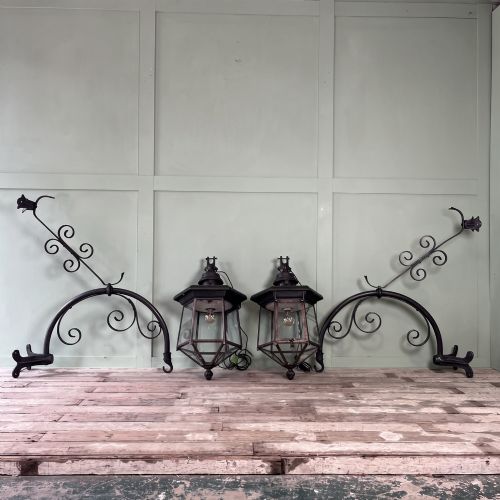
Makers constructed these lanterns primarily from sheet copper, shaped and soldered or riveted together to house protective glass panes. Iron, wrought iron, and cast iron frequently form the supporting brackets, bases, and structural frames that anchor the copper body.
Many examples show evidence of early gas conversion, where burners and internal piping were replaced to accommodate electrical fittings. Painted finishes and weathered patinas on the metal surfaces reflect decades of exposure to outdoor elements.
Several street lamps bear the scars of retired gas burners, quietly hiding twentieth-century electric cables inside nineteenth-century flues.
Assessing build quality and proportions
Quality in these lanterns rests in the gauge of the copper and the integrity of the structural brackets. Heavier metal plating and robust cast iron supports indicate substantial manufacture intended for municipal or large estate use.
The sophistication of the glazing and the detailing on the metal framing distinguish standard utility lamps from grander architectural examples. Surviving matching pairs and complex mounting brackets also alter the character and visual impact of the piece.
REVO Leicester·A Foster & Pullen Bradford
The Copper Street Light Glossary
- Post lantern
- An outdoor light fixture designed to mount vertically on top of a gate pier, wall, or dedicated post.
- Wall bracket
- A projecting arm of iron or metal fixed to a building exterior to support a heavy lantern at a distance from the wall.
- Gas conversion
- The historical alteration of an interior burner system to allow the housing of modern electrical wiring and lamp holders.
- Patina
- The surface oxidation and weathering that develops naturally on exterior copper and iron over extended periods.
- Glazing
- The fitted glass panels enclosed within the metal framework of the lantern body.
Copper Street Light: Frequently Asked Questions
Can these street lights be used outside today?
Most of these lanterns were built specifically for exterior municipal or domestic use and withstand weather conditions well. They often require a qualified electrician to check the internal wiring and ensure safe outdoor installation.
Their robust construction makes them suitable for mounting beside entranceways, on garden walls, or upon exterior gate posts.
How do I mount a wall lantern?
Wall lanterns typically require secure fixing to exterior brickwork or stone using appropriate heavy-duty brackets. The weight of the copper body and iron arm demands solid masonry anchors rather than standard timber screws.
Professional mounting ensures the fixture remains stable against strong winds and supports the weight of the metal structure safely.
Were these lights originally gas powered?
Many nineteenth and early twentieth-century street lights operated on gas before municipal electrification schemes took place. Subsequent adaptations fitted electrical lamp holders inside the existing copper housing.
This history means internal components often show signs of past conversion work alongside the original ventilation caps.
How do I date a copper lantern?
Dating relies on examining the construction techniques, the style of the metal framing, and any maker stamps present on the brackets. Victorian and Edwardian examples often feature heavier cast iron elements and distinct decorative proportioning.
Later twentieth-century versions from the nineteen-thirties and forties tend to display more streamlined industrial forms without ornate cresting.