



Gothic Copper Light
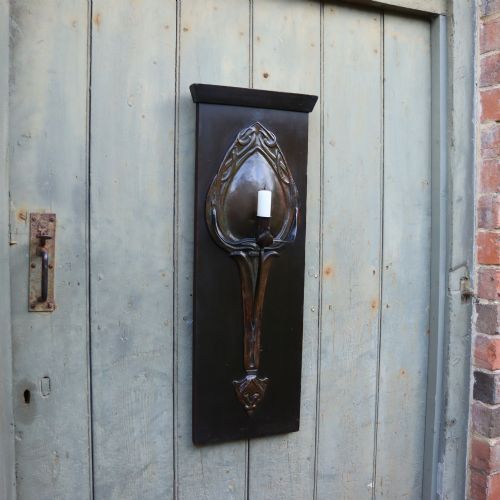
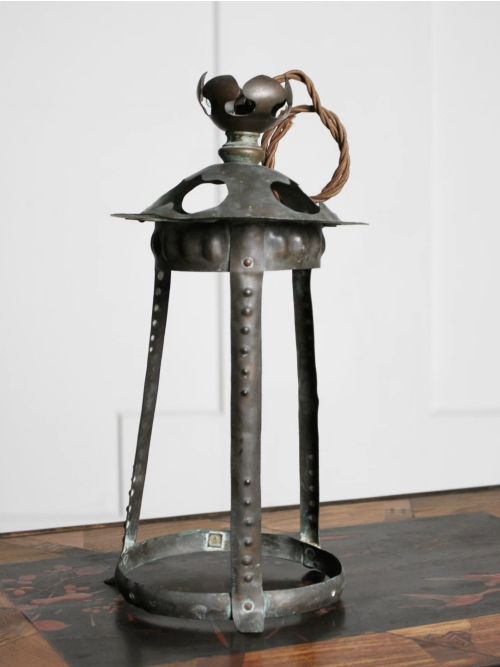
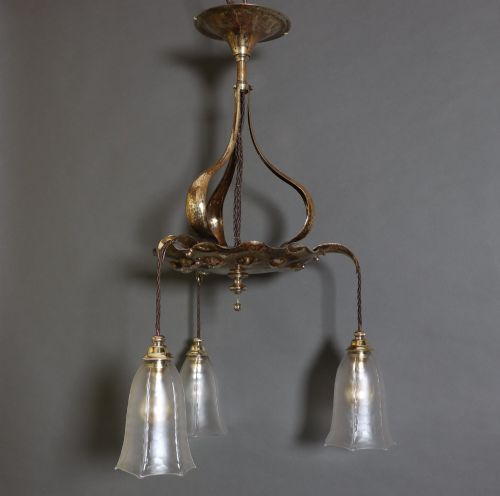
These gothic copper light examples combine ecclesiastical form with heavy metalwork, bringing striking period character and atmospheric illumination to an interior.
Gothic Copper Light
A gothic copper light draws upon medieval ecclesiastical design, taking the form of wall lanterns, porch lights, pendants, and chandeliers. These fixtures merge structural metalwork with period decorative motifs, often pairing beaten surfaces with glass panels.
The versions most frequently met on this page belong to the Arts and Crafts and Victorian eras, ranging from the late nineteenth century into the Edwardian period. Makers adapted gothic revival principles for domestic and exterior spaces, producing both wall lights and hanging lamps.
Alongside hanging and wall-mounted fixtures, the selection includes related forms such as pricket candlesticks and table lamps utilising copper and brass. These objects share the same material palette and stylistic lineage as the lighting.
How they were made
Construction relies heavily on beaten copper sheet, often combined with wrought iron, brass, and timber to provide structural rigidity. Metalwork was shaped by hand, leaving visible hammer marks that evidence the labour involved in forming lanterns, wall brackets, and candleholders.
Glazing typically involves clear or frosted glass fitted within metal frames to diffuse illumination from early electric or candle sources. Gilding and patination techniques were applied to surfaces to enhance the deep tones of the metal.
Gothic Copper Light Retail Price Guide 2026
Typical asking prices for gothic copper light among the pieces listed under this phrase on Sellingantiques today, from the lower quarter to the upper quarter. They describe what is for sale here now, not the wider market.
One listed lantern comes complete with a charming green man mask glaring out from the metalwork.
What varies in quality
Quality rests upon the depth of hand-working in the metal and the integrity of the original assembly. Pieces displaying sophisticated beaten copper work and substantial iron framing stand apart from simpler commercial output.
Design attribution and provenance elevate certain works, particularly those associated with specific movements like the Amsterdam School or designers such as Dr Christopher Dresser. The complexity of the gothic ornamentation and the weight of the materials dictate the standing of each piece.
Dr Christopher Dresser
The Gothic Copper Light Glossary
- Arts and Crafts
- A design movement valuing handcraftsmanship and traditional materials over industrial mass production. It heavily influenced the production of domestic metalwork and lighting.
- Amsterdam School
- An expressionist architectural and design style originating in the Netherlands during the early twentieth century. It produced distinctive organic forms in metal and other media.
- Pricket candlestick
- A candleholder featuring a sharp metal spike upon which the base of a candle is pressed. This form has medieval ecclesiastical origins.
- Gothic Revival
- An architectural and decorative style reviving medieval aesthetic forms, pointed arches, and heavy ornamentation. It permeated nineteenth-century interior design.
- Patination
- The natural or chemically induced ageing of a metal surface over time. It creates varied surface colour and depth on copper and brass objects.
Gothic Copper Light: Frequently Asked Questions
Where were these lights hung?
These fixtures were designed for both interior spaces and exterior use, appearing frequently in porches, hallways, and principal rooms. Wall lanterns and brackets suited entranceways, while pendants and chandeliers illuminated larger living spaces.
Their robust construction in copper and iron allowed them to withstand external environments when specified as porch lights or wall lanterns.
How do I date a gothic copper light?
Dating relies upon examining the manufacturing techniques, stylistic markers, and material combinations present in the piece. Items from the late nineteenth century often reflect Victorian Gothic Revival or Aesthetic Movement sensibilities, while those from around nineteen hundred frequently show Arts and Crafts or Amsterdam School influences.
Hand-beaten surfaces and specific structural fixings help distinguish earlier nineteenth-century examples from Edwardian production.
Are these lights wired for modern use?
Many vintage and antique lighting fixtures require rewiring to meet current electrical standards before installation. Buyers should consult a qualified electrician to ensure compatibility with modern domestic wiring.
Original lamp holders and fittings are often preserved where possible, but internal wiring is typically updated for safety.
What is a pricket candlestick?
A pricket candlestick is a holder that uses an upright metal spike to secure the candle rather than a socket. This traditional format derives from church altars and medieval lighting.
In copper and brass examples from the Arts and Crafts period, this historic form was revived for domestic decorative use.