


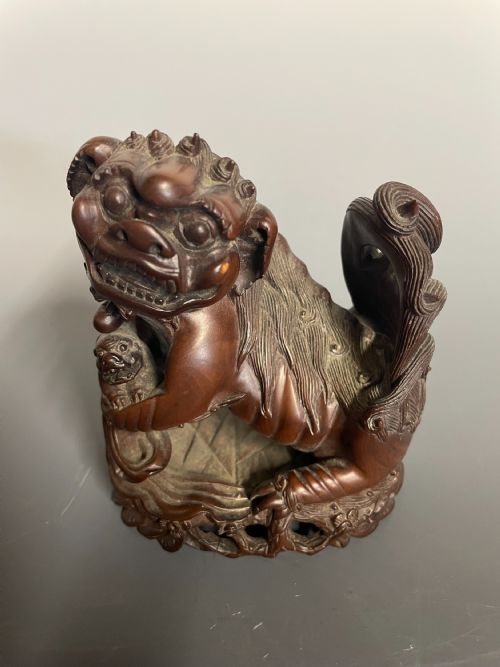
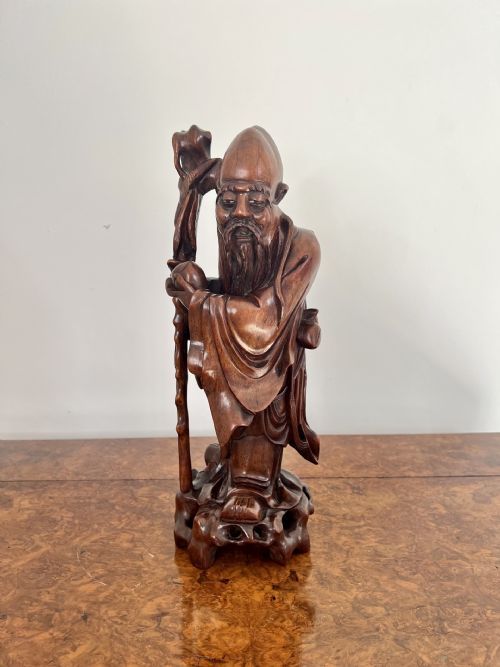


Vintage Oriental Wood Sculpture
Vintage oriental wood sculpture brings together carved figures, animals, and mythological subjects created across Asian and British colonial workshops.
Vintage Oriental Wood Sculpture
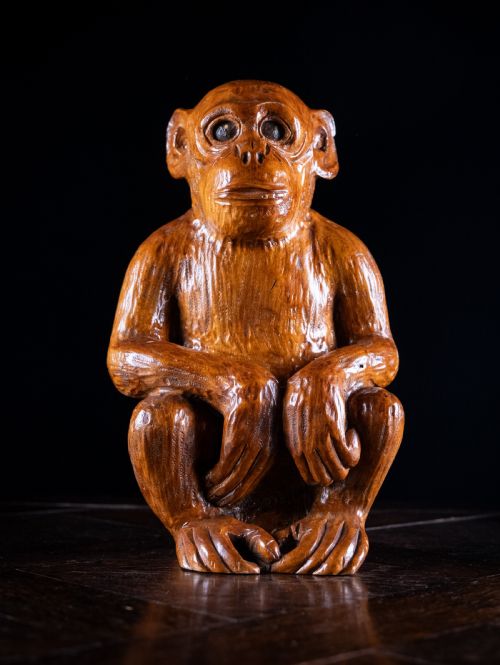
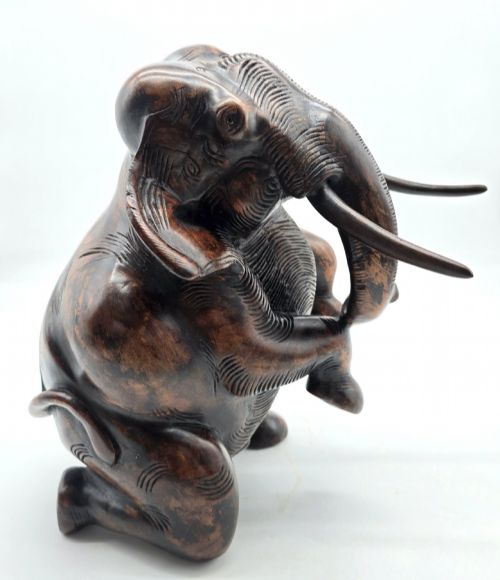
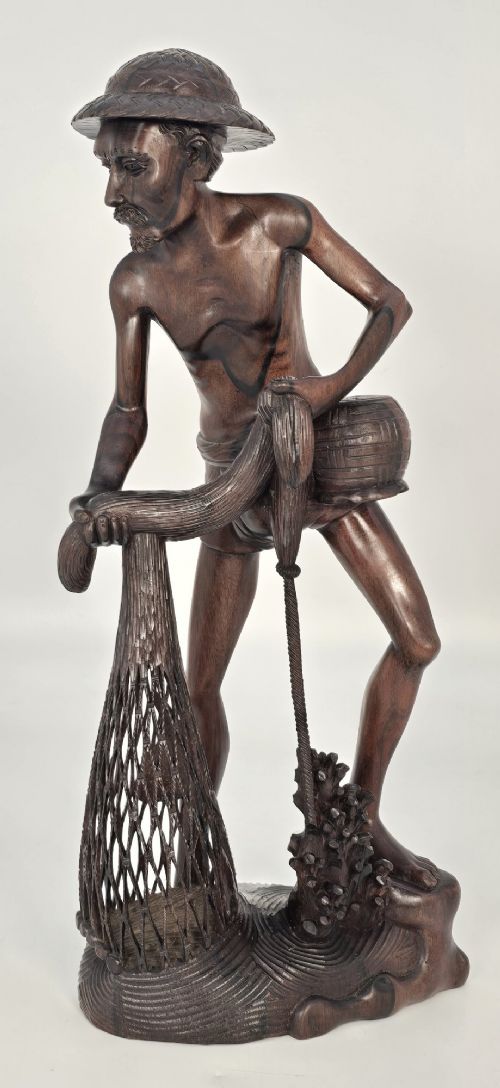
Vintage oriental wood sculpture encompasses carved figures, animals, and architectural elements originating from Chinese, Indian, Japanese, and Indonesian traditions. Buyers encounter everything from small boxwood paperweights and okimono to large freestanding hardwood figures of deities, fishermen, and animals.
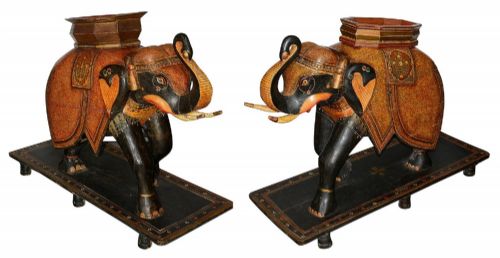
The selection ranges from nineteenth-century pieces spanning the Victorian and Edwardian eras into the early twentieth century, including traditional Chinese Qing Dynasty works and Anglo-Indian Raj period carvings. Forms span from functional table gongs and wall hanging displays to elaborate sculptural groupings of horses, elephants, and human figures.
How they were made
Techniques range from the fine, intricate toolwork seen in Japanese boxwood carvings and Nata-tsukuri style sculptures to the robust heft of large Indian and Chinese hardwood figures. Certain objects integrate mixed media elements, such as brass bells on carved stands or glass components.
The listings span from the nineteenth century into the 1930s, featuring hardwoods, boxwood, teak, and root wood shaped into figures and animals.
What varies in quality
The distinction between ordinary and superior pieces rests entirely upon the depth of the carving and the precision of the anatomical or textural detail. Master carvers coax expressive character and fluid movement from unyielding timber, whereas lesser examples remain stiff and generalized in execution.
Proportion and the preservation of the original wooden surface without excessive later intervention dictate the standing of a piece. Finer sculptures display deliberate control over tool marks, bringing out the natural grain to articulate folds of drapery or animal musculature.
The Vintage Oriental Wood Sculpture Glossary
- Boxwood
- A dense, pale wood prized by carvers for its fine, even grain that allows for minute, detailed work without splitting.
- Okimono
- A Japanese decorative object or carving designed for display on a shelf or in a tokonoma alcove.
- Root wood
- Timber sourced from the gnarled underground roots of trees, shaped by nature and adapted by carvers into imaginative figures.
- Foo Dog
- A traditional guardian lion depicted in Chinese art, symbolising protection and strength.
- Gesso
- A plaster-like mixture applied to wooden surfaces to prepare them for painting and gilding.
Vintage Oriental Wood Sculpture: Frequently Asked Questions
What is a vintage oriental wood sculpture?
These works are carved wooden figures, animals, and decorative objects originating from Asian regions and produced during the nineteenth and early twentieth centuries.
They represent traditional regional craftsmanship, utilising dense hardwoods, boxwood, and root wood to depict historical figures, deities, and wildlife.
How were these wooden sculptures used?
Many served as decorative items within homes, while others fulfilled ceremonial functions or practical roles as table gongs, paperweights, and architectural panels.
Figures of deities and animals often held cultural or spiritual significance, placed in prominent domestic spaces for contemplation or protection.
How do I care for antique wood carvings?
Keep the wood away from direct sunlight and sudden temperature shifts to prevent the natural material from drying out and splitting over time.
Dust the surface gently with a dry, soft cloth, avoiding commercial polishes or moisture that might harm lacquer, paint, or gesso finishes.
How can I tell the period of a carving?
Dating relies on stylistic markers associated with the Victorian, Edwardian, Qing Dynasty, and Raj periods, alongside the type of wood and tool marks present.
Examining the patina and wear patterns helps establish the age, distinguishing nineteenth-century examples from later twentieth-century productions.