


Vintage Oriental Mirror
These vintage oriental mirror selections bring hand-finished Chinoiserie and Anglo-Indian carving into rooms that need depth and surface interest.
Vintage Oriental Mirror
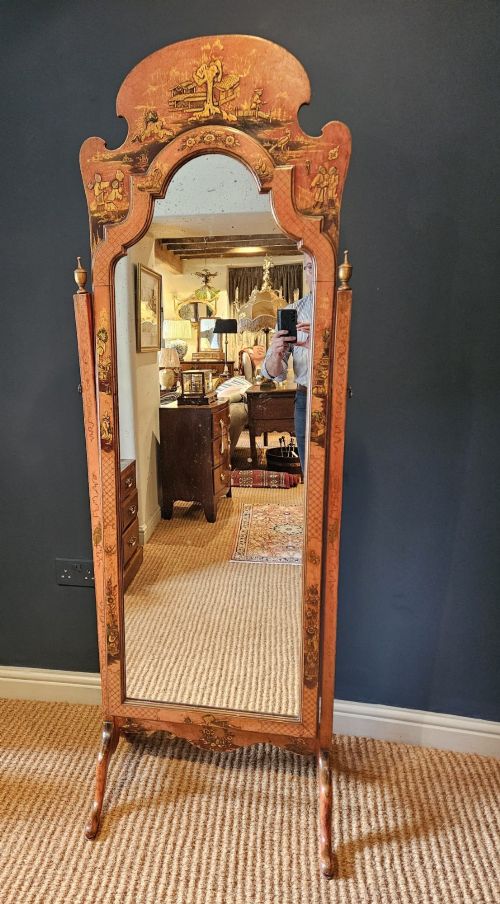
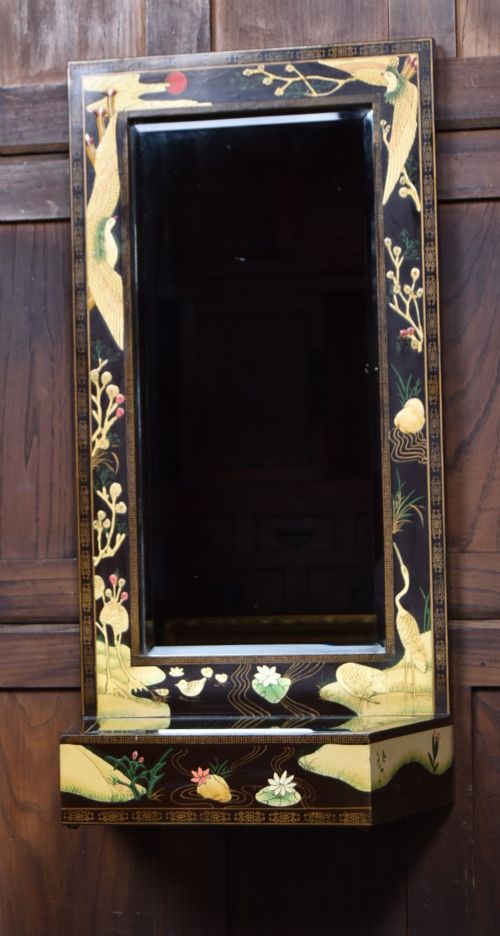
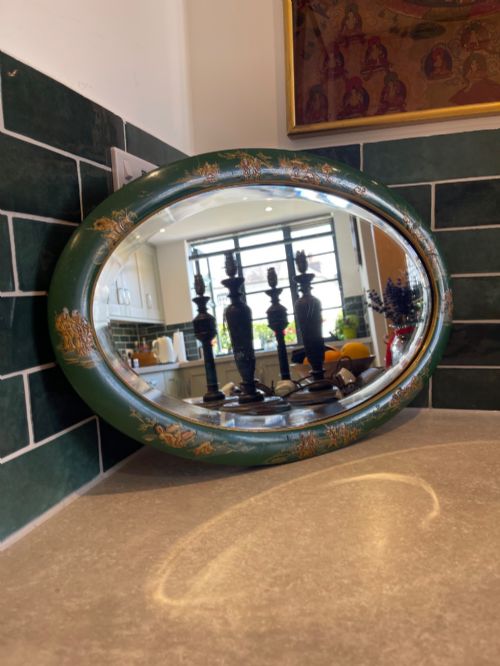
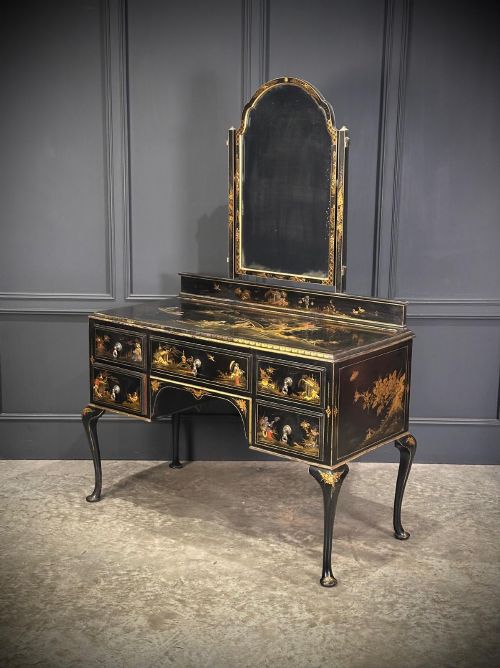
When you search for a vintage oriental mirror, you encounter a range of forms spanning wall hung plates, cheval glasses, and dressing table furniture. The core of what appears here draws heavily on Chinoiserie and Edwardian interpretations of Eastern design, alongside Anglo-Indian woodwork from the late nineteenth and early twentieth centuries. Wall mirrors dominate the selection, often finished in black, cream, or ebonised lacquer.
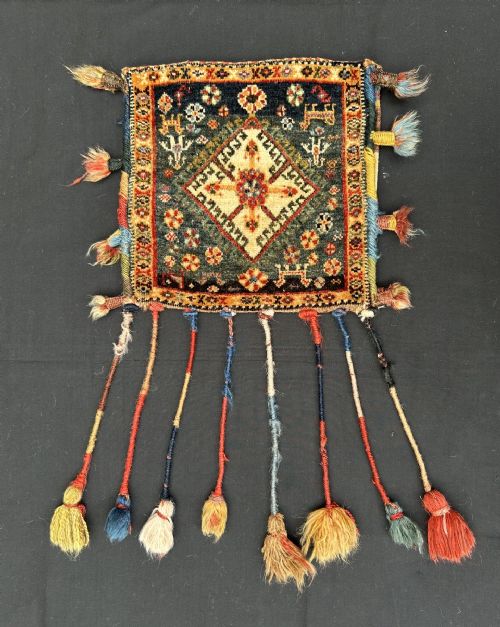
Beyond standard hanging plates, the inventory extends to larger floor standing cheval mirrors, dressing tables, and occasional tables with integral glass. These pieces date from the Victorian and Edwardian eras through to the nineteen-twenties, incorporating distinct stylistic threads like the Aesthetic Movement and Persian tribal textile work. Each object reflects how British and European makers interpreted oriental motifs across domestic furniture.
How they were made
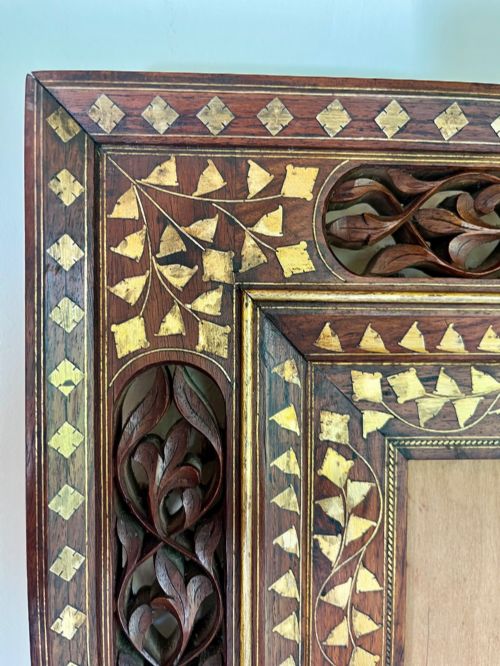
Construction relies upon traditional timber framing in woods such as rosewood and bamboo, forming sturdy supports for decorative surfaces. Lacquered wood provides a smooth substrate for painted or gilt ornamentation, while other examples showcase intricate relief carving typical of Hoshiarpur production.
Surface decoration unites gold leaf and applied pigment over lacquer, building up layered depth on frames. Glass plates are set within these custom wooden housings, sometimes bevelled at the edges to catch the light within a room.
Some dressing tables hide mirrors so effectively you might accidentally powder your nose while trying to check your tie.
What varies in quality
Quality rests in the crispness of the hand-carved relief and the depth of the lacquer finish. Pieces with finely articulated motifs display a higher degree of artisan skill than simpler moulded or stencilled alternatives.
The integrity of the timber frame and the retention of original gilding or painted detail dictate the overall standard. Superior examples maintain cohesive proportion between the mirror glass and its decorative surround across different periods.
The Vintage Oriental Mirror Glossary
- Chinoiserie
- European theatrical interpretation of Chinese and East Asian artistic traditions. This style manifests in lacquered furniture and decorative wall mirrors featuring painted landscape and figural motifs.
- Aesthetic Movement
- Nineteenth-century design reform emphasising art for art's sake and incorporating oriental influences. Pieces from this period often utilise ebonised finishes and bamboo construction.
- Cheval mirror
- A full-length freestanding mirror suspended on a vertical frame with pivoting pivots. These large glass panels allow adjustment of the angle for dressing.
- Hoshiarpur
- A region in India renowned for intricate woodwork and inlay techniques. Mirrors from this origin feature dense carved patterns across wooden frames.
Vintage Oriental Mirror: Frequently Asked Questions
How do I hang a heavy wall mirror?
Heavy wall mirrors require secure fixings anchored directly into wall studs or masonry using appropriate brackets. Distributing the weight evenly across two mounting points ensures stability.
Professional installation is recommended for larger cheval mirrors or heavy lacquered frames to prevent strain on the structural joints.
How do I clean an antique lacquer frame?
Dust lacquered wooden frames gently with a dry, soft microfiber cloth to prevent scratching the surface finish. Avoid harsh chemical cleaners or excess moisture which can damage old varnish.
For stubborn marks, a slightly damp cloth with mild soap can be applied sparingly, followed immediately by drying with a soft towel.
Are these mirrors original to the nineteenth century?
Dating depends on the specific construction and materials recorded in each listing, spanning Victorian, Edwardian, and nineteen-twenties periods. Stylistic cues such as ebonised wood or hand-painted Chinoiserie help establish the era of manufacture.
Examine the backboards and joining techniques to understand the age and construction methods used by the makers.
What is the difference between Chinoiserie and Anglo-Indian styles?
Chinoiserie focuses on painted or lacquered depictions of East Asian scenes, frequently utilising black, cream, or ebonised backgrounds with gilt detailing. Anglo-Indian pieces rely instead on dense, intricate wood carving without lacquer.
Both styles reflect British appreciation for imported aesthetic traditions during the Victorian and Edwardian eras.