


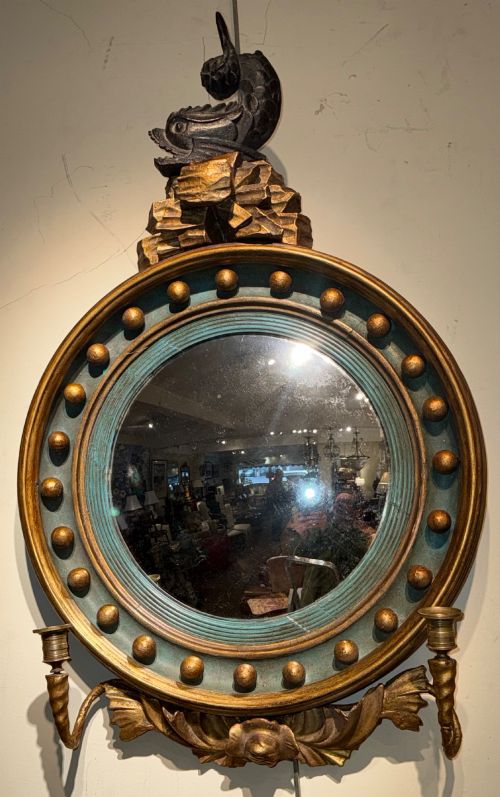


Gilded Green Wall Mirror
These gilded green wall mirror examples bring together painted wooden surfaces, reflective glass and gold leaf detail across classical and revival styles.
Gilded Green Wall Mirror
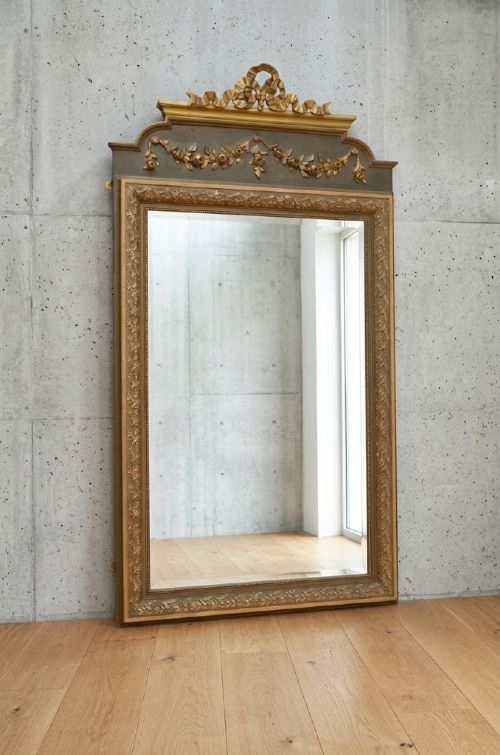
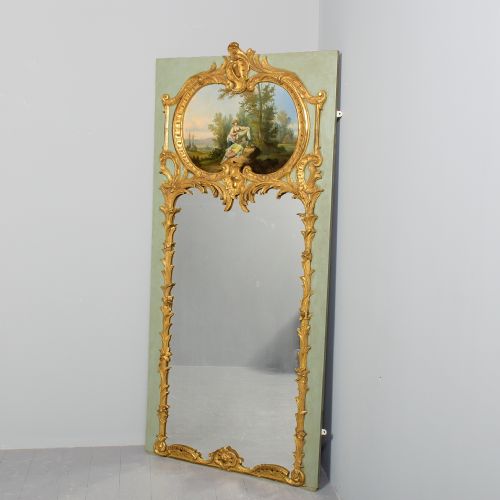
When you search for a gilded green wall mirror, you are looking at decorative wall furniture that combines painted woodwork with metallic leaf application. The pieces found here span the nineteenth and twentieth centuries, taking the form of overmantel mirrors, pier mirrors, trumeau panels and convex looking glasses.
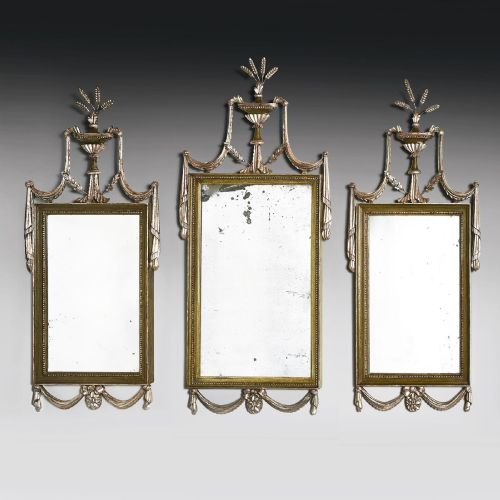
You are most likely to meet French and Italian examples from the nineteenth century, alongside later nineteenth and early twentieth century interpretations. These items reflect classical idioms such as Neoclassical, Louis XV Rococo and Regency designs, often featuring painted green grounds accented with gold.
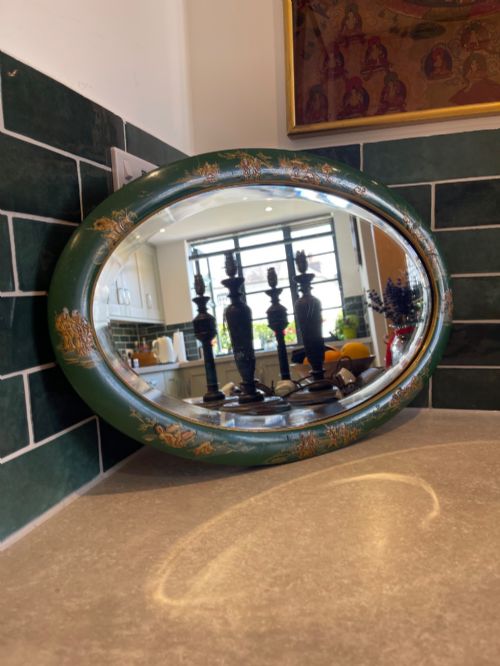
The selection ranges from grand architectural overmantels to smaller decorative wall mirrors and distinctive painted gypsy mirrors. Each piece demonstrates how makers combined green paintwork with gilt highlights to frame reflective glass for domestic interiors.
How they were made
Makers constructed these frames using wood, gesso and painted wood as a foundation before applying gold leaf or silver leaf. Carved wooden elements provided structural relief for ribbon crests, neoclassical motifs and rococo scrolls.
Surfaces received layers of green paint, which was often distressed or combined with faux marble effects to create depth. Artisans applied thin sheets of metal leaf to raised mouldings and carved details to contrast against the painted ground.
Gilded Green Wall Mirror Retail Price Guide 2026
Typical asking prices for gilded green wall mirror among the pieces listed under this phrase on Sellingantiques today, from the lower quarter to the upper quarter. They describe what is for sale here now, not the wider market.
Listings feature pieces spanning the nineteenth and twentieth centuries, utilising materials including glass, giltwood, wood, gesso, gold leaf, canvas and silver leaf.
What varies in quality
The distinction between ordinary and exceptional work lies in the depth of the carving and the execution of the surface finish. Finer pieces display crisp hand-carved wooden detail beneath the gesso and gold leaf, rather than moulded composition ornament.
The quality of the paint application and the harmony between the green ground and the gilding determine visual success. Original glass plates with authentic ageing also separate untouched period examples from later replacements.
Gillows Of Lancaster
The Gilded Green Wall Mirror Glossary
- Giltwood
- Wood that has been prepared with gesso and covered with thin sheets of gold leaf. This material provides the bright metallic highlights seen on many antique frames.
- Gesso
- A plaster mixture applied to a wooden base to create a smooth surface for carving and gilding. It allows artisans to shape intricate ornamental details.
- Trumeau
- A decorative wall mirror or panel designed to fit into the space between windows or above a fireplace. These French pieces frequently incorporate painted scenes or carved decoration.
- Convex mirror
- A round looking glass with a curved surface that reflects a wide, distorted view of the room. Regency interiors often featured these framed optical mirrors.
- Pier mirror
- A tall looking glass designed to hang on the wall space between two windows, often placed above a console table.
Gilded Green Wall Mirror: Frequently Asked Questions
Where should I hang a gilded green wall mirror?
These mirrors work effectively above a mantelpiece, a sideboard or a console table where they can reflect light and anchor the room's decorative scheme.
Larger overmantel and pier formats suit principal reception rooms, while smaller painted or gypsy mirrors fit narrower wall spaces in halls and bedrooms.
How do I identify a nineteenth century mirror?
Nineteenth century examples typically exhibit traditional construction methods, including hand-carved wooden frames, early gesso layers and original mercury or silvered glass plates.
Stylistic cues such as Neoclassical symmetry, Regency convex forms or Louis XV Rococo scrolls also point toward nineteenth century production.
What is a trumeau mirror?
A trumeau mirror is a traditional French wall mirror integrated into a decorative wooden panel, often designed to stand between windows.
These pieces frequently combine painted woodwork with gilded moulding and occasionally incorporate an upper oil painting or decorative carving.
How do I care for antique giltwood?
Antique giltwood requires gentle maintenance, avoiding moisture, direct sunlight and modern chemical polishes that can lift the delicate gold leaf.
Dusting lightly with a dry, soft brush is sufficient to keep the carved and gilded surfaces in stable condition.