



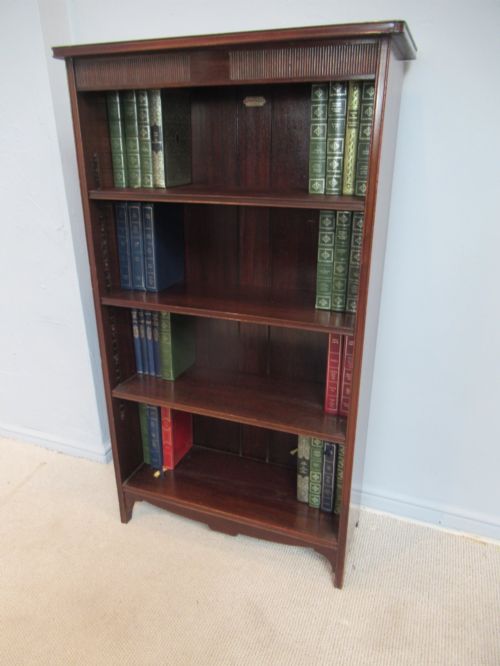


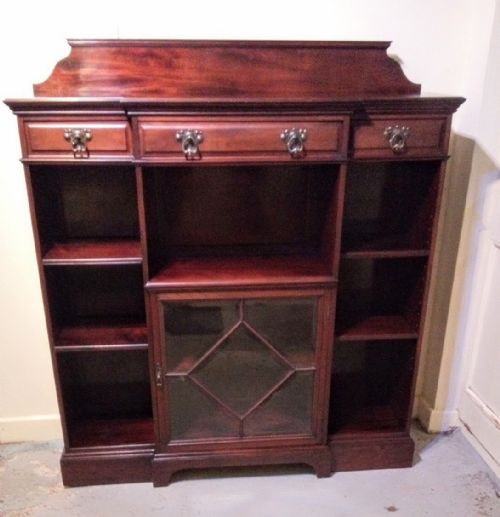
Vintage Open Face Bookcase
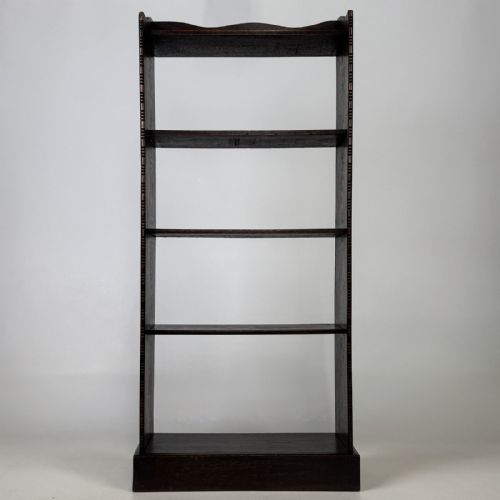
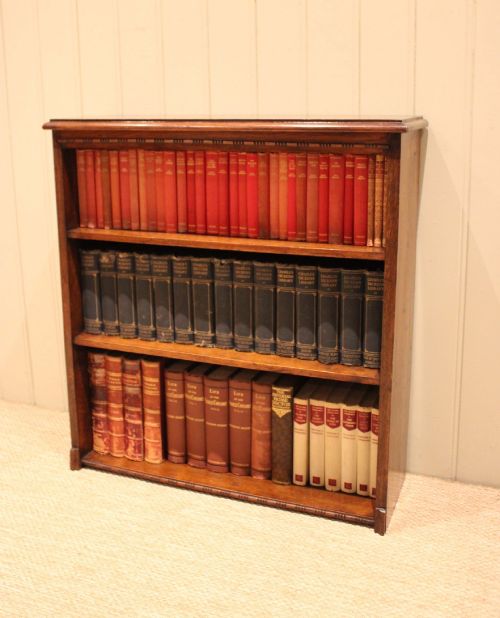
These vintage open face bookcase pieces offer immediate access to rows of volumes, spanning Edwardian golden oak to Georgian and Regency designs.
Vintage Open Face Bookcase
A vintage open face bookcase provides accessible shelving without doors, suiting studies and living rooms alike. The selection ranges from compact Edwardian examples to taller nineteenth-century forms.
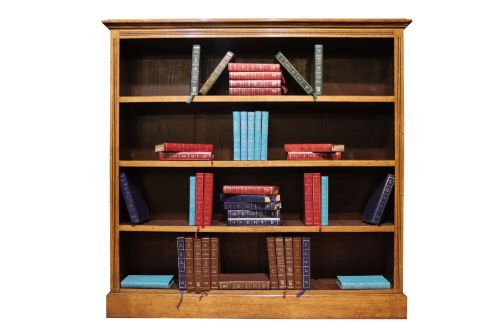
Most pieces encountered here date from the Edwardian period or the early twentieth century, constructed in mahogany, oak, or walnut veneer. Forms include breakfront layouts and designs with height-adjustable shelves.
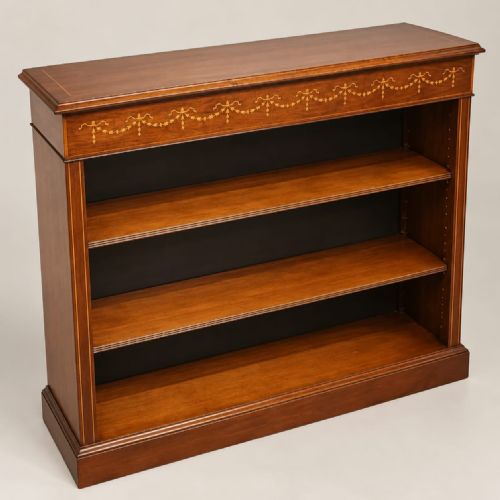
Makers and styles stretch from Arts and Crafts solid oak to French Louis XV style and Regency rosewood. Buyers find both simple utilitarian oak shelves and finely inlaid mahogany pieces.
Materials and construction
Many examples incorporate functional engineering through height-adjustable shelves, while brass fittings and subtle inlay ornament select pieces. Carved details occasionally adorn nineteenth-century oak and mahogany carcasses.
Vintage Open Face Bookcase Retail Price Guide 2026
Typical asking prices for vintage open face bookcase among the pieces listed under this phrase on Sellingantiques today, from the lower quarter to the upper quarter. They describe what is for sale here now, not the wider market.
Materials span mahogany, oak, walnut, brass, inlay, and rosewood across multiple decades from Regency to the 1930s.
Judging quality in open bookcases
The choice of timber and veneer dictates much of the character, with figured mahogany and rich rosewood sitting apart from utility oak. Subtle details like breakfront configurations and brass accents elevate certain pieces.
Original finishes and thoughtful carving distinguish finer workshop output from standard commercial production. Practical refinements, such as adjustable shelving mechanisms, also separate standard utility shelves from better library furniture.
waring and gillows
The Vintage Open Face Bookcase Glossary
- Breakfront
- A piece of furniture where the central section projects forward from the flanking outer sections. This configuration adds architectural depth to larger library bookcases.
- Rosewood
- A dense, heavily figured dark timber with distinctive grain patterns often utilised in Regency and Victorian cabinetmaking. It provides a luxurious surface finish for formal rooms.
- Arts and Crafts
- A design movement favouring honest construction, visible hand craftsmanship, and solid materials like oak. Pieces from this tradition avoid excessive ornamentation in favour of utility.
Vintage Open Face Bookcase: Frequently Asked Questions
What is an open face bookcase?
An open face bookcase is a freestanding shelving unit designed without doors, allowing direct visibility and reach to the book collection.
Such pieces range from modest early twentieth-century oak cupboards to grand nineteenth-century library fixtures.
Are the shelves adjustable?
Many examples incorporate adjustable shelving systems, which let owners alter shelf heights to accommodate volumes of various sizes.
This adaptability appears across multiple periods, including Edwardian oak pieces and early twentieth-century mahogany designs.
Which woods were commonly used?
Cabinetmakers relied heavily on oak and mahogany, alongside walnut, rosewood, and occasional walnut veneer.
Arts and Crafts pieces typically utilise solid oak, whereas Regency and Victorian examples frequently showcase rosewood or figured mahogany.
How do I date a bookcase?
Dating relies on observing the timber choice, stylistic cues such as inlay or carving, and period traits like Edwardian or Regency forms.
Construction methods and specific design movements help place pieces accurately within their historical context.