


Vintage Office Wall Clock
A vintage office wall clock brings architectural presence and reliable movement to a room, drawing on decades of utilitarian design.
Vintage Office Wall Clock
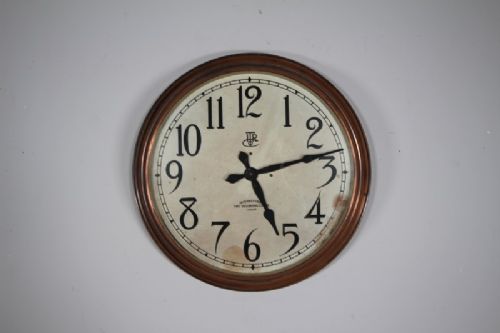
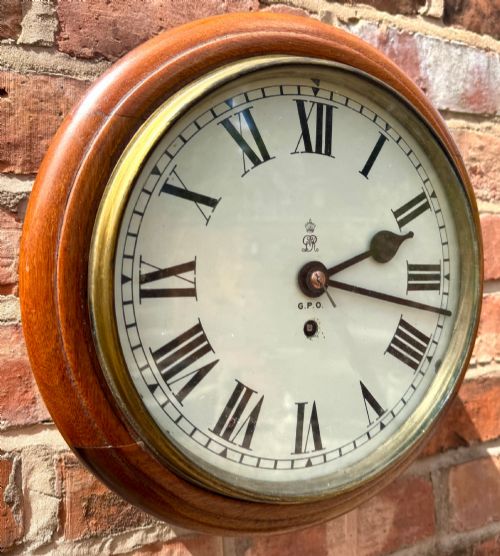
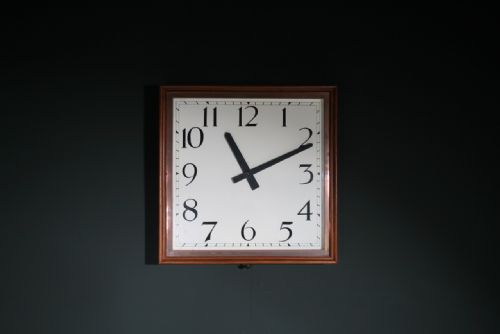
When you search for a vintage office wall clock, you encounter heavy timber dials, brass bezels, and station timepieces that once regulated British commercial and municipal life. These pieces trace a line from Victorian and Edwardian railway offices through to mid-century utilitarian spaces.
The most common examples you meet on this page are mahogany and oak fusee dial clocks from the nineteenth and early twentieth centuries, alongside 1930s octagonal models and mid-century Post Office timepieces. They span eras from the Victorian period up to the 1950s, capturing shifts in British workplace interiors.
Whether housed in a deep mahogany case or a green metal surround, a vintage office wall clock serves as both a practical timekeeper and a focal point. Their robust construction reflects an era when public and commercial buildings demanded clarity and durability from every fixture.
How They Were Made
Cabinetmakers constructed the surrounds of these timepieces using dense hardwoods like mahogany, walnut, and oak, often turning deep rims designed to protect the glass and dial. Metal cases in iron, copper, and brass appeared increasingly by the 1930s for industrial and municipal settings.
Mechanisms relied on chain fusee movements and standard dial trains to ensure precise timekeeping over long operational periods. Glass fronts guarded painted or printed paper and metal faces, while brass bezels provided a secure, hinged enclosure for daily winding and adjustment.
Vintage Office Wall Clock Retail Price Guide 2026
Typical asking prices for vintage office wall clock among the pieces listed under this phrase on Sellingantiques today, from the lower quarter to the upper quarter. They describe what is for sale here now, not the wider market.
Listings feature woods such as mahogany, oak, and walnut alongside metals including brass, copper, iron, and glass.
What Varies in Quality
The distinction between standard commercial timepieces and finer examples lies in the integrity of the movement and the crispness of the case timber. High-grade fusee movements exhibit meticulous hand-finishing on the brass plates and gears, whereas utilitarian office clocks prioritize straightforward reliability.
Case construction also dictates overall quality, with well-figured mahogany and solid oak housings retaining their structural tightness far better than softer woods. Original brass numbering, stamped case markings, and uncompromised glass bezels elevate the character of a piece significantly.
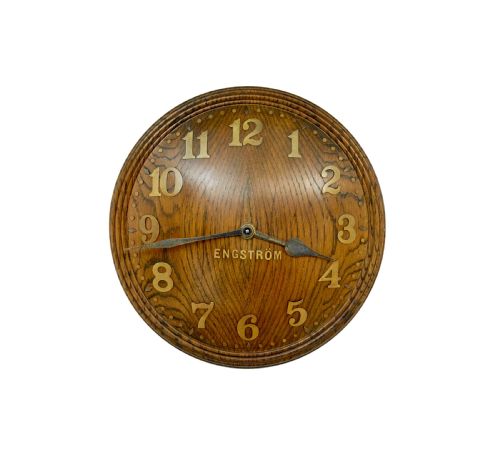
John Walker·Engström by Zenith·J C Ralls Clevedon
The Vintage Office Wall Clock Glossary
- Fusee
- A conical pulley used in clock movements to equalize the declining power of the mainspring as it unwinds. This mechanism ensures consistent torque and more accurate timekeeping throughout the winding cycle.
- Dial
- The face of the clock where the hours and minutes are displayed. On office and station models, these are typically painted or papered iron plates.
- Bezel
- The metal ring, often hinged and glazed, that holds the protective glass in front of the clock face. Brass is the material most commonly encountered on British wall clocks.
- Dropdial
- A clock case featuring a rounded dial at the top above an extended vertical trunk box below. This distinct shape allowed room for a longer pendulum or weight drop.
- School clock
- A common descriptor for a straightforward wall timepiece utilised in classrooms and public offices. They generally feature clear Arabic or Roman numerals for readability from a distance.
Vintage Office Wall Clock: Frequently Asked Questions
How do I wind a fusee wall clock?
You use a matching winding key inserted into the dial aperture, turning it gently clockwise until resistance indicates the mainspring is fully tensioned.
Take care not to overwind the movement, as this can strain the chain and internal components over time.
Where were these clocks originally used?
These timepieces hung in British railway stations, post offices, municipal offices, and schoolrooms where precise timekeeping was essential for daily operations.
Government departments and local councils also commissioned them for administrative halls and staff rooms.
How do I date a wooden wall clock?
You examine the timber species, case construction methods, and the style of the painted dial numerals to determine the likely era of manufacture.
Makers' marks stamped into the wooden case or engraved on the movement backplate often provide definitive chronological clues.
Can I hang these clocks on any wall?
You must secure them directly into solid masonry or substantial wooden wall studs using appropriate fixings due to the considerable weight of the hardwood cases and movements.
Hanging them level ensures the pendulum swings evenly and the mechanism maintains accurate time.