
Vintage Office Chest
A vintage office chest brings sturdy utility and traditional craftsmanship straight into a workspace, offering reliable storage built to last.
Vintage Office Chest
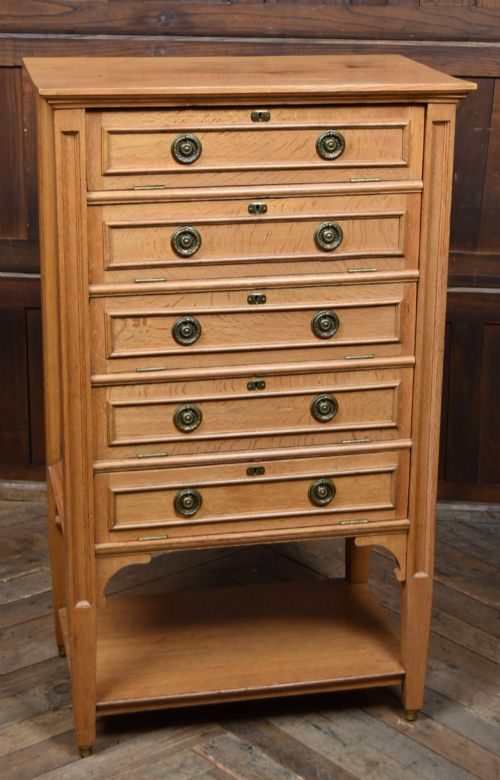
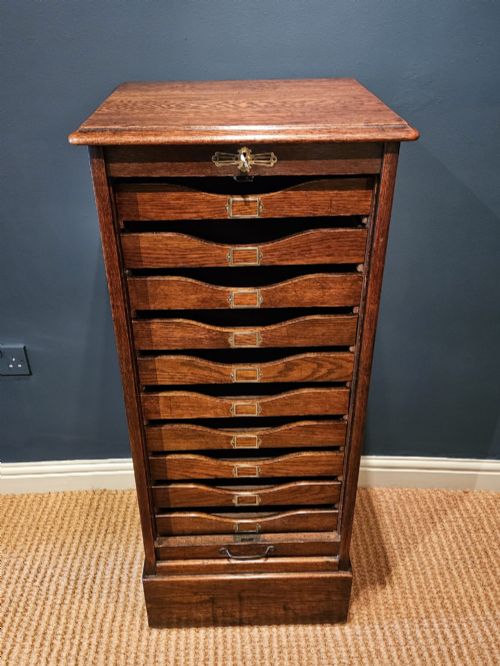
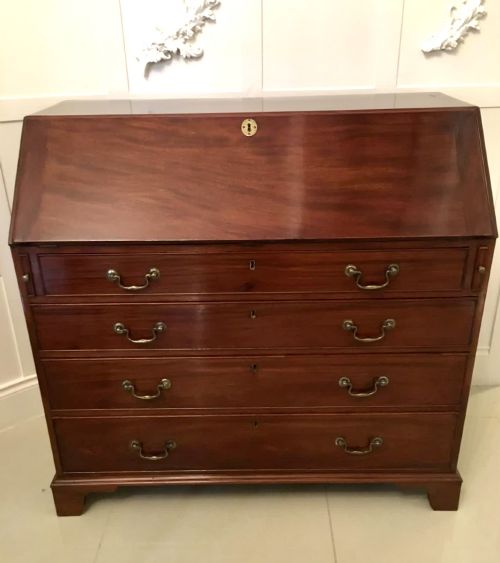
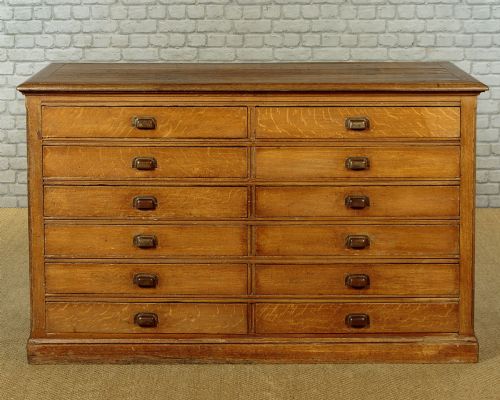
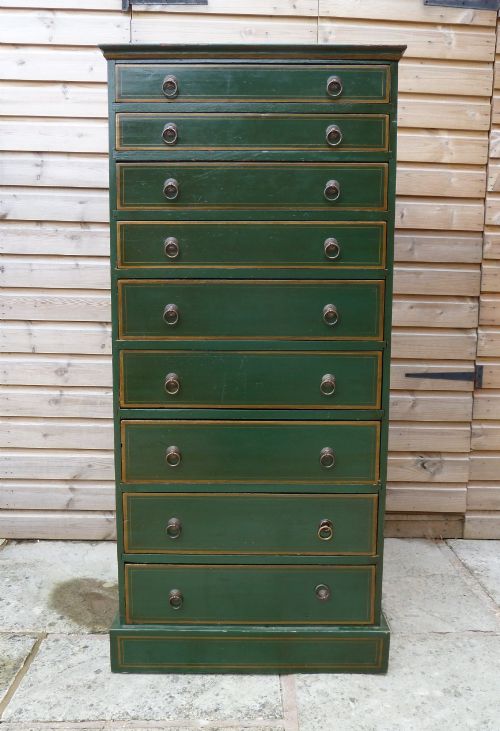
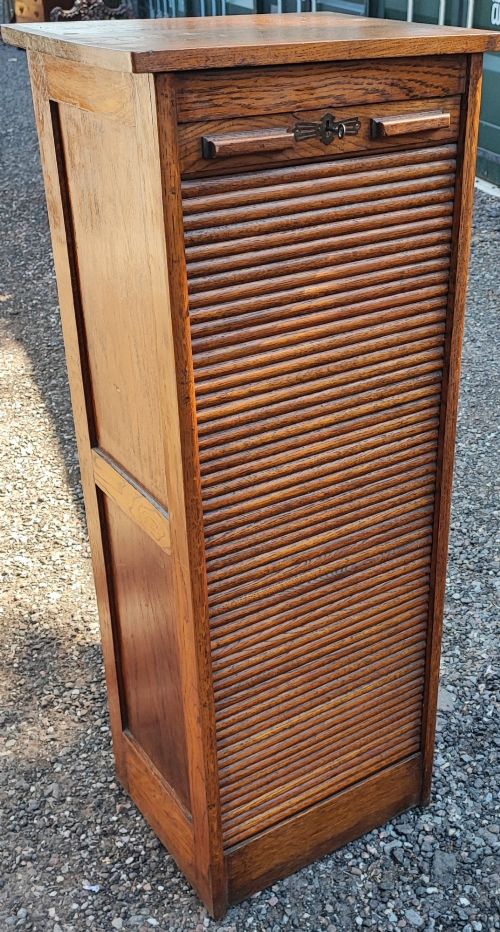
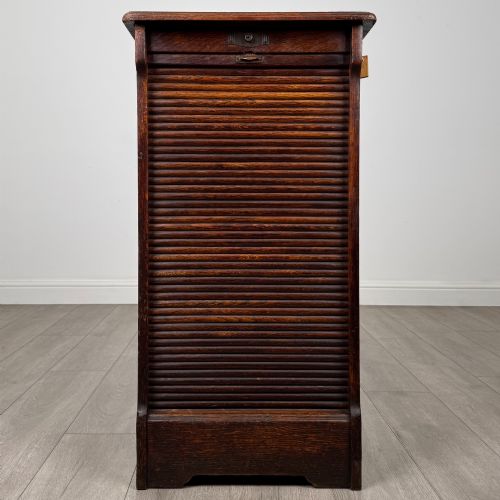
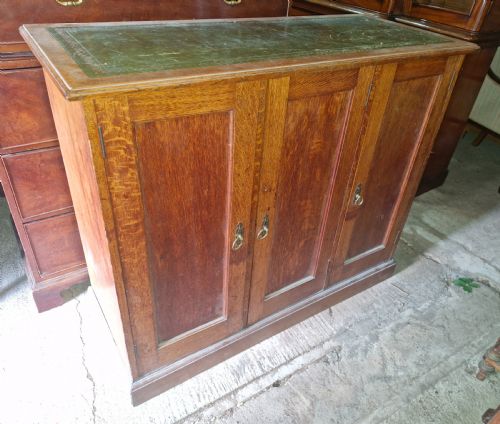
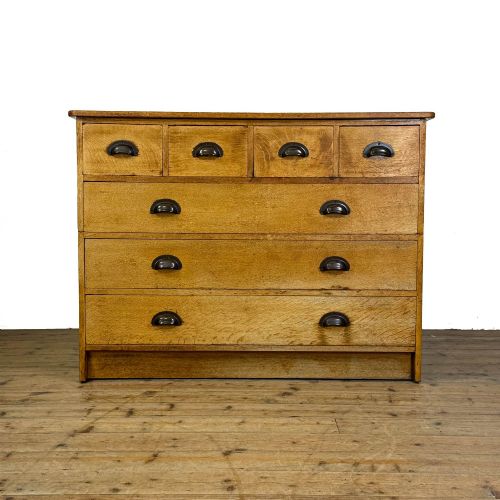
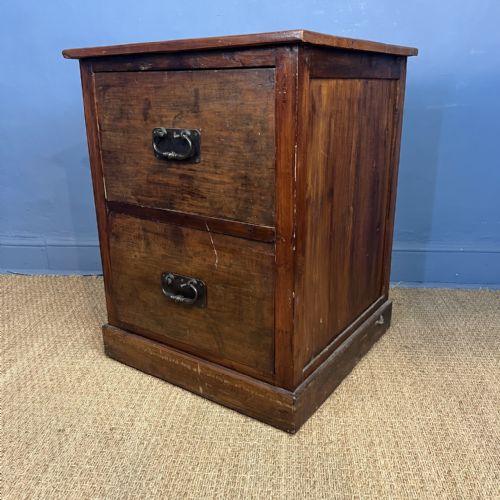
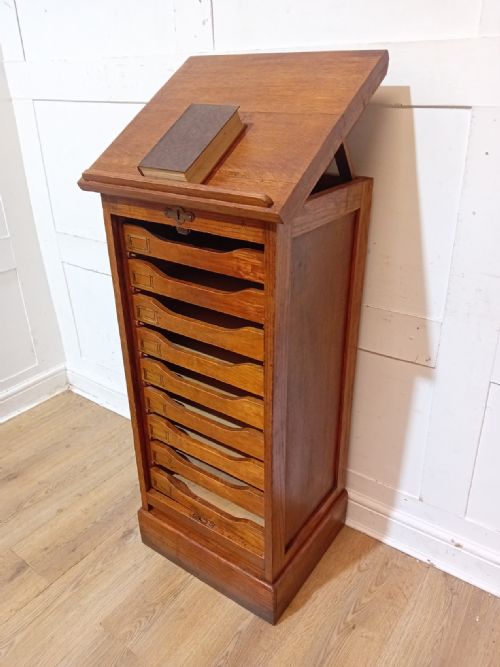
A vintage office chest encompasses utilitarian storage solutions designed for paperwork, books, and daily administration, drawing on forms from the Georgian period through to the mid-century. Buyers searching for a vintage office chest will most frequently encounter sturdy oak and mahogany filing cabinets, banks of drawers, and tambour-front cabinets originating from the Edwardian era and the early twentieth century.
Materials and Construction
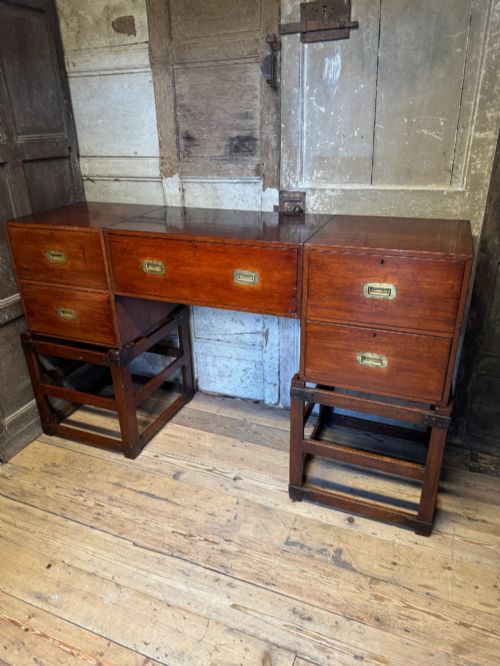
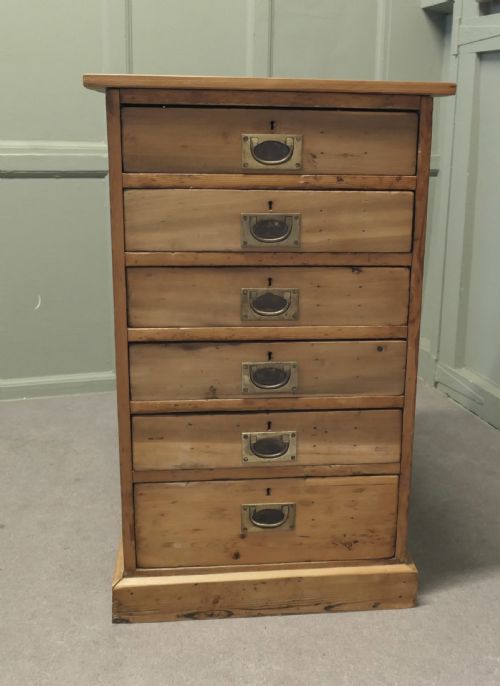
Makers relied heavily on solid hardwoods like oak, mahogany, and walnut, alongside resilient pine for secondary timbers and internal framing. Brass fittings, including drop handles, label holders, and campaign mounts, provide durable operational hardware that withstands daily use.
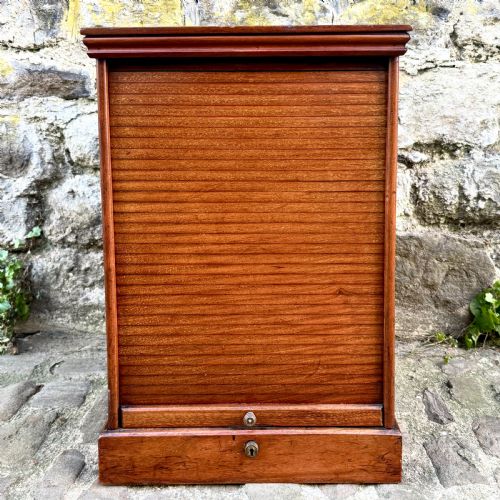
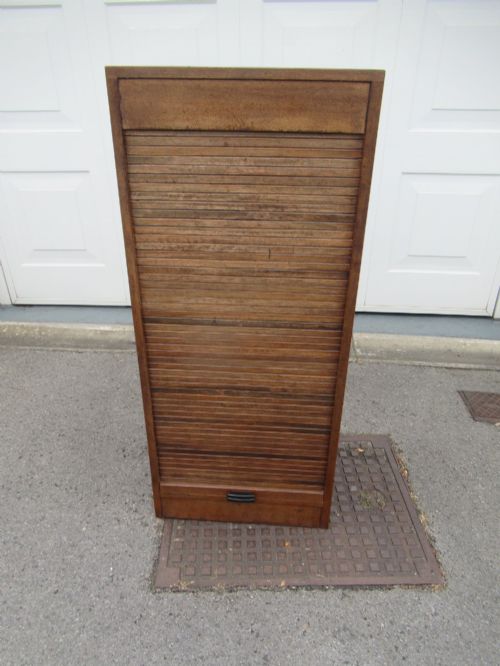
Joinery techniques focus on structural integrity, utilising dovetailed drawer construction to handle heavy loads of documents. Tambour doors employ fine wooden slats on flexible backings to glide smoothly around curved tracks, concealing specialised filing compartments.
Original brass label holders still contain faded handwritten filing tags left by clerks a century ago.
Assessing the Standard
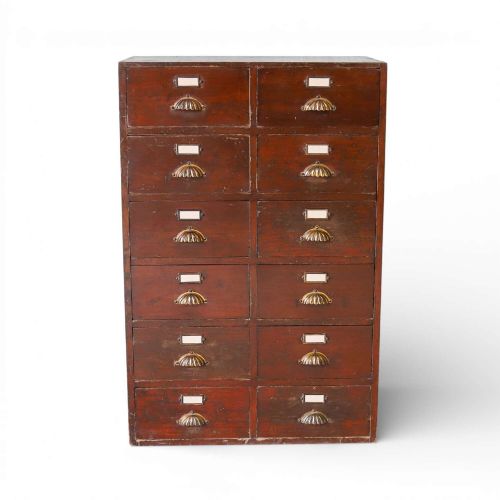
The division between standard workshop utility pieces and finer examples rests on the selection of timber, such as flame mahogany or figured walnut, and the sophistication of the mechanism. Superior pieces incorporate original hardware like brass shell pulls and functioning patent locking systems that secure every drawer simultaneously.
Refinement in secondary details also dictates distinction, seen in panelled backs, precise dovetailing, and intact tambour tracks that operate without binding. Pieces retain greater appeal when they preserve their original patination and uncompromised structural surfaces.
The Vintage Office Chest Glossary
- Tambour
- A flexible shutter door formed of narrow strips of wood glued to canvas, allowing it to slide around a curved corner to enclose a cabinet. This ingenious mechanism saved workspace in busy Edwardian offices.
- Bank of drawers
- A chest containing numerous shallow drawers stacked vertically or horizontally, originally utilised for filing letters, documents, or maps. They are prized today for systematic organisation.
- Campaign furniture
- Portable furnishings constructed in sections with brass corners and recessed handles for easy transport by military officers on active service. Teak and mahogany were standard choices for their durability.
- Bureau
- A sloping desk with a hinged flap that opens to reveal a writing surface and small interior compartments above a set of drawers. Georgian and Edwardian examples often combined writing facilities with domestic storage.
- Cartonniere
- A freestanding cabinet fitted with pigeonholes or vertical compartments for sorting papers and folios, frequently finished in leather and walnut. French examples introduced refined decorative elements to administrative spaces.
Vintage Office Chest: Frequently Asked Questions
How do I maintain the tambour doors?
Keep the wooden tracks clean and free from dust by running a soft brush gently along the grooves. Apply a tiny amount of bees wax to the slats if movement becomes stiff over time.
Avoid using liquid oils or silicone sprays, which attract dirt and can damage the fabric backing holding the wooden strips together.
How do I care for the leather writing surfaces?
Dust the leather regularly with a dry, soft cloth to prevent grit from wearing away the surface. Treat the hide periodically with a neutral leather cream to maintain flexibility and colour depth.
Keep these pieces away from direct sunlight and strong heat sources to prevent the leather from drying out and cracking.
What is the best way to clean antique brass hardware?
Remove surface dust with a soft cloth before attempting any cleaning on handles, label holders, or campaign mounts. Gentle wiping preserves the natural patination that develops over decades of handling.
Avoid harsh chemical metal polishes that strip away the aged character and risk staining the surrounding wood.