

Wooden File Storage
Solid wooden file storage keeps papers organised with period character, offering durable craftsmanship in oak, mahogany and pine.
Wooden File Storage
Wooden file storage encompasses practical office furniture and specialist cabinetry designed to organise papers and documents. When exploring wooden file storage, you encounter filing cabinets, banks of drawers, tambour front units and plan chests originating from the Victorian era through to the mid-twentieth century.
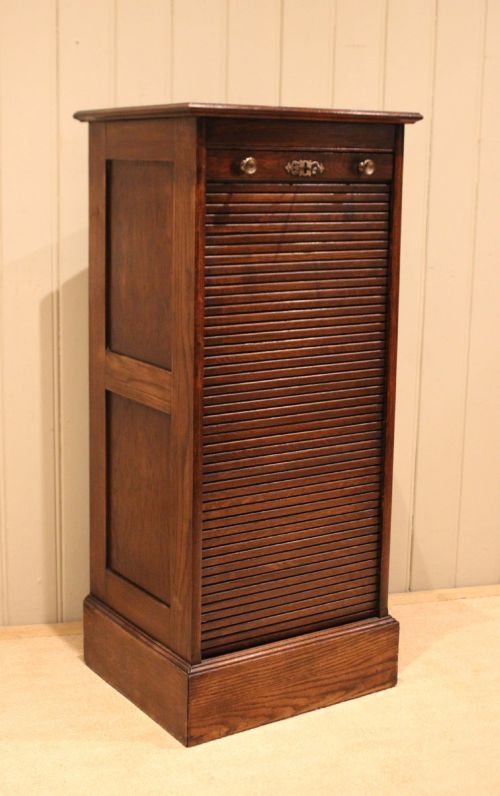
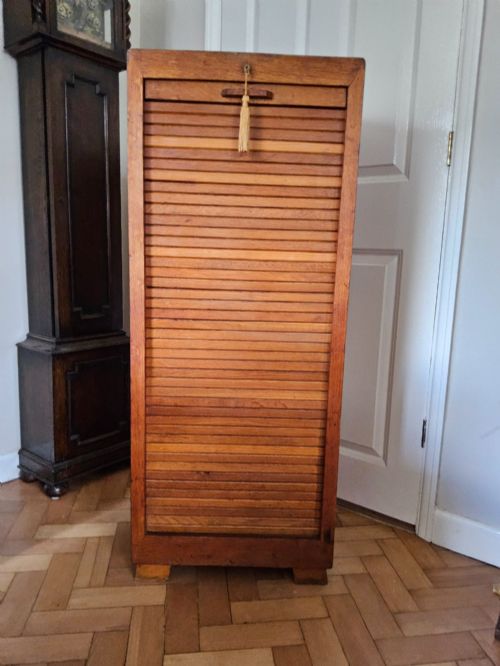
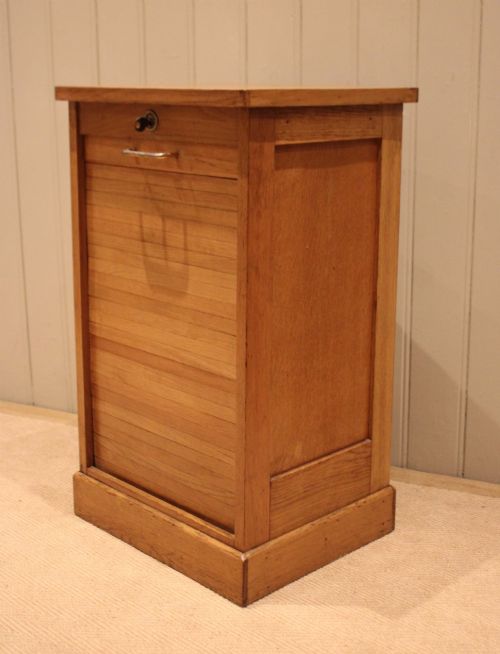
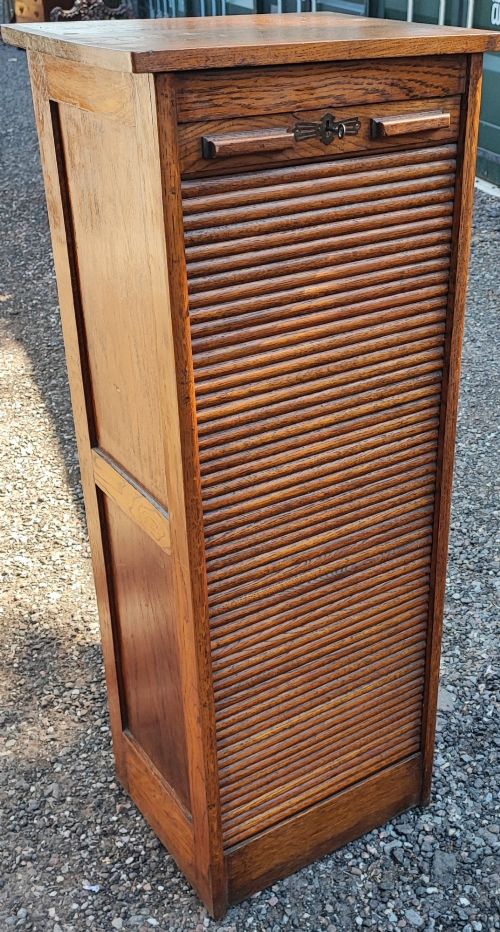
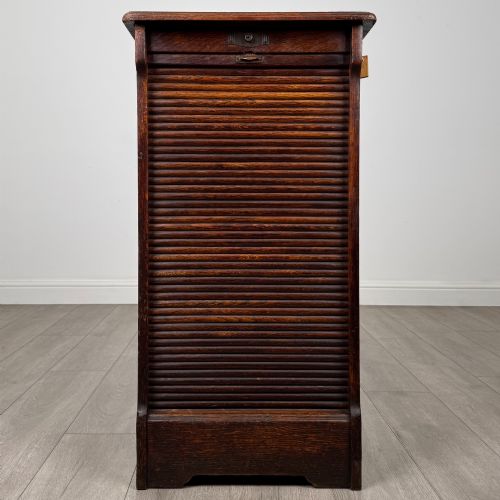
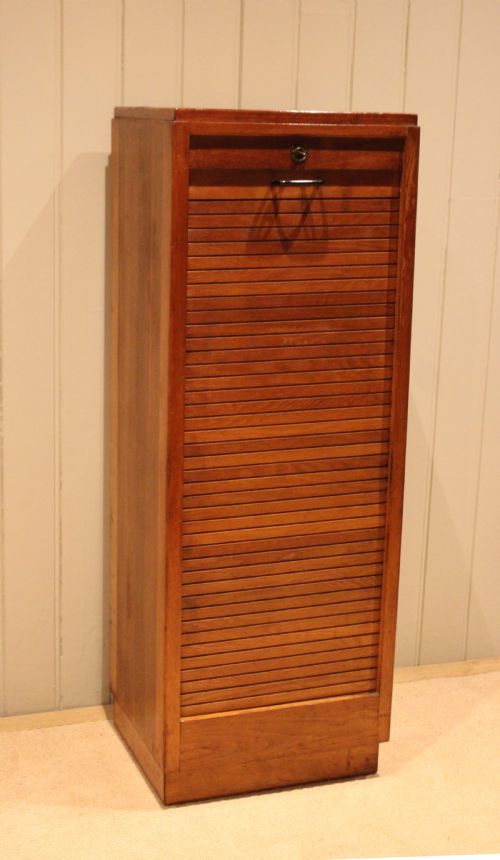
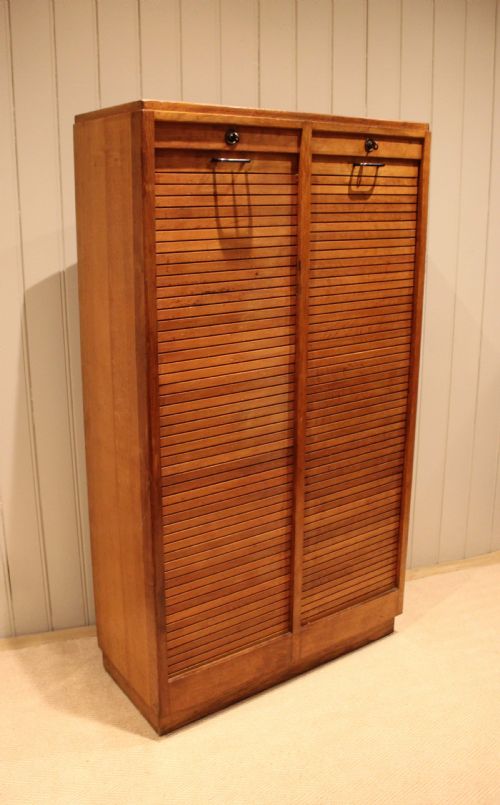
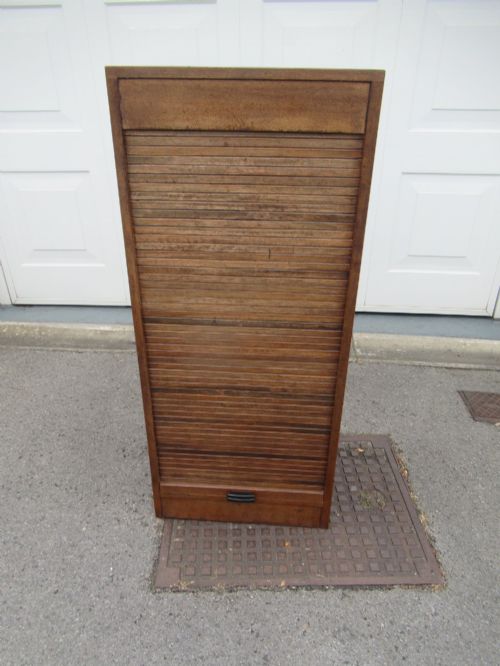
The most common examples on this page are Edwardian and early twentieth-century oak filing cabinets featuring tambour doors. These pieces reflect the functional demands of twentieth-century offices while retaining traditional cabinet-making methods.
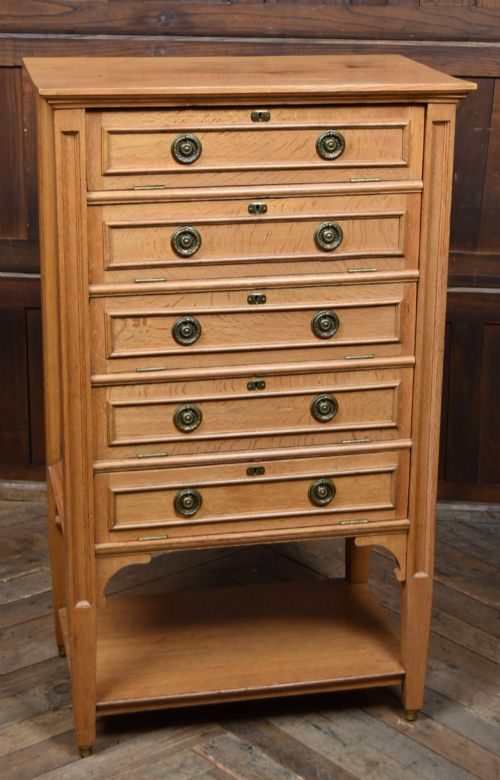
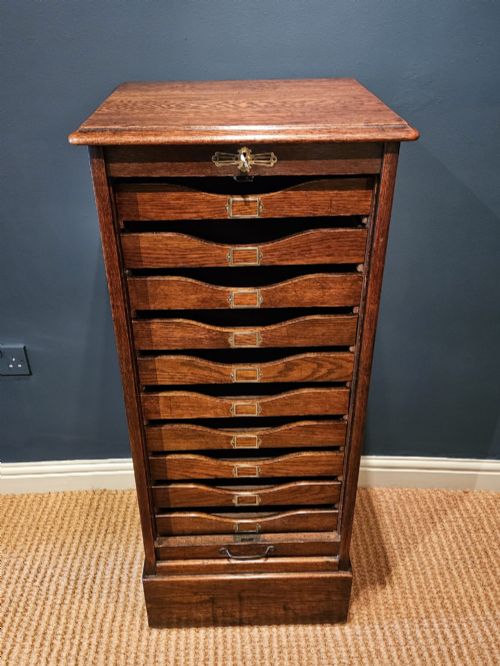
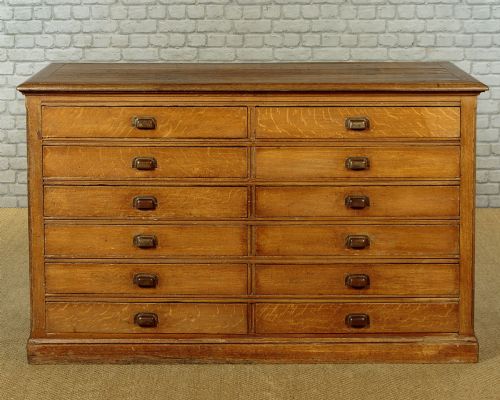
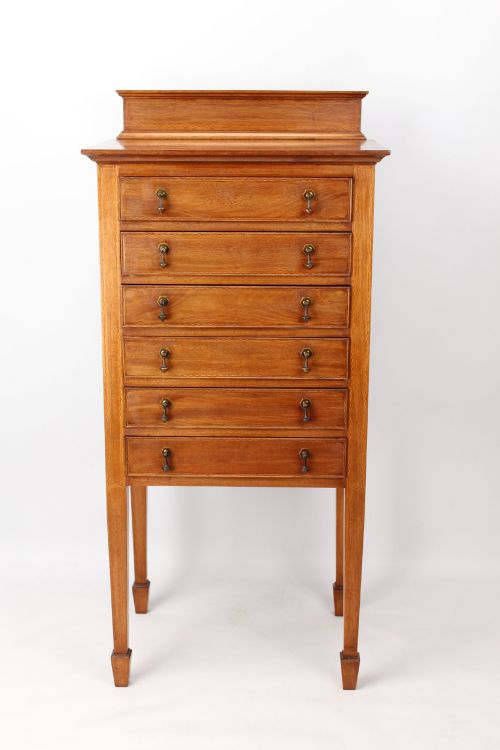
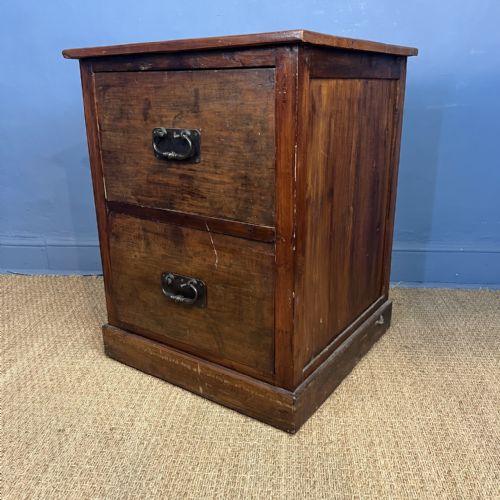
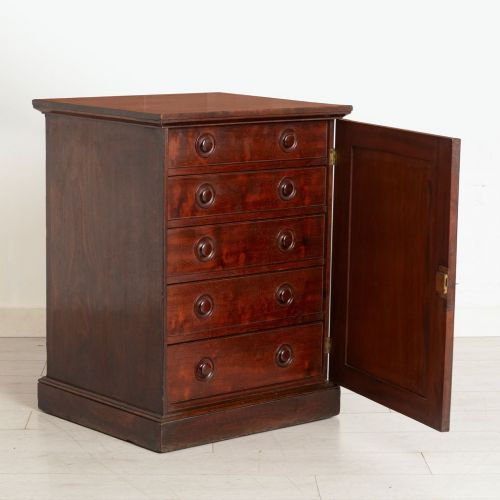
Other forms include music cabinets, multi-drawer workshop units, and patent letter files in mahogany, teak and pine. Each type served a specific commercial or domestic archiving purpose, from sheet music to business correspondence.
How they were made
Makers utilised dense timbers such as oak, mahogany, teak and pine to construct robust carcases capable of withstanding heavy daily office use. Solid timber construction often combined panelled sides with dovetailed drawer joints to ensure long-term structural stability.
Hardware played an essential role in construction, with brass handles, cardholders and patent locking mechanisms fitted to secure contents. Tambour doors required precise individual slats of wood fixed to flexible backing canvases to glide smoothly around curved tracks.
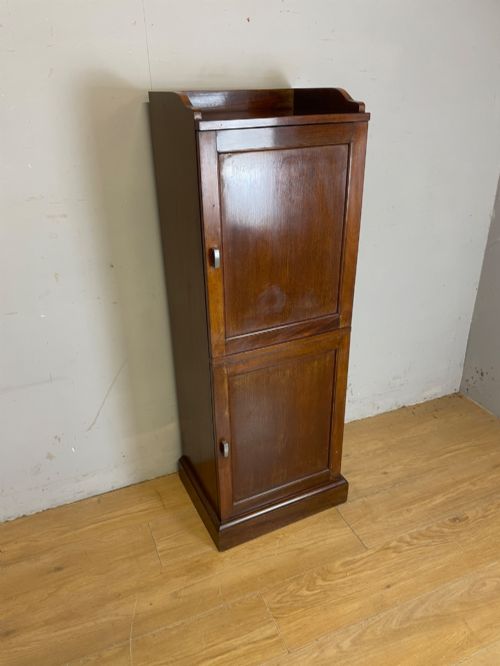
Listings feature oak, mahogany, pine and teak cabinets spanning from the Victorian era to the nineteen-forties.
What varies in quality
Quality in these pieces rests upon timber selection and the complexity of the mechanism, distinguishing standard utility office furniture from finer cabinet-making. Superior examples utilise quarter-sawn oak with prominent medullary rays or finely figured mahogany, paired with smooth-running tambour shutters.
The sophistication of the internal mechanism also sets pieces apart, particularly patent filing systems and multi-drawer banks with original brass hardware. Solid timber backs and hand-cut dovetails indicate higher standards of construction than later utilitarian replacements.
D Napier and Sons
The Wooden File Storage Glossary
- Tambour
- A flexible shutter door formed of narrow wooden slats attached to canvas, allowing it to slide smoothly around a curved track to conceal filing compartments.
- Tambour Front
- A sliding door system commonly found on office cabinets that retracts into the sides of the furniture when opened.
- Plan Chest
- A wide, shallow multi-drawer cabinet originally designed for storing architectural plans, maps and large format artwork.
- Bank of Drawers
- A multi-drawer cabinetry unit designed for heavy sorting tasks in workshops, post offices and administrative settings.
- Quarter-Sawn
- A method of timber cutting that produces boards with straight grain patterns and decorative figuring, commonly seen in quality oak furniture.
Wooden File Storage: Frequently Asked Questions
How do tambour doors work?
Tambour doors operate through narrow slats of wood glued to a flexible canvas backing, enabling the shutter to curve around internal tracks.
This clever mechanism allows the door to slide away completely inside the cabinet carcase, saving workspace in busy offices.
What periods do these cabinets date from?
The pieces span from the nineteenth century through the Edwardian period and into the mid-twentieth century.
Most examples originate from the early decades of the nineteen hundreds when specialised office furniture production expanded rapidly.
Are these cabinets suitable for modern paper sizes?
Many vintage filing cabinets and drawers were built for historical document formats rather than modern international paper sizes.
Certain specialist multi-drawer units and collectors cabinets accommodate contemporary paper formats, while others suit smaller stationery and desk accessories.
What timbers were commonly used?
Makers relied predominantly on durable hardwoods such as oak and mahogany for commercial office furniture.
Pine, teak and walnut also appear across various pieces, offering different tonal qualities and grain structures according to the style and origin.