
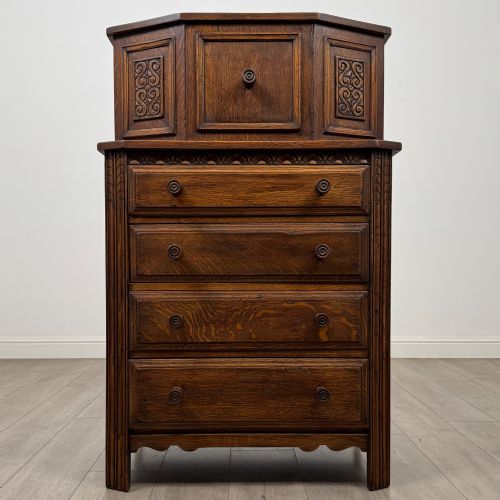
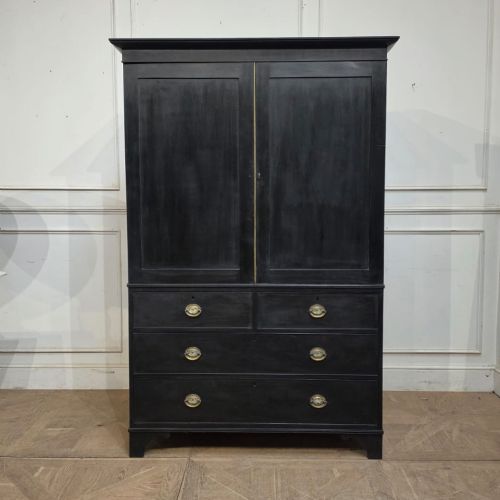
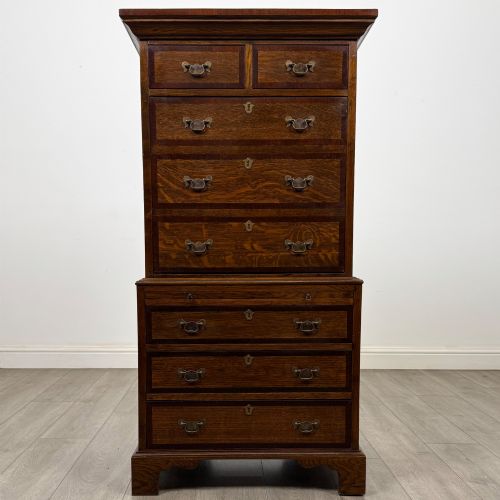
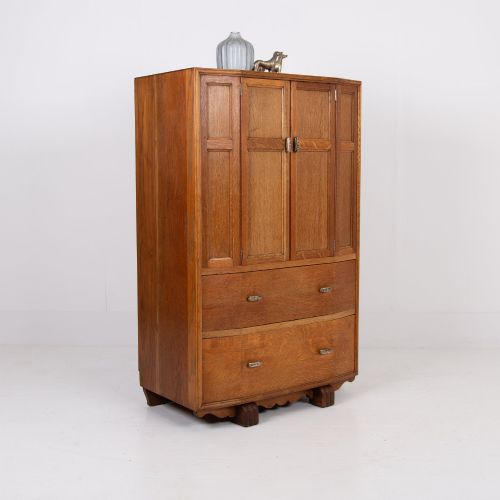


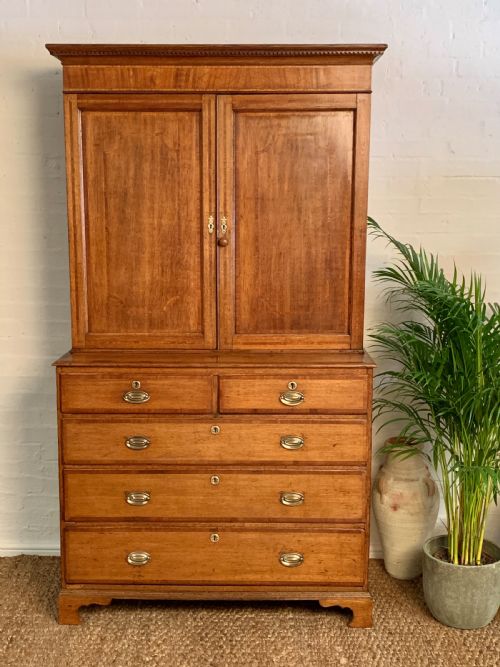


Vintage Oak Tallboy Cupboard
These vintage oak tallboy cupboard pieces bring practical height and honest grain to a room, offering tall storage built to last.
Vintage Oak Tallboy Cupboard
A vintage oak tallboy cupboard combines vertical storage with traditional cabinetmaking, appearing across several eras on this page. Pieces range from Georgian and 18th-century designs to Edwardian, 1930, and Art Deco interpretations, often taking the form of linen presses, armoires, and tall cabinets.
The selection includes regional pieces such as Welsh oak secretaire press cupboards and French provincial armoires alongside standard English examples. Buyers encounter everything from narrow chests and filing cabinets to large two-stage cross-banded cupboards in solid oak.
Variations in form are common, with single-door formats, dressing chests, and safe cabinets sitting alongside traditional tallboys and linen cupboards. Oak remains the defining material, occasionally augmented by ebonised finishes or burr walnut details.
How they were made
Makers relied on solid oak timbers, chosen for durability and distinctive grain patterns, sometimes paired with ebonised treatments for contrast. Construction methods include traditional joinery techniques suited to large case furniture, supporting heavy two-stage configurations and deep linen presses.
Hardware consists principally of brass and iron handles, hinges, and lock escutplements that anchor the heavy timber doors and drawers. Occasional glass panels or specialised internal fittings like secretaire drawers complete the functional architecture of these taller cupboards.
Materials across the inventory extend beyond plain oak to include brass, iron, ebonised oak, glass, and burr walnut details.
What varies in quality
The calibre of a piece rests on the selection of timber, the crispness of any cross-banding, and the integrity of the original hardware. Finer examples show thoughtful proportion and deliberate grain matching across tall cabinet doors and multiple drawers.
Structural refinement distinguishes standard utility pieces from exceptional vernacular or revival work. Clean integration of internal drawers, smooth movement in sliding or hinged elements, and well-preserved period brass set the higher tier apart.
Whytock and Reid of Edinburgh
The Vintage Oak Tallboy Cupboard Glossary
- Tallboy
- A tall chest of drawers standing upon another chest or a leg stand, though the term often applies broadly to high storage cupboards.
- Linen Press
- A tall wardrobe or cupboard originally designed to store folded linen, typically featuring sliding trays or deep shelving behind doors.
- Cross-banded
- A decorative border technique where strips of veneer are applied so the grain runs perpendicular to the surrounding wood.
- Secretaire
- A writing cabinet featuring a pull-down front desk drawer concealing smaller compartments and pigeonholes.
- Ebonised
- Timber treated with a dark stain or finish to simulate the appearance of dense, black ebony.
Vintage Oak Tallboy Cupboard: Frequently Asked Questions
How do I use a tallboy cupboard?
These tall cupboards provide vertical storage solutions for rooms with limited floor space. They suit bedrooms, hallways, or living areas where you need to house folded garments, linens, or general household items behind closed doors.
The height allows you to maximise storage volume without crowding the room footprint. Internal shelving or hanging spaces help organise different categories of belongings efficiently.
How do I tell periods apart?
Dating relies on observing construction details, timber preparation, and prevailing stylistic traits. Earlier Georgian and 18th-century pieces often feature cross-banding, fielded panels, and substantial proportions, while Edwardian and 1930s examples lean towards cleaner lines or Art Deco influences.
Hardware styles, foot designs, and interior configurations also shift across the centuries. Examining the joinery and finish helps distinguish traditional vernacular work from later revival interpretations.
Are these cupboards solid oak?
The primary material across the selection is oak, utilised in both solid plank form and occasionally with complementary secondary timbers. Some pieces incorporate ebonised finishes or contrasting veneers like burr walnut.
Hardware elements integrate brass and iron to secure doors and operate drawers. Each piece reflects the structural priorities of its specific period of origin.
How do I care for vintage oak?
Maintaining these pieces requires stable indoor humidity and temperature to protect the oak from warping or splitting. Regular dusting with a soft, dry cloth preserves the finish without building up residue.
Avoiding direct sunlight prevents the timber and any contrasting veneers from fading unevenly over time. Occasional gentle waxing helps nourish older wood surfaces.