
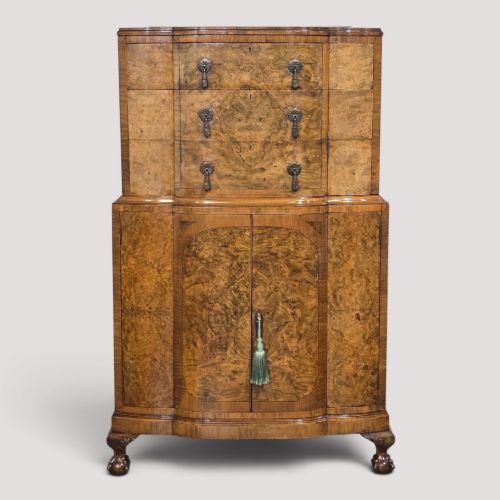
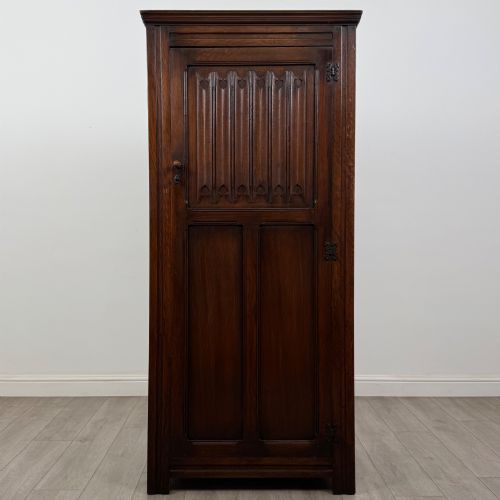
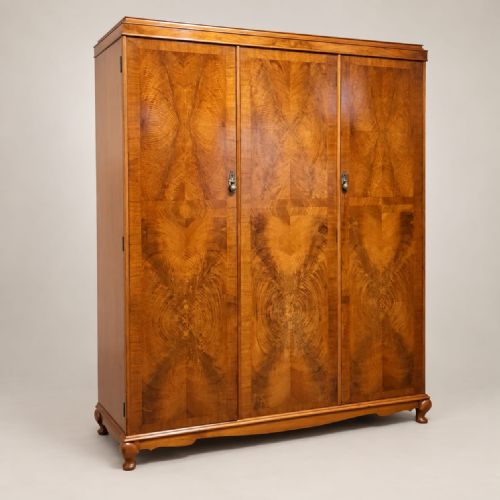
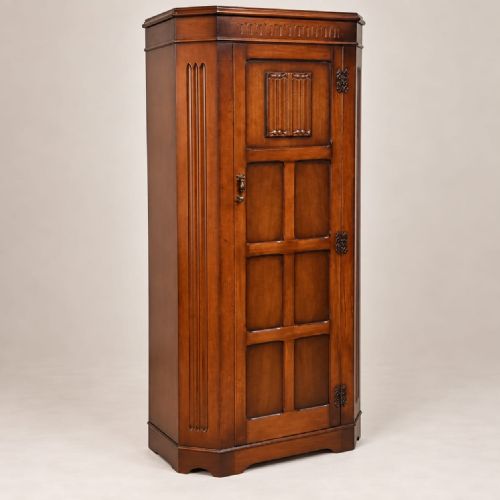
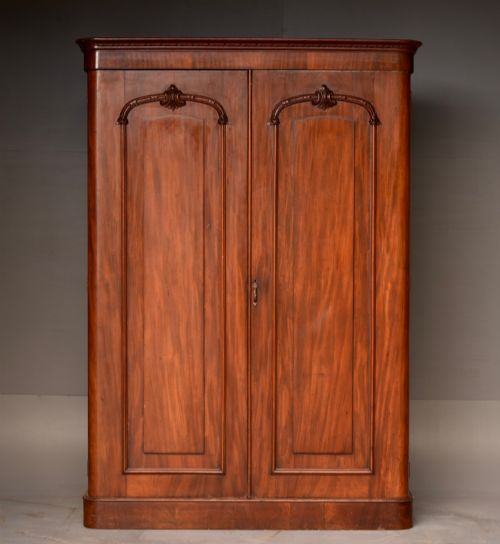
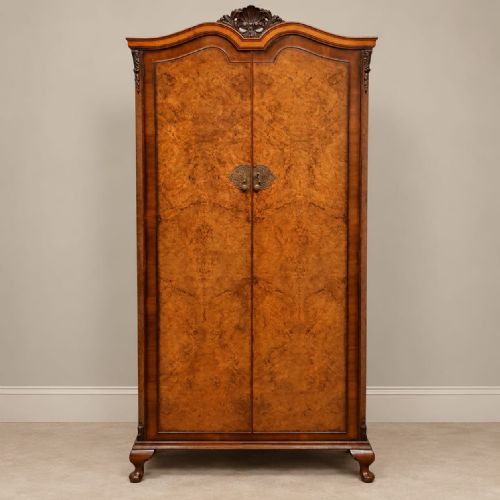
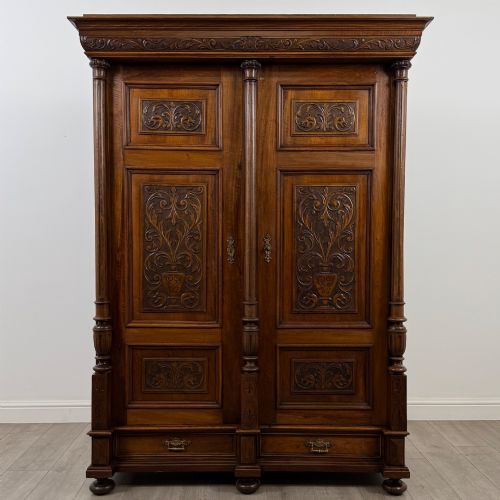
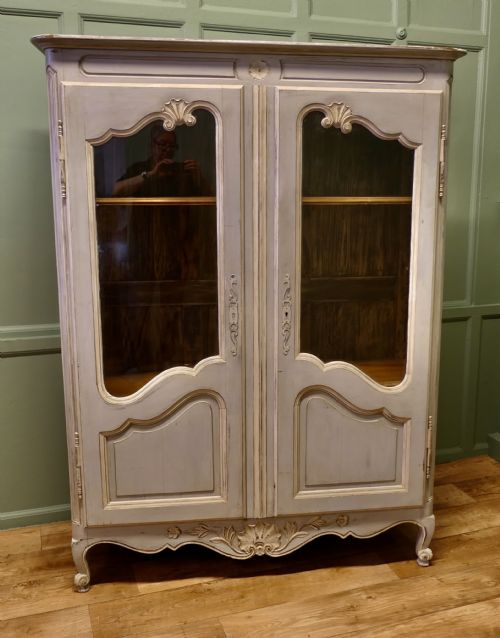
Armoire with Carved Doors
An armoire with carved doors is a substantial storage piece, offering deep timber construction and ornate surface work that anchors a bedroom.
Armoire with Carved Doors
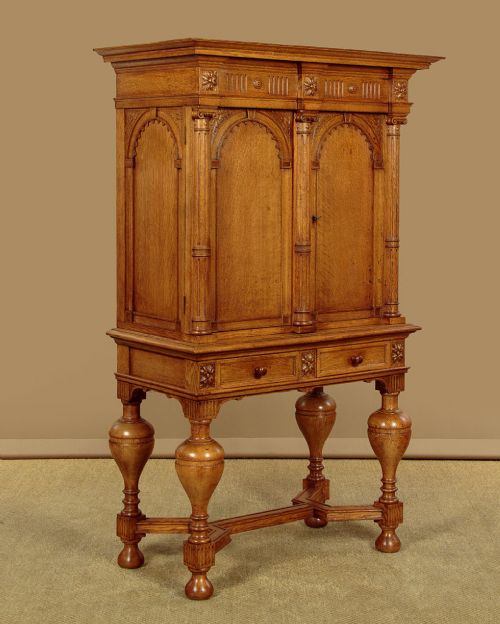
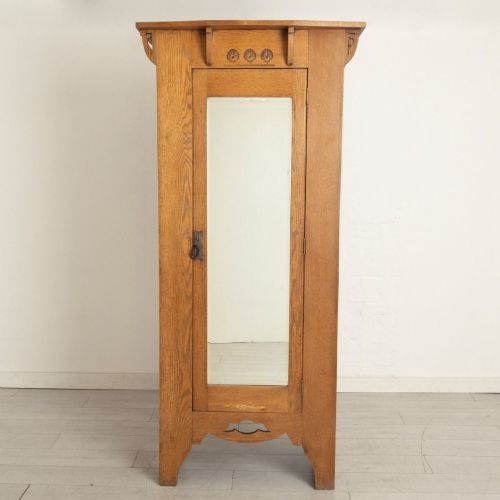
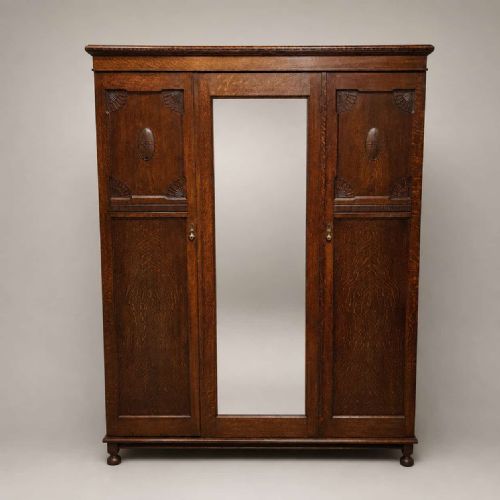
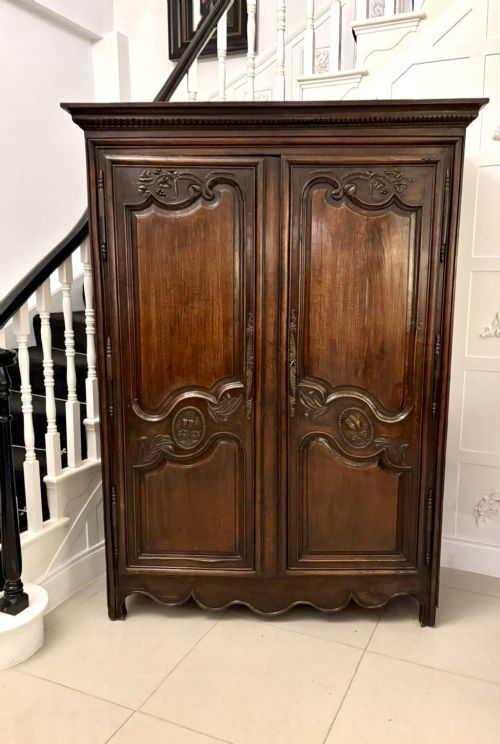
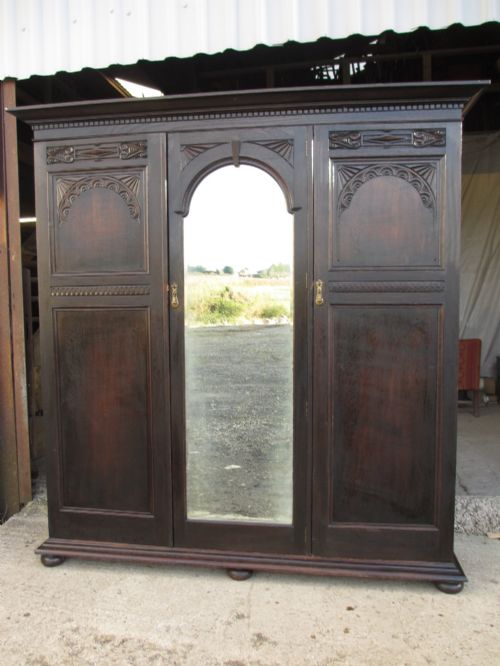
When you search for an armoire with carved doors, you are looking at large storage furniture built to hold garments, linen or household goods behind decorative wooden panels. The pieces you meet on this page span several decades, from Victorian and Edwardian examples to early twentieth century productions.
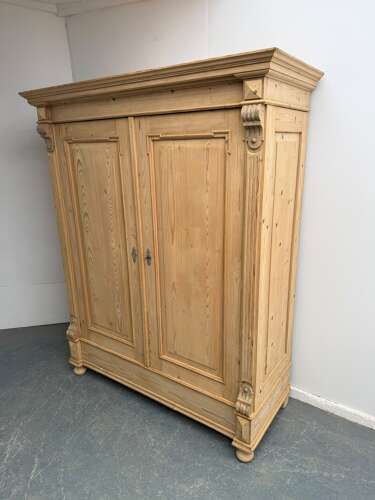
The forms vary from French armoires in oak or walnut to British compactum wardrobes, hall robes and linen presses. Oak and pine are common, alongside mahogany, satinwood and walnut, reflecting the domestic utility and decorative ambition of their periods.
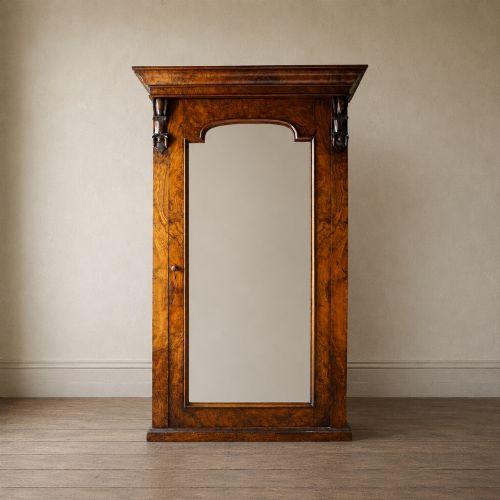
Stylistic influences range from French provincial and Dutch Renaissance revival to Arts and Crafts and Jacobean revival. You encounter both single door formats and triple door combinations, often fitted with mirrors or drawers alongside the main carved compartments.
How they were made
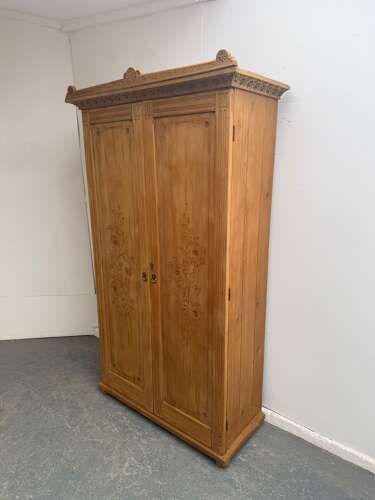
Cabinet makers constructed these wardrobes using solid timbers such as oak, mahogany, pine and walnut, sometimes pairing them with decorative veneers like satinwood and maple. Panels were frequently hand-carved with linen fold details, floral motifs or geometric patterns.
Many of the larger nineteenth century pine and oak examples utilised knockdown construction, allowing the heavy frames to be disassembled for transport and reassembled in position. Brass and iron hardware, including hinges, handles and locking mechanisms, secured the heavy timber doors.
Listings feature oak, pine, mahogany, satinwood, walnut, ash and brass across Victorian, Edwardian and early twentieth century periods.
What varies in quality
The distinction between standard utility storage and finer cabinet work lies in the selection of timber and the depth of the carving. Dense hardwoods like oak and figured mahogany, combined with crisp, well-executed chisel work on the doors, elevate a piece above simpler pine workshop output.
Construction methods also separate the grades, with dovetailed drawers, substantial panel framing and original brass or iron hardware indicating careful craftsmanship. Pieces that retain their fitted interior sliding trays, hanging rails or matching mirrors show a higher degree of original design integrity.
The Armoire with Carved Doors Glossary
- Compactum
- A multi-compartment wardrobe combining hanging space, drawers and shelving within a single cabinet. It offers versatile storage for various garments.
- Linen Press
- A tall piece of furniture traditionally used for storing folded linens, typically featuring upper doors enclosing sliding trays above lower drawers.
- Hall Robe
- A narrow wardrobe designed for hallways to store coats and hats, often scaled down in width compared to bedroom furniture.
- Linen Fold
- A carved wooden panel motif popular in revival styles that mimics folded fabric, adding texture to cupboard doors.
- Satinwood
- A lustrous, yellowish timber often used for fine veneers and inlay work on Edwardian and Victorian cabinetry.
Armoire with Carved Doors: Frequently Asked Questions
How do I fit a large armoire in a modern bedroom?
Many larger wardrobes from the nineteenth century feature knockdown construction, meaning they can be fully dismantled into sections for easy transport and assembly inside your room.
Measure your ceiling height and floor space carefully before purchasing, ensuring adequate clearance for doors to open fully.
What is the difference between an armoire and a wardrobe?
An armoire is traditionally a French standing cupboard with doors enclosing shelving or hanging space, whereas a wardrobe is a British term for similar tall clothing storage.
In modern usage, the terms overlap considerably, especially when describing pieces with decorative carved doors imported from continental Europe.
How do I care for antique carved wooden doors?
Dust the carved panels regularly with a soft cloth and apply a quality beeswax periodically to nourish the timber and maintain the lustre of the finish.
Keep wooden furniture away from direct heat sources and strong sunlight to prevent the timber from drying out or splitting over time.
Can I use a linen press as a wardrobe?
A linen press typically contains internal sliding trays rather than a deep hanging rail, making it ideal for folded garments, jumpers and bed linen.
Some collectors adapt the interior space by removing internal trays to install a hanging rail if full-length garment storage is required.