




Two Door Oak Armoire
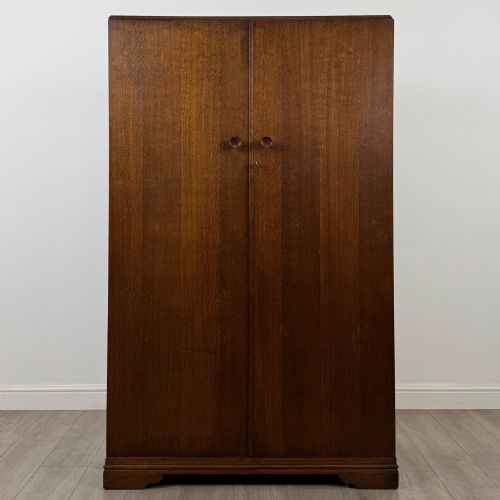
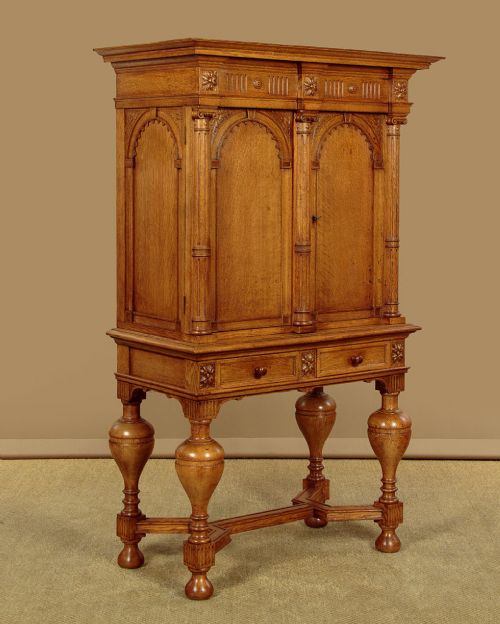
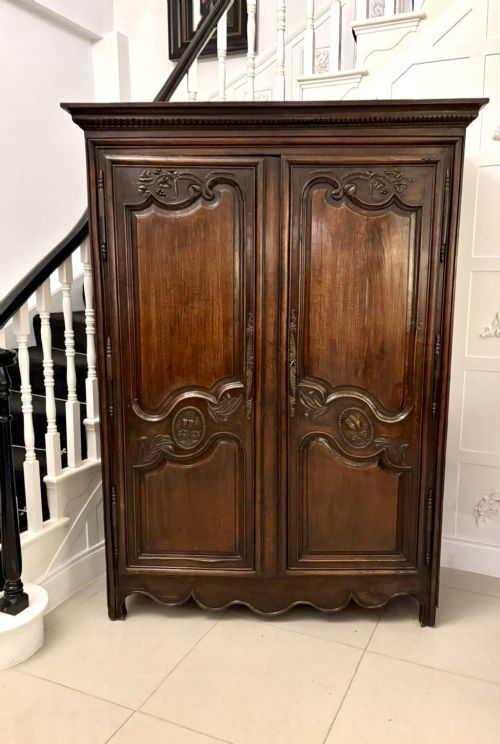
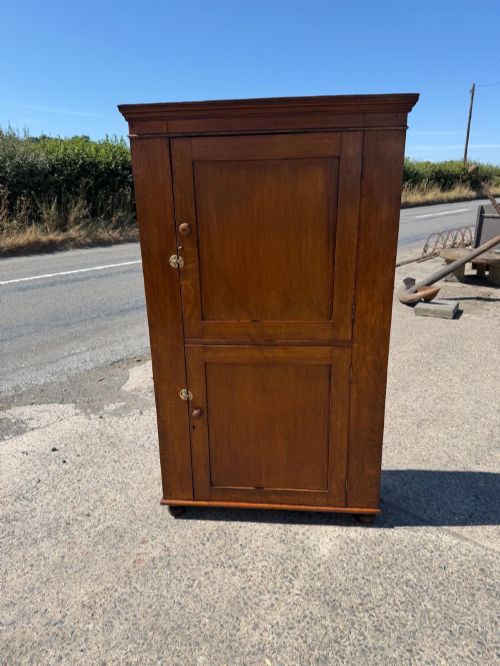
A two door oak armoire provides a commanding storage solution with a heavy timber presence that anchors a bedroom.
Two Door Oak Armoire
When you search for a two door oak armoire, you encounter substantial timber storage pieces originating across the seventeenth, eighteenth, nineteenth, and early twentieth centuries. These large items serve as wardrobes, linen presses, and hanging cupboards within domestic spaces.
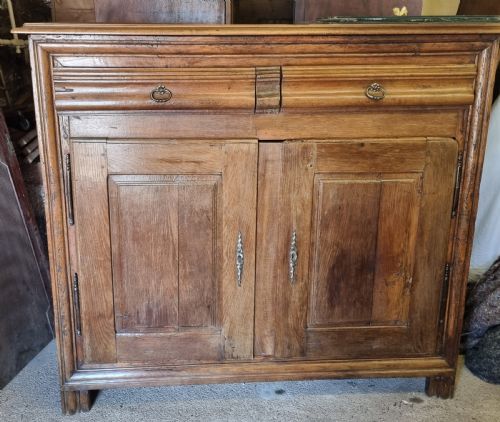
The pieces on this page span several distinct regional expressions, notably French provincial styles alongside English and Dutch examples. You will frequently find architectural forms featuring dual doors, panelled construction, and strong linear proportions.
Makers adapted these cabinets for domestic utility, resulting in variations from low armoires to tall double wardrobes and two-stage cupboards. Oak predominates as the primary structural timber, often complemented by secondary woods and period hardware.
Materials and construction methods
Carpenters constructed these cabinets primarily using solid oak, frequently selecting fruitwood or rosewood for contrasting details and inlay work. Timber boards were joined using traditional framing techniques to accommodate the natural movement of the wood over centuries.
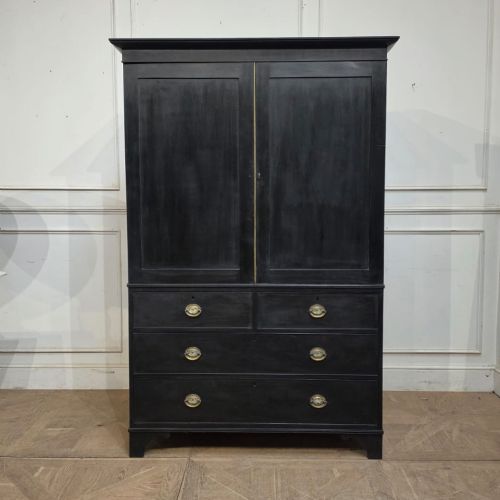
Iron, brass, and wrought steel appear as functional hardware, forming hinges, escutcheons, and locks that secure the large double doors. Ebonising treatments and bleaching methods were also applied to the timber surface to alter the visual tone of the cabinet.
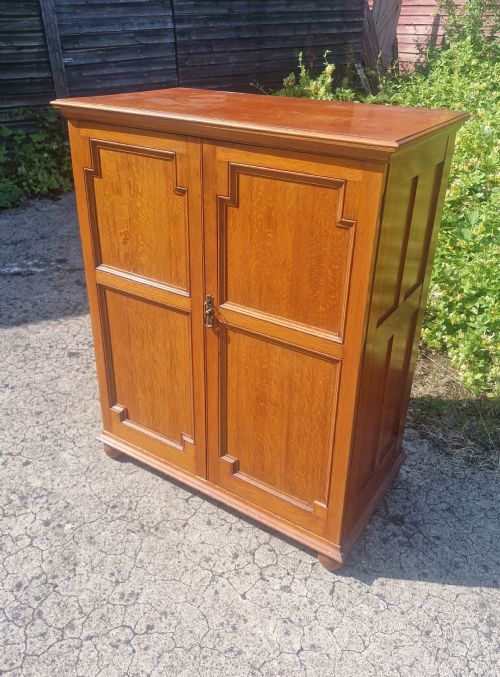
Listings on this page include styles from the Gothic Revival, Dutch Renaissance Revival, and French Provincial traditions.
Factors that distinguish quality
The standard of a two door oak armoire rests in the selection of the timber grain and the precision of the joinery used in the panelled doors. Cabinets featuring well-figured oak boards and integrated cross-banding demonstrate superior initial craftsmanship.
Proportion and architectural detail separate simpler utility cupboards from finer regional examples, such as French provincial armoires with carved mouldings. The retention of original brass and iron hardware also influences the integrity of the piece.
The Two Door Oak Armoire Glossary
- Armoire
- A large upright cupboard or wardrobe used primarily for hanging garments and storing textiles. These pieces typically feature two full-length doors enclosing deep storage space.
- Cross-banding
- A decorative border technique where thin strips of veneer are laid across the grain of the primary timber. This method creates a contrasting frame around drawer fronts or cupboard doors.
- Linen Press
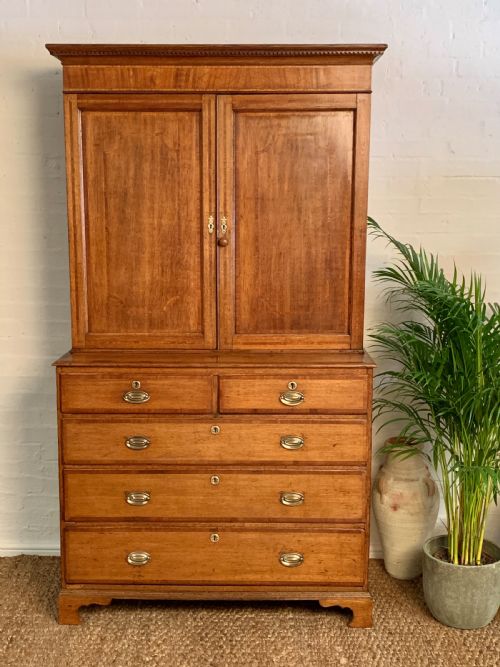
- A tall cabinet specifically designed for storing folded linen and bedding on internal sliding trays or shelves. The upper section usually houses the storage trays while the lower section contains drawers.
- Ebonised
- Timber treated with chemical solutions or dark finishes to resemble expensive ebony. This dark surface finish appears frequently on nineteenth-century Revival furniture.
- Bun Feet
- Low, rounded wooden feet shaped like flattened spheres that elevate the base of a cabinet off the floor. They support heavy case furniture from the Victorian period and earlier eras.
Two Door Oak Armoire: Frequently Asked Questions
How do I clean an oak armoire?
Dust the timber regularly with a dry, soft cloth to prevent particulate accumulation on the grain and carved mouldings.
Apply a microcrystalline wax periodically to nourish the oak surface without building up a heavy, obscuring residue.
Can I dismantle these large cupboards?
Many period armoires feature pegged frame construction that allows the side panels, cornices, and doors to be disassembled for transport.
Examine the internal joints carefully to determine if the piece was built as a modular knockdown structure or a permanent glued assembly.
Where should I place an armoire?
Position the cabinet against an interior wall away from direct sunlight and heating vents to protect the dry oak timber from splitting.
Ensure the floor is level so the heavy double doors hang evenly within their frames and latch correctly.
What is the difference between an armoire and a wardrobe?
An armoire traditionally denotes a European cupboard with movable internal shelving or mixed storage configurations used for various household goods.
A wardrobe specifically designates a piece configured primarily with hanging rails and hooks for garments.