






Vintage Oak Rocking Chair
A vintage oak rocking chair brings heavy timber framing and steady country rhythm into a modern room.
Vintage Oak Rocking Chair
A vintage oak rocking chair represents a sturdy branch of vernacular seating history, built for farmhouse kitchens and cottage parlours. These chairs combine solid oak frames with turned spindles, shaped wooden seats, and occasionally rush, cane, or leather pads.
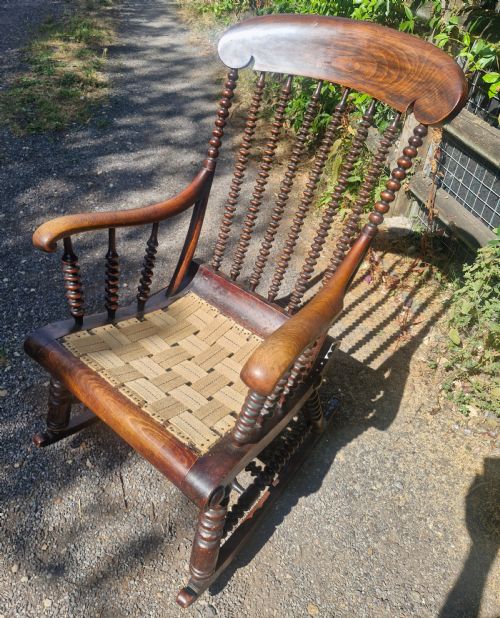
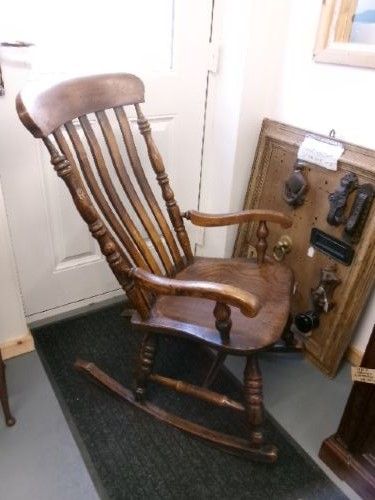
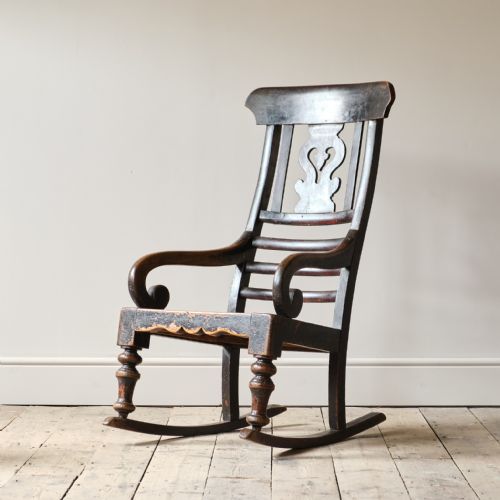
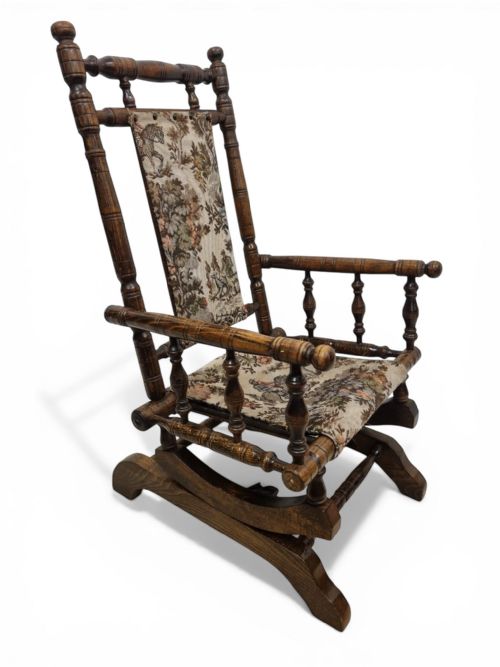
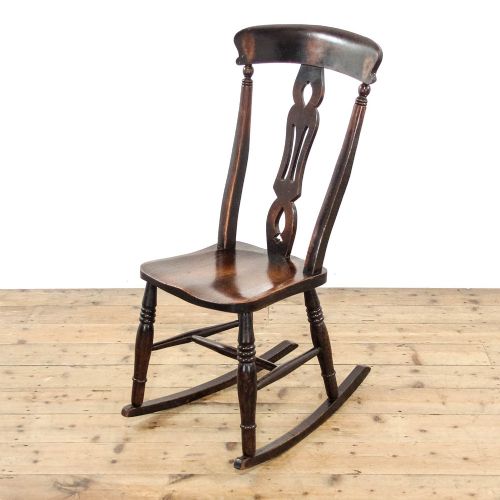
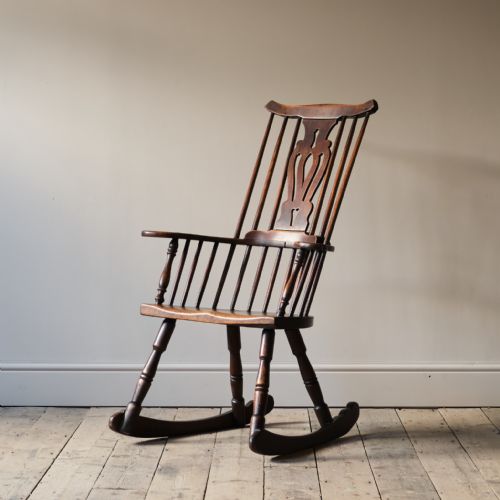
The pieces appearing on this page span several centuries and styles, from nineteenth-century English country Windsors and ladder-backs to Victorian farmhouse models. Buyers will also encounter smaller child variants and occasional vernacular pieces featuring bobbin frames or elm and beech additions.
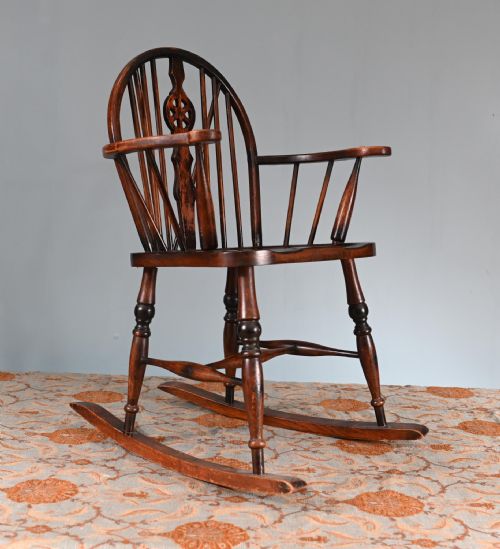
Most examples lean towards traditional craft rather than courtly polish, showing the practical hands of regional makers. They survive in various guises, including spindle-backs, wheel-backs, and low child rockers.
How they were made
Makers relied on solid timber construction, selecting oak for its strength alongside elm and beech for turned spindles and steam-bent components. Seats were frequently carved from a single thick slab of elm or oak, then hollowed for comfort before being pegged to the undercarriage.
Framing techniques included mortise and tenon joints secured with wooden pins, while bobbin-turned or spindle-back versions utilised lathe-turned components assembled by hand. Surface finishes ranged from natural wax patination to dark polish applied over decades of domestic use.
Some nineteenth-century makers turned chair legs to resemble stacked wooden bobbins, proving that even a humble farmhouse carpenter appreciated a playful rhythm.
What varies in quality
The calibre of a vintage oak rocking chair rests upon the crispness of its turnery and the integrity of its structural joints. Superior examples display balanced proportions, clean spindle alignments, and substantial timber thickness without unnecessary replacement parts.
Subtle details separate everyday utility pieces from finer vernacular items, such as the sculpting of the solid seat or the complexity of a wheel-back splat. Original surface patination and tight rocker curves without excessive wear define the upper tier of surviving examples.
The Vintage Oak Rocking Chair Glossary
- Windsor
- A chair built with a solid wooden seat into which the legs, back spindles, and bow are separately socketed. This construction method creates a resilient and enduring frame.
- Bobbin
- A style of furniture turning that resembles a string of wooden bobbins or spools. It gained popularity during the seventeenth century and returned in nineteenth-century vernacular revivals.
- Vernacular
- Everyday objects made by regional carpenters or unrecorded makers following local traditions rather than metropolitan high styles. These pieces prioritise utility and local timber availability.
- Spindle back
- A chair back filled with numerous slender, turned wooden rods rather than a solid central splat. This design offers lighter weight while maintaining robust support.
- Wheelback
- A Windsor chair variation featuring an openwork splat shaped like a cartwheel. It represents a decorative development popular in nineteenth-century English farmhouse seating.
Vintage Oak Rocking Chair: Frequently Asked Questions
Are these chairs comfortable for daily use?
Many models feature deep-saddled wooden seats carved to fit the body, offering surprising support without cushions. Adding a small pad can increase comfort during longer sits.
The gentle arc of the rockers provides a steady motion well suited to reading or resting in a quiet corner.
How can I tell the age of an oak rocker?
Examine the timber grain, tool marks, and construction pins beneath the seat to gauge the manufacturing era. Hand-cut peg joints and dense oak patination often point towards nineteenth-century or earlier origins.
Turned components like bobbins or thick spindles also offer clues, reflecting the popular vernacular styles of specific decades.
Will these heavy chairs damage modern floors?
Solid oak rockers carry considerable weight and concentrate pressure along the narrow curved base as they move. Placing them on thick rugs or attaching subtle protective strips helps prevent floor marks.
The momentum of a heavy wooden rocker requires smooth clearance to glide without scuffing baseboards.