

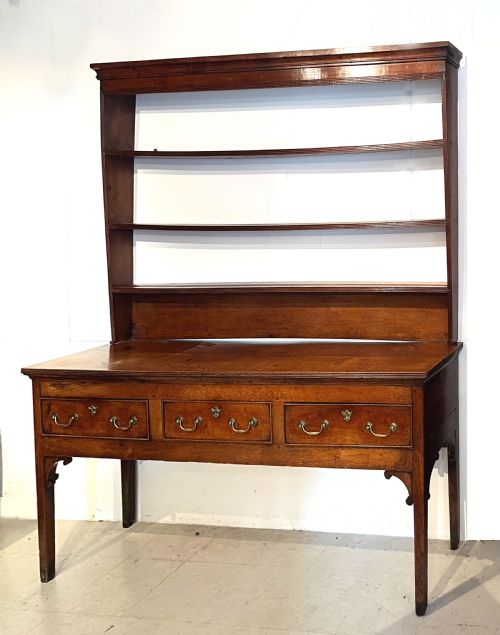


Vintage Oak Hutch
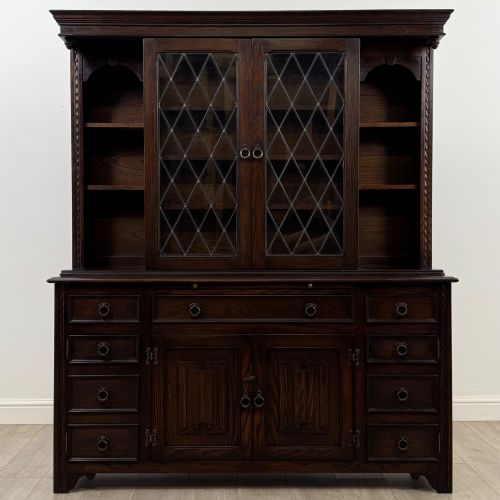
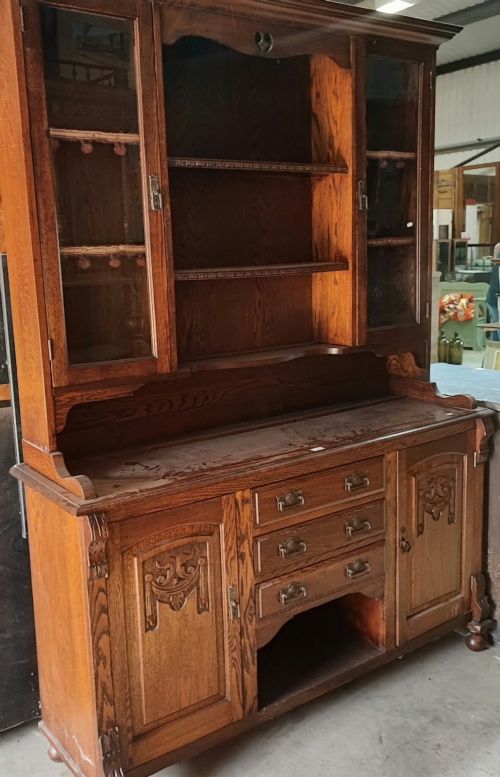
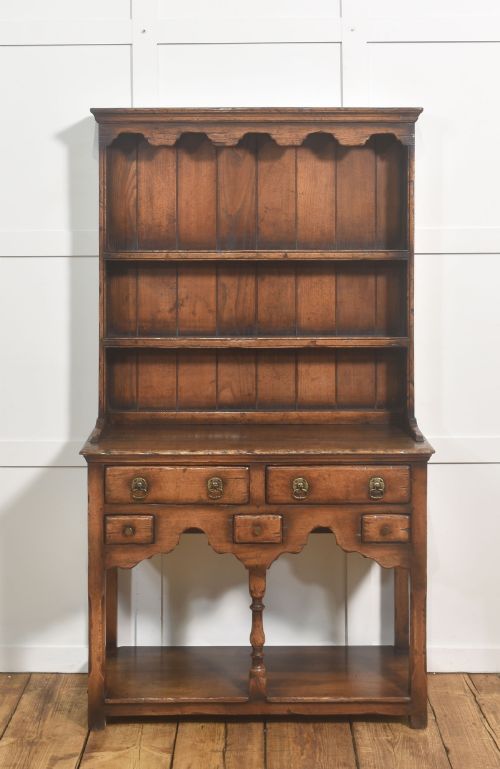
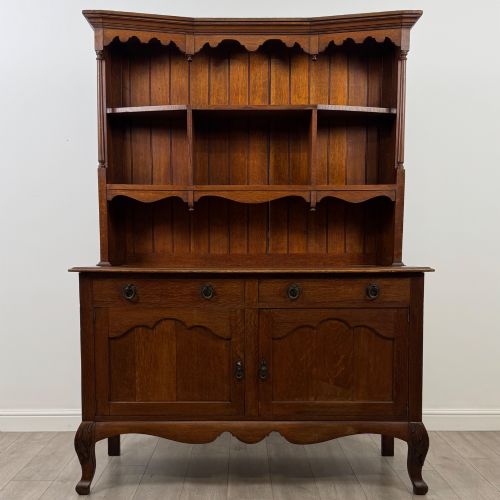
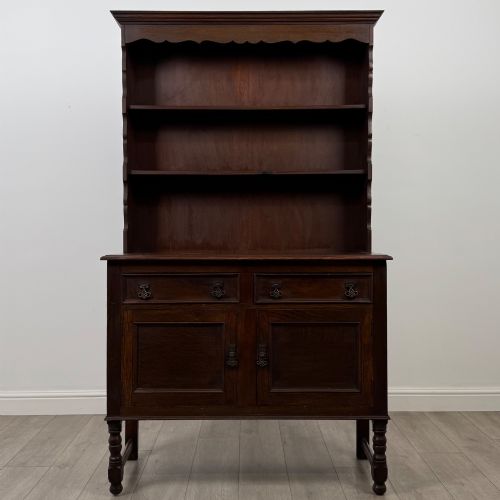
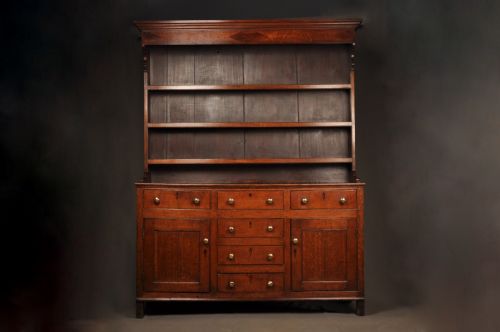
A vintage oak hutch brings substantial timber storage and plate display to a room, appearing most often here as an 18th-century, Victorian or Edwardian dresser with an open rack.
Vintage Oak Hutch
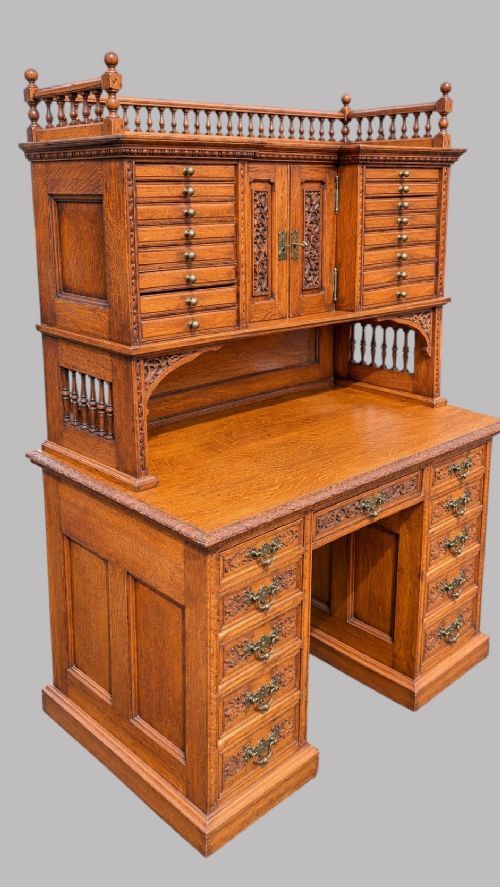
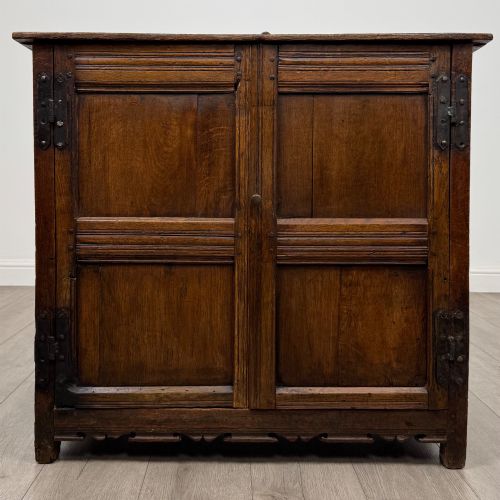
When you search for a vintage oak hutch, you are looking at substantial storage furniture designed for domestic use, spanning periods from the 17th century through to the 1930s. The items gathered here appear primarily as dressers, Welsh dressers, and plate rack combinations, alongside desks, bookcases, and cabinets.
You are most likely to meet pieces from the 18th and 19th centuries, often built in regional English and Welsh styles or constructed under later revivals like the Jacobean, Georgian, and Arts and Crafts movements. These range from simple country cottages and farmhouse examples to larger two-part fitted cupboards with glazed or leaded doors.
What varies in quality
Quality rests in the selection of the timber and the integrity of the original construction, distinguishing simple utility items from finely proportioned formal pieces. The depth of hand-carved detailing and the survival of original brass or iron hardware alter the character of a piece.
Proportion and form dictate distinction within regional styles, where well-balanced proportions in a two-part Welsh dresser or an early fitted cupboard elevate the object. The integration of the plate rack to the base and the crispness of period detailing separate standard vernacular furniture from finer workshop examples.
Materials recorded across the inventory include oak, brass, glass, iron, wrought iron, lead, and bone.
Heals of London
The Vintage Oak Hutch Glossary
- Plate rack
- An open set of wooden shelves mounted above the main surface of a dresser, designed for displaying plates and dishes upright.
- Welsh dresser
- A traditional form combining a lower sideboard or cupboard base with an upper plate rack or display shelving unit.
- Kneehole desk
- A flat-topped writing table featuring a central recess for the legs, flanked by pedestals of drawers.
- Jacobean Revival
- A style popular in the 19th and early 20th centuries that imitates 17th-century English furniture through heavy mouldings, paneling, and geometric carvings.
- Leaded glass
- Small panes of glass held together within a network of lead cames to form windows or cabinet doors.
Vintage Oak Hutch: Frequently Asked Questions
What is the difference between a hutch and a dresser?
A hutch generally refers to an enclosed cabinet or cupboard structure, often with shelving, whereas items classed as dressers in these listings typically combine a lower storage base with an upper plate rack.
In British vernacular furniture, the terms often overlap, as many examples incorporate both enclosed lower cupboards and open upper display shelves.
How do I identify an 18th-century oak dresser?
Eighteenth-century pieces usually exhibit hand-shaped panels, pegged joints, and heavy board construction that reflect regional country craftsmanship.
They lack the machine precision of later 19th-century and Edwardian revival pieces, often showing patination acquired through generations of domestic use.
Where were these pieces made?
The listings show regional origins spanning English and Welsh country workshops, alongside specific centres like Ipswich and French provincial makers.
Makers utilised local timbers and regional joinery traditions, resulting in distinct vernacular styles from farmhouse kitchens to urban workshops.
How do I care for vintage oak furniture?
Solid oak benefits from stable indoor humidity levels away from direct heat sources and sudden temperature fluctuations that can dry out old timber.
Regular dusting with a dry or slightly damp cloth preserves the finish, while occasional traditional wax polishing maintains the surface sheen.