


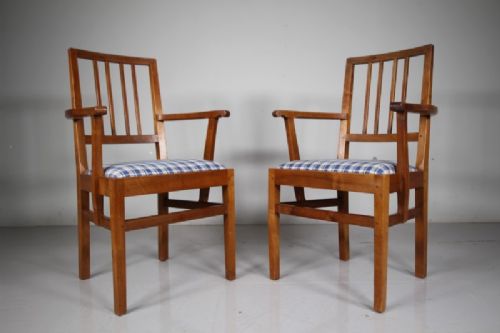
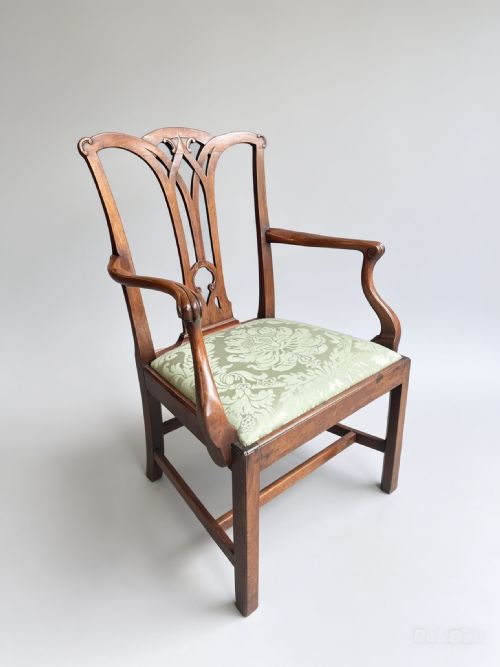
Vintage Oak Carvers
Vintage oak carvers bring substantial timber, generous arms and enduring craft into a room, offering a robust anchor for a dining table or study.
Vintage Oak Carvers
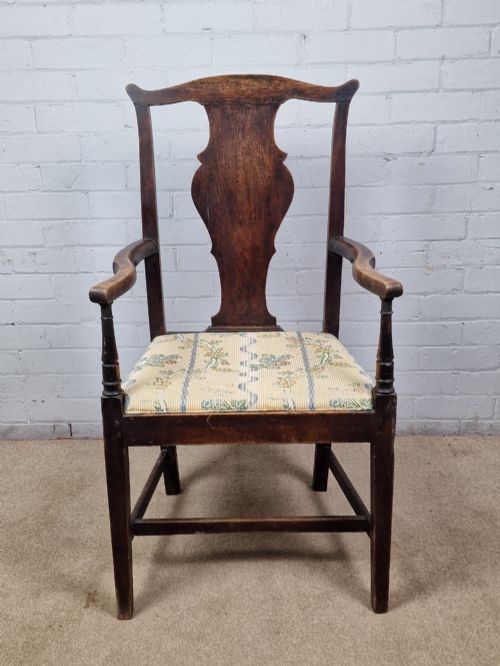
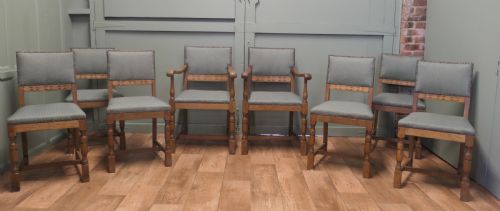
Vintage oak carvers encompass sturdy armchairs and dining chairs shaped from timber across multiple periods, including the Victorian, Edwardian and early twentieth century. Buyers searching this phrase look for substantial seating featuring open arms, often appearing singly or in matching sets alongside side chairs.
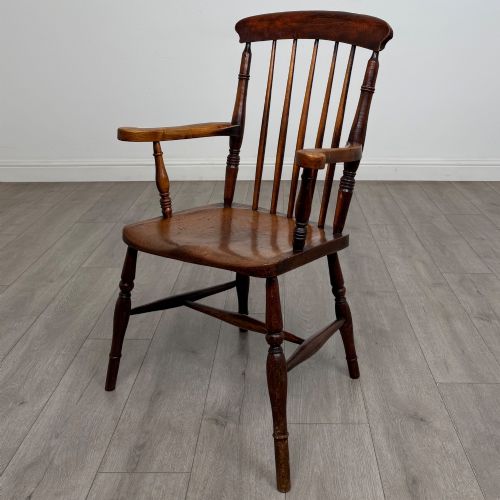
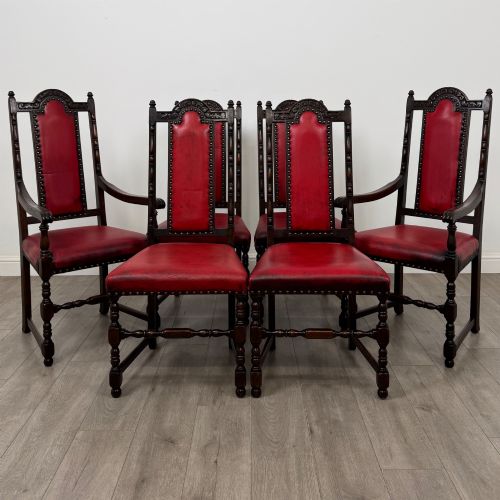
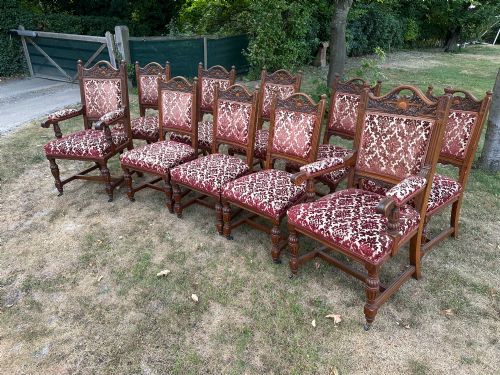
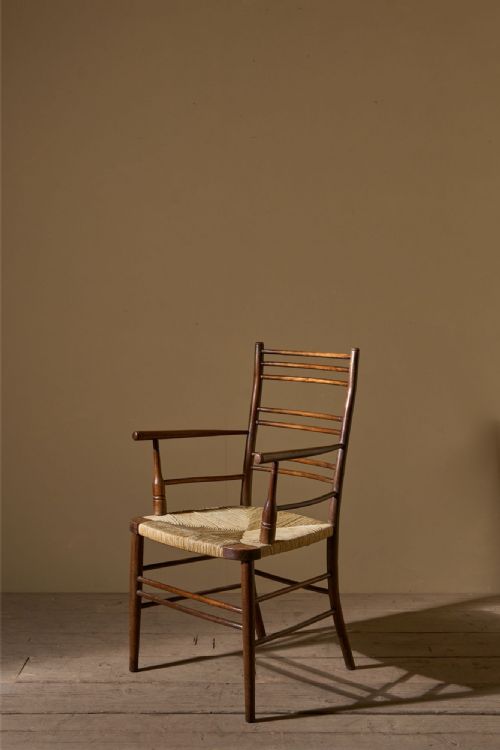
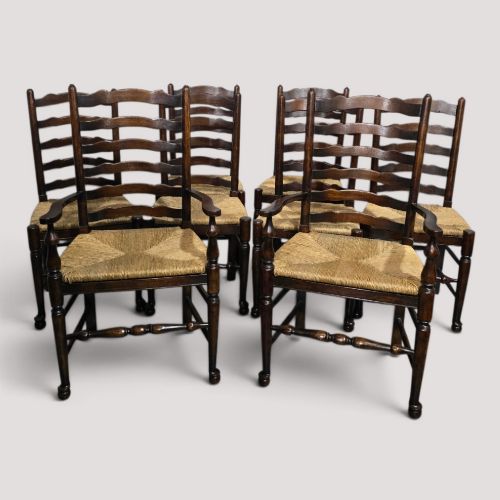
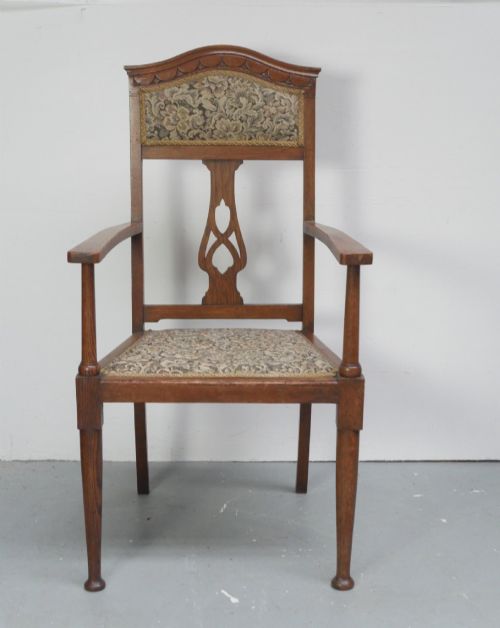
The versions most commonly met on this page span the Arts and Crafts movement, the Jacobean Revival and various country styles. These pieces range from rush-seated vernacular forms to heavily carved revival dining chairs produced in the opening decades of the twentieth century.
Materials and Construction
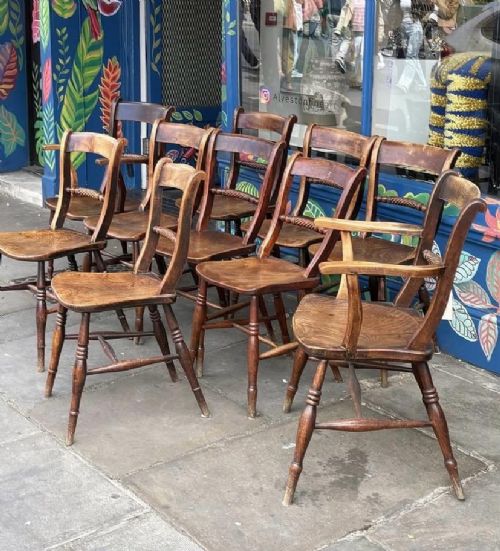
Solid oak forms the primary structural foundation of these armchairs, frequently supported by secondary timbers such as elm, ash and beech in vernacular Windsor and ladder-back variations. Joinery relies on traditional pegged mortise and tenon joints to secure the heavy wooden frames.
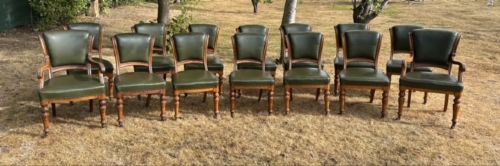
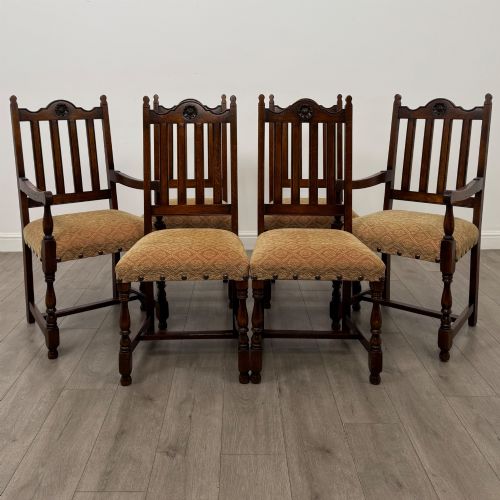
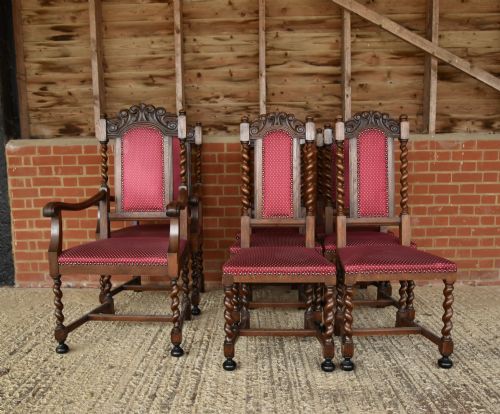
Seats incorporate woven rush, cane panels, or upholstered pads finished in leather, fabric, brass studs and tapestry. Woodturning techniques create barley twist or spindle legs, while hand-carving defines the decorative crest rails and back panels seen in revival styles.
A harlequin set gathers mismatched dining chairs that share a common vernacular spirit around one table.
Evaluating Quality and Character
Quality rests upon the crispness of the timber carving, the integrity of the frame construction and the harmony of the timber grain. Chairs originating from notable workshops or bearing maker stamps display superior precision in joinery and detailing compared to standard commercial production.
The tactile quality of the materials - ranging from closely woven rush to supple leather and heavy oak - dictates the enduring presence of the piece. Consistency within larger sets and the survival of original surface finishes separate exceptional examples from ordinary utility seating.
Edward Barnsley·Liberty Morris And Co·W Williamson And Sons·William Morris
The Vintage Oak Carvers Glossary
- Carver
- An armchair designed with elbow rests, traditionally placed at the head of a dining table alongside matching single chairs.
- Windsor
- A traditional wooden chair constructed with a solid shaped seat into which the legs and back spindles are directly wedged.
- Barley twist
- A decorative turning technique resembling a twisted rope, commonly found on the legs and stretchers of revival seating.
- Rush seat
- A woven seating surface made from dried marsh grasses, typical of Arts and Crafts and country vernacular chairs.
Vintage Oak Carvers: Frequently Asked Questions
How do I identify a Jacobean revival carver?
Jacobean revival carvers display deep geometric hand-carving, straight columnar uprights, and often feature high backs with cane or upholstered panels.
These pieces draw inspiration from seventeenth-century design traditions while utilising the machinery and timber standards of the Edwardian and later periods.
Can I mix these chairs with a modern table?
The robust grain and warm tones of oak allow these armchairs to sit comfortably beside contemporary glass, metal or plain wood tables.
Single carvers function effectively as desk chairs or accent seating in a living room when paired with modern interiors.
How do I care for antique oak furniture?
Maintain the timber by applying a traditional beeswax polish sparingly and buffing with a soft cloth to preserve the natural lustre.
Keep wooden seating away from direct heat sources and rapid temperature fluctuations to prevent the oak and historical joinery from drying out.