



Oak Study Armchairs
Oak study armchairs are substantial seating built for workspaces, offering sturdy timber frames and leather upholstery designed for daily use.

Oak Study Armchairs
When searching for oak study armchairs, buyers encounter sturdy pieces intended for libraries, offices, and writing rooms. These chairs combine robust timber framing with functional seating forms suited for long hours at a desk.
The selection on this page leans heavily toward nineteenth century and early twentieth century examples. Victorian and Edwardian periods dominate the inventory, accompanied by specific revivals such as Jacobean and Gothic styles.
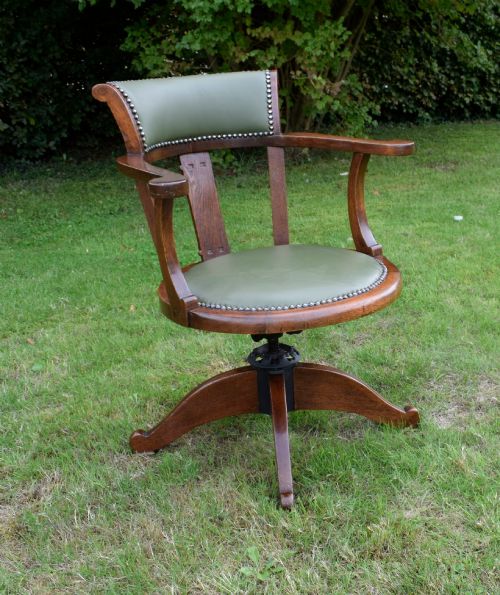
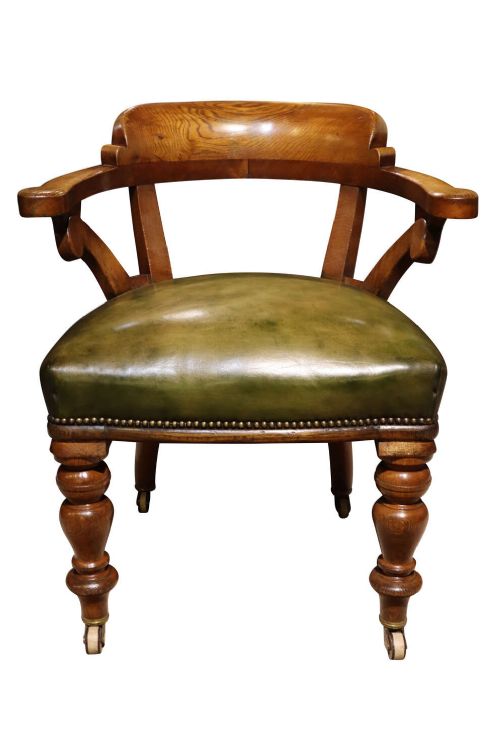
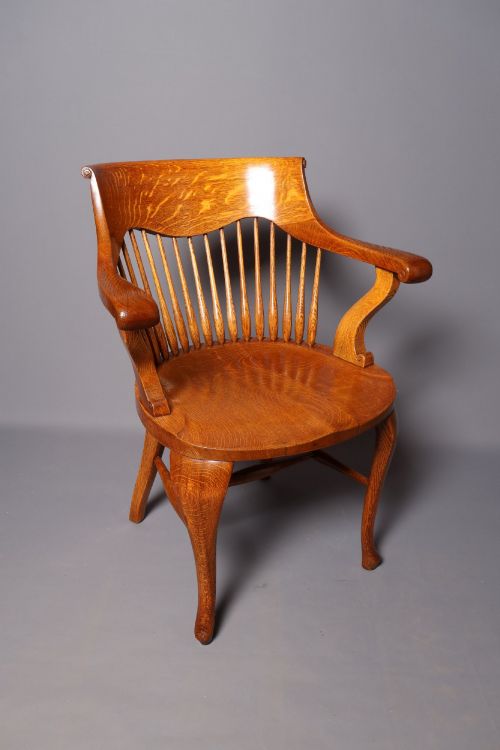
Common forms include swivel desk chairs, library armchairs with leather upholstery, and solid wood captain chairs. Beech and chestnut occasionally supplement the primary oak construction in these working seats.
Materials and Construction
Makers utilised solid oak alongside golden oak variants for the primary frames and turnings. Leather, tan hide, velvet, and fabric provide the primary upholstery materials for seats and backrests.
Metal mechanisms, brass fittings, and cast iron components appear on adjustable height and swivel desk chairs. Buttoned leather upholstery and carved ornamentation frequently finish the heavier revival pieces.
The listings on this page span from the mid nineteenth century through to the 1920s, showcasing diverse revival styles in solid oak.
Judging Quality
The distinction between standard office seating and superior examples rests in the depth of timber carving and the selection of golden oak. Attribution to notable designers or makers elevates certain pieces above standard utilitarian furniture.
The integration of mechanical elements, such as smooth swivel actions and adjustable height screws, separates well engineered desk chairs from simpler fixed forms. High grade leather upholstery and original buttoning preserve the integrity of the better examples.
Gillows·Bruce James Talbert·A W N Pugin·Kendrick and Jefferson·Edward William Godwin
The Oak Study Armchairs Glossary
- Bergere
- A traditional upholstered armchair with cane or wicker side panels. It provides a lighter appearance while retaining a sturdy wooden frame.
- Smokers Bow
- A sturdy low backed wooden armchair with a turned spindle gallery. This form evolved from Windsor chair designs for use in smoking rooms and offices.
- Gothic Revival
- An architectural and decorative style drawing inspiration from medieval design. Pieces often feature pointed arches, trefoils, and heavy carved details.
- Carolean Revival
- A furniture style reviving seventeenth century court aesthetics. It is characterised by elaborate scrollwork, crown motifs, and turned stretchers.
- Swivel Desk Chair
- A revolving seat mounted on a central pivot mechanism. These chairs often incorporate adjustable height screw threads and metal bases.
Oak Study Armchairs: Frequently Asked Questions
How do I identify a Victorian desk chair?
Victorian desk chairs display distinct period characteristics through dark or golden oak timbers, heavy frame construction, and traditional upholstery methods. Look for turned wooden spindles, leather panels fastened with brass studs, and nineteenth century joinery.
Many examples incorporate functional elements like swivel mechanisms or adjustable heights suited for Victorian offices and libraries. The integration of Gothic or Carolean revival carving styles further confirms the nineteenth century origin.
Are swivel chairs from the Edwardian period comfortable?
Edwardian swivel desk chairs were engineered for daily clerical and administrative work, making them remarkably supportive for modern use. Their ergonomic wooden seats and supportive backrests accommodate prolonged sitting at a desk.
Adjustable height functions and smooth revolving mechanisms allow the user to customise the seating position. The sturdy oak frames ensure structural stability despite decades of movement.
What is a library armchair?
A library armchair is a deeply padded seat designed for reading rooms and private studies. These pieces feature generous proportions, upholstered armrests, and supportive backs covered in leather or fabric.
Unlike standard dining seating, they prioritize relaxation and sustained comfort during long periods of reading. The robust oak framing provides a formal aesthetic suitable for institutional or domestic libraries.
How do I care for leather upholstery on an antique chair?
Maintaining antique leather requires gentle cleaning with a damp cloth followed by regular conditioning to prevent cracking. Avoid harsh chemical cleaners and keep the material away from direct heat sources.
Preserving the natural moisture of the hide protects the original surface finish and buttoning. Regular dusting prevents abrasive particles from wearing into the grain.