
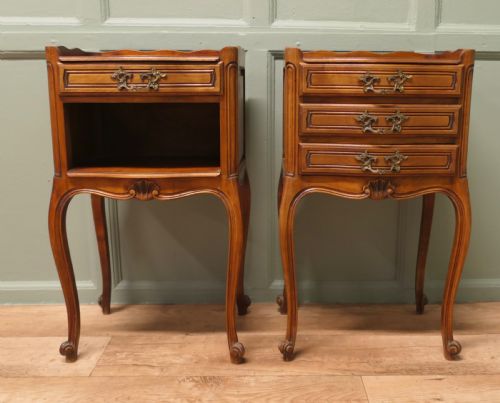
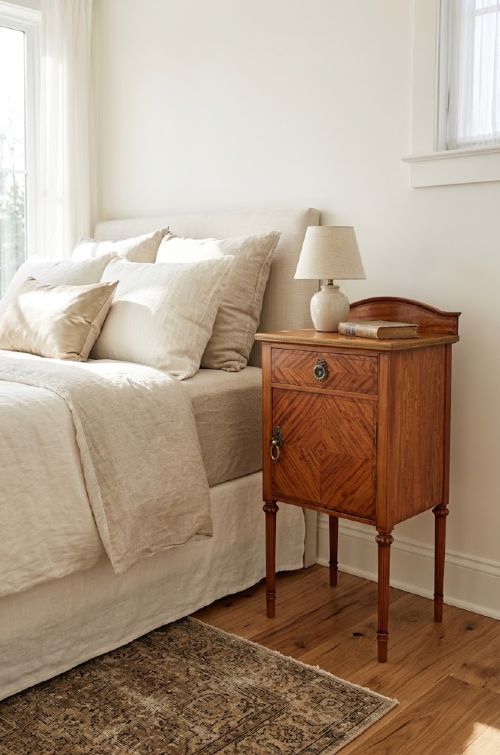
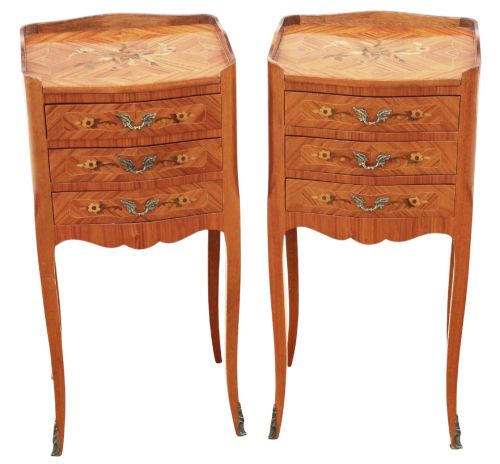
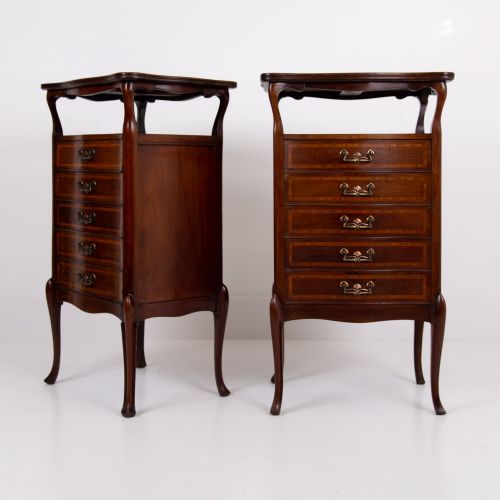


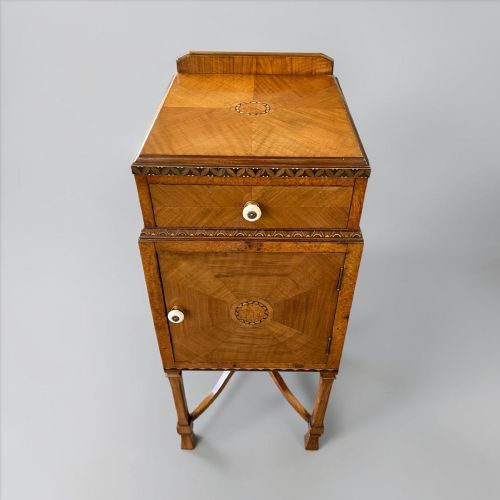
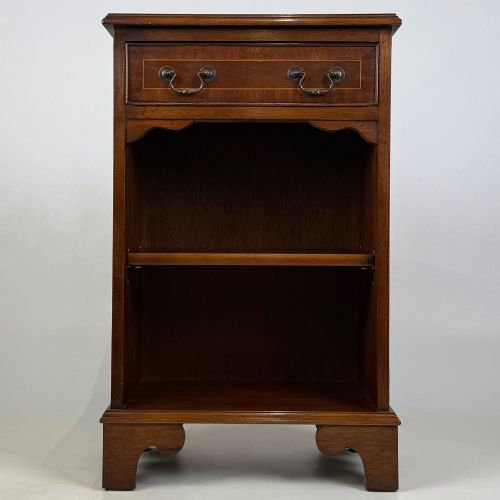
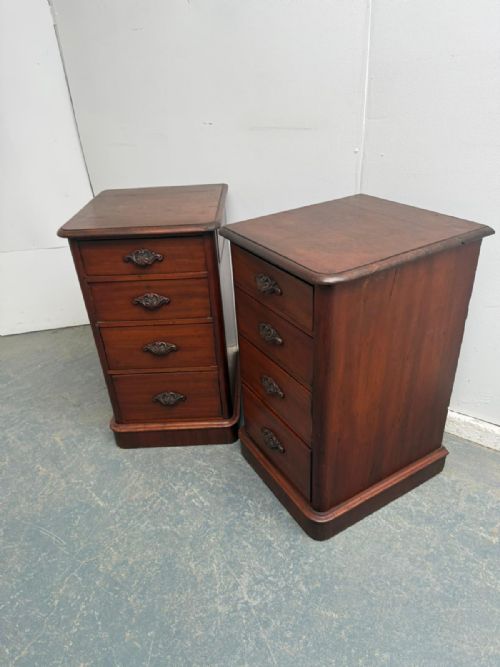
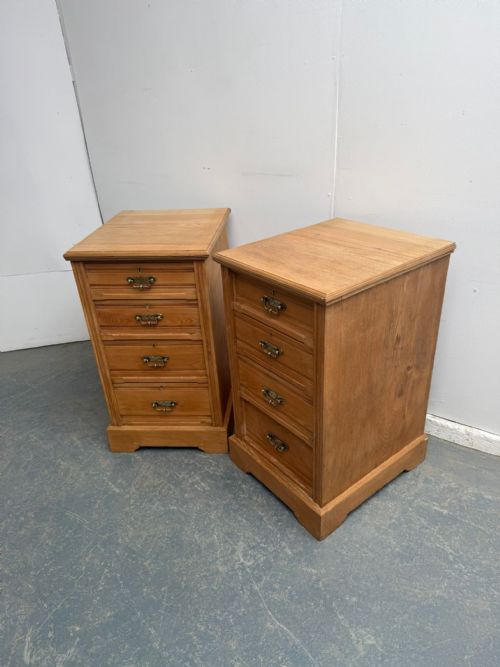
Vintage Nightstand with Drawers
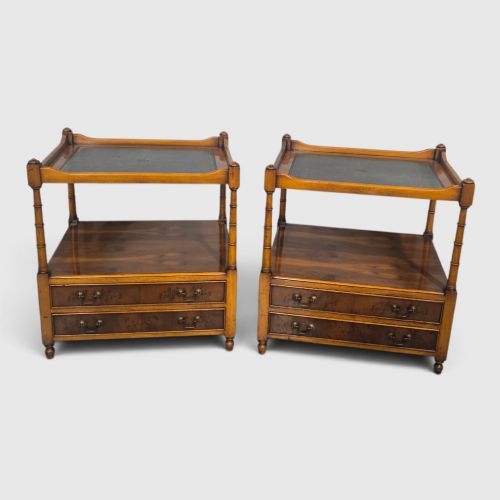
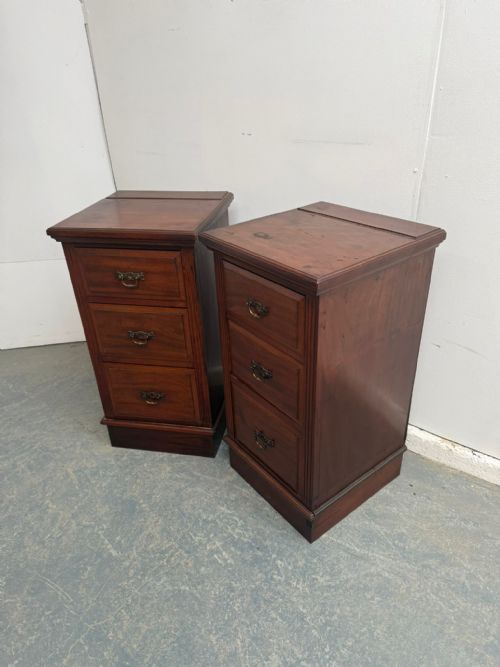
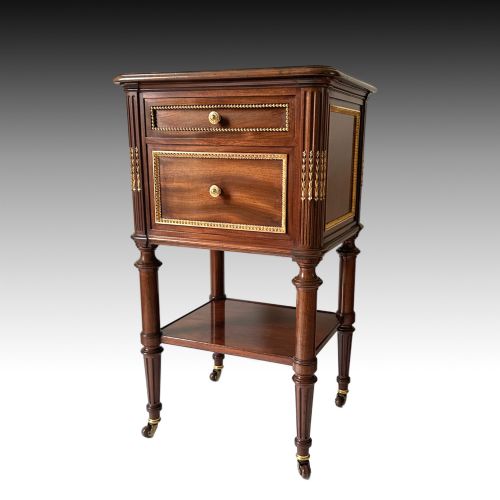
These vintage nightstand with drawers pieces combine practical bedside storage with period character, offering compact surfaces and concealed compartments for your bedroom.
Vintage Nightstand with Drawers
A vintage nightstand with drawers brings functional bedside storage and traditional craftsmanship into the modern bedroom. Buyers searching this phrase most frequently encounter Edwardian and Victorian examples alongside 1920s and Art Deco pieces.
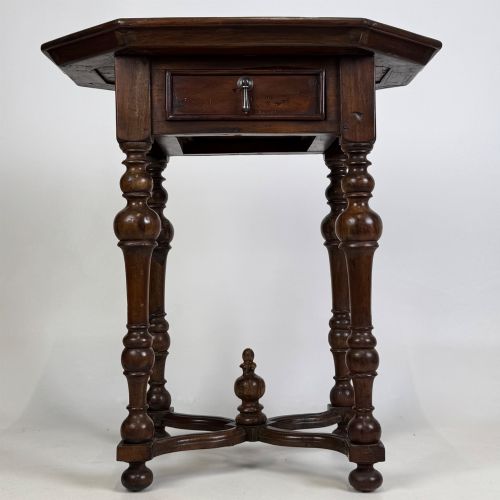
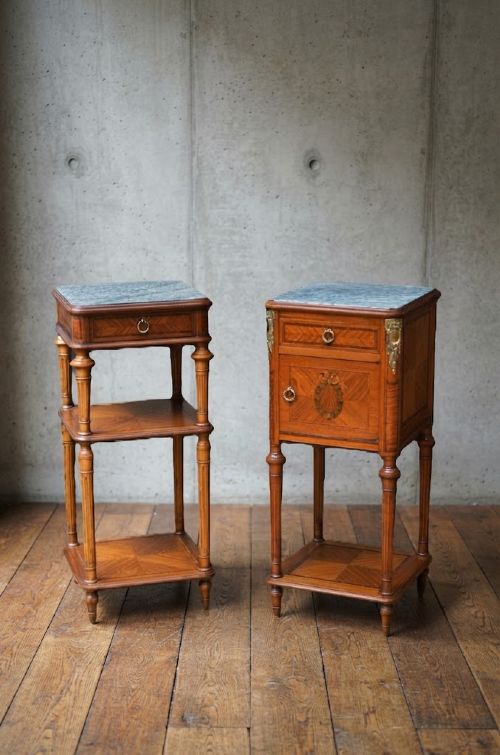
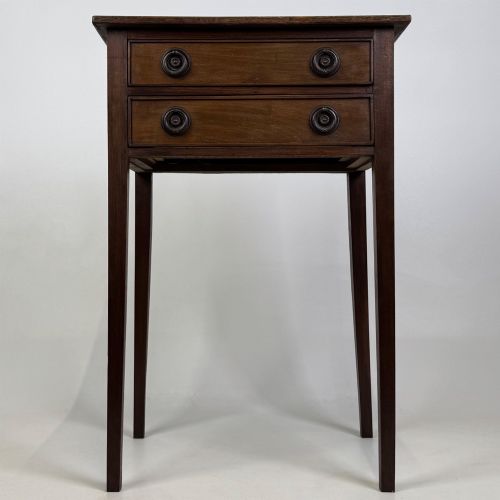
The form spans bedside cabinets, side tables, and night cabinets featuring single or multiple drawers. Materials range from mahogany and oak to walnut, pine, and satinwood, often complemented by brass handles or marble tops.
How they were made
Cabinet makers utilised dense hardwoods like mahogany, walnut, and oak to construct sturdy frames and durable drawer structures. Timber surfaces were frequently finished with inlaid details, quartered veneers, or painted treatments.
Functional metal elements such as brass handles and hardware secured doors and drawers, while French pieces often incorporated white marble tops and secret compartments.
What varies in quality
The grade of timber selection and the precision of veneer matching dictate the visual appeal of each cabinet. Figured walnut and finely grained mahogany elevate the finish above standard utility pieces.
Construction methods such as traditional joinery in the drawer boxes and the preservation of original brass hardware separate superior examples from standard workshop production.
Gomme
The Vintage Nightstand with Drawers Glossary
- Commode
- A low cabinet or chest of drawers, often used historically as a bedside piece enclosing a chamber pot. Georgian and Victorian examples frequently feature tray tops or enclosed cupboards.
- Tambour
- A sliding door constructed from narrow vertical strips of wood glued to a canvas backing. This mechanism allows smooth access to enclosed bedside storage.
- Satinwood
- A luminous, fine-grained timber with a golden sheen, popular in Edwardian cabinet making for contrasting inlay work and decorative banding.
- Drop leaf
- A table top with hinged flaps that fold down to reduce the footprint. These occur on occasional tables and small bedside surfaces.
- Bowfront
- A curved cabinet front that swells outward in the centre, adding visual depth and soft lines to mahogany and walnut chests.
Vintage Nightstand with Drawers: Frequently Asked Questions
What is a night cabinet?
A night cabinet is an enclosed bedside piece designed to store chamber pots, books, and personal items out of sight. They typically feature a cupboard door beneath a surface top or small drawer.
These pieces emerged strongly during the Georgian and Victorian periods, evolving into matched pairs by the Edwardian era and the 1920s.
How do I date a bedside cabinet?
Dating relies on identifying timber choices, construction techniques, and decorative styles characteristic of specific periods. Georgian pieces often show tray tops, while Edwardian examples display lighter satinwood inlays.
Art Deco items from the 1930s utilise figured walnut veneers and modernist geometric proportions distinct from earlier Victorian mahogany cabinets.
Are bedside tables usually sold in pairs?
Bedside tables and cabinets appear both as single items and matched pairs depending on their original domestic use. Pairs are common in Edwardian, 1920s, and Art Deco furniture.
Single bedside cupboards frequently originate from Victorian and Georgian bedrooms where furniture sets were assembled less uniformly.
What materials were used?
Cabinet makers predominantly used hardwoods such as mahogany, oak, walnut, and rosewood. Softer woods like pine and painted surfaces also appear across Victorian and Edwardian examples.
Luxury French and Art Deco pieces frequently incorporate marble tops, brass handles, and contrasting quartered walnut veneers.