







Vintage Needlepoint Artwork
These vintage needlepoint artwork pieces bring centuries of hand-worked textile history to your walls through wool, silk, and canvas.
Vintage Needlepoint Artwork
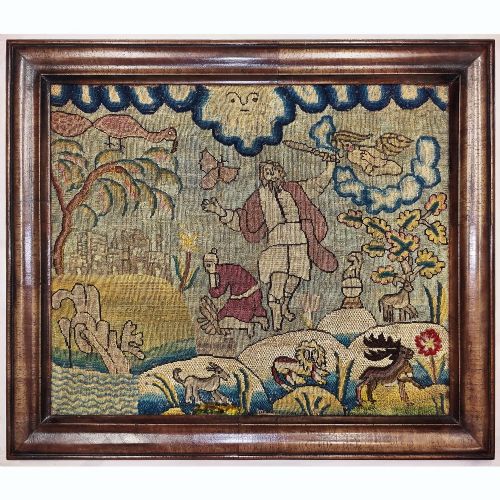
When you search for vintage needlepoint artwork, you encounter historical textile pieces ranging from framed wall art to embroidered panels and samplers. These works span multiple eras, including the 17th century, 18th century, Victorian period, and 1900.
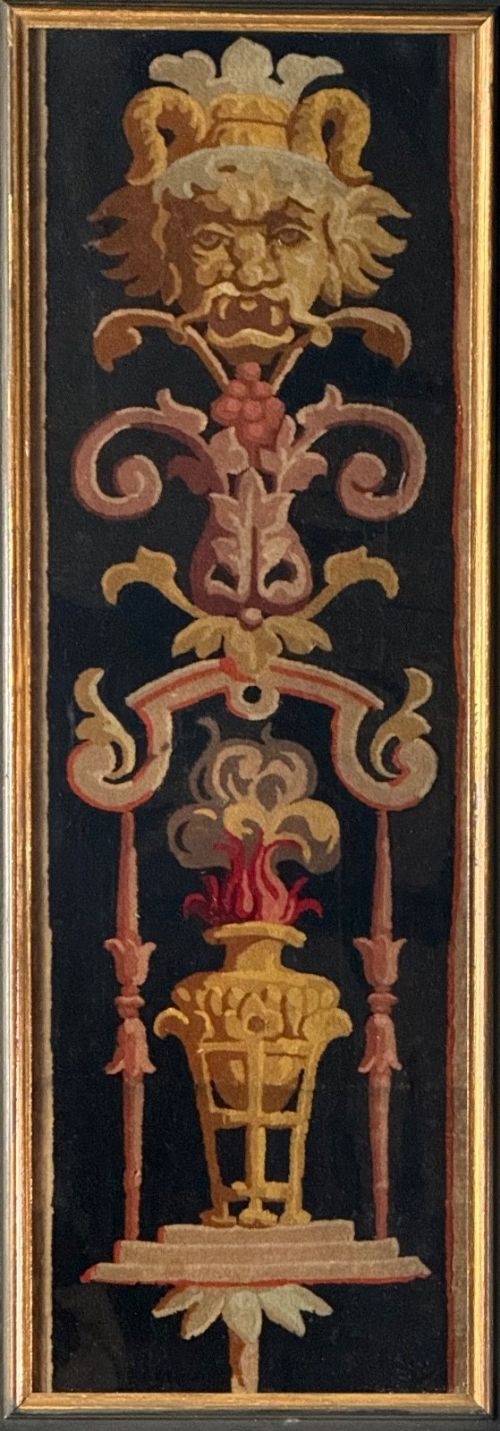
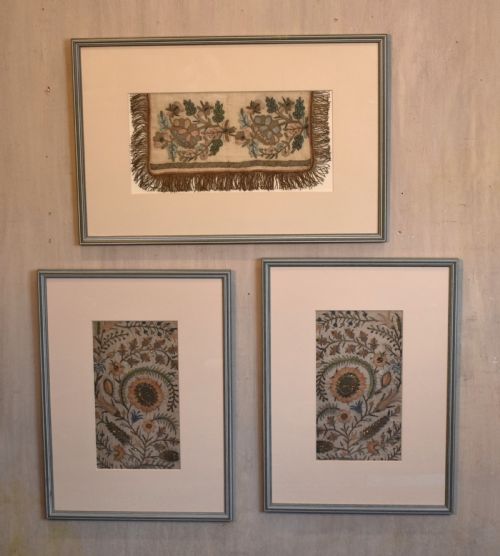
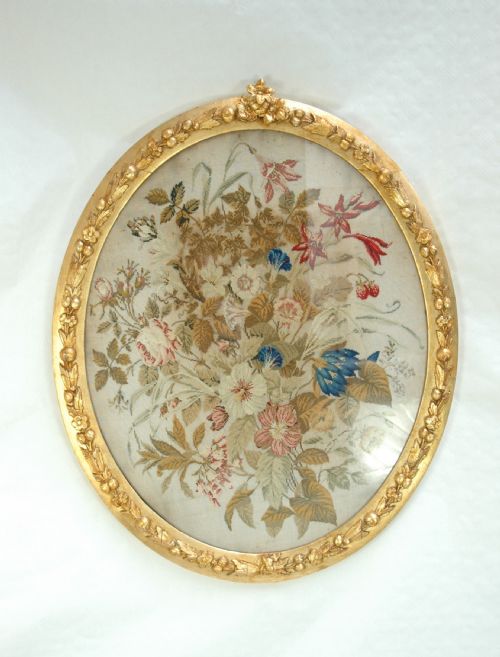
The selections on this page commonly feature framed textile art, needlework pictures, and tapestry cushion covers. You will find subjects stretching from classical continental scenes and garden birds to alphabet samplers and wool work depicting animals.
Origin styles vary widely across the inventory, taking in English country house aesthetics, Chinese motifs, Victorian folk art, and 17th century Stuart designs. Each textile captures the domestic handcraft of its specific historical era.
How they were made
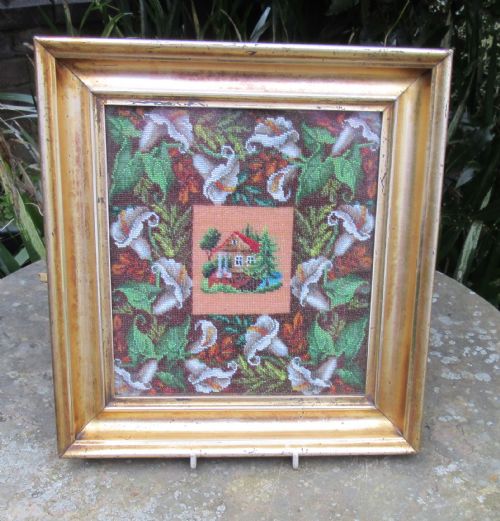
Makers utilised wool, silk, and crewel work threads stitched onto linen or canvas backings to create these detailed textile pictures. Beads also appear on specific American examples from the 19th century.
Finished needleworks were frequently housed in protective wooden frames, sometimes utilising giltwood or rosewood alongside glass to preserve the delicate stitched surfaces.
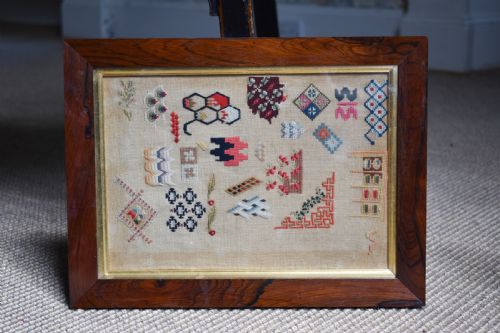
Emma and Hannah Barnes left their names stitched into an 1853 alphabet sampler.
What varies in quality
The standard of execution in the stitching and the complexity of the pictorial composition determine the distinction between average and exceptional needlework pictures. Finer examples display meticulous control over wool and silk threads to render realistic or detailed decorative subjects.
Preservation of the original textile and the quality of the surrounding wood or giltwood frame also influence the overall character of the piece. Age adds patination, but the crispness of the remaining embroidery defines the visual strength of the artwork.
The Vintage Needlepoint Artwork Glossary
- Sampler
- A piece of needlework produced as a demonstration or test of skill in various stitches, often featuring alphabets or motifs.
- Crewel work
- A type of embroidery utilising wool yarn to create flowing designs on linen or canvas.
- Giltwood
- Wood that has been treated with gold leaf or a gold-coloured gilt finish, commonly found on decorative picture frames.
- Tapestry
- A form of textile art traditionally woven on a loom or worked by hand on canvas to depict pictorial scenes.
- Rosewood
- A dense, dark timber frequently utilised for framing high-quality historical pictures.
Vintage Needlepoint Artwork: Frequently Asked Questions
How old are these needlework pieces?
The listings span several centuries, starting from the 17th century through the 18th century and Victorian era up to 1900.
Specific dates or periods are identified in the titles where known, ranging from early crewel work to alphabet samplers dated to the mid-19th century.
What materials were used?
Artisans worked primarily with wool, silk, and canvas or linen backings to create these embroidered and needlepoint compositions.
Selected pieces also incorporate glass, wooden frames in rosewood or giltwood, and decorative beadwork.
Are they supplied ready to hang?
Many examples are offered as framed wall art or framed textile pictures enclosed behind glass.
This framing protects the historic fabric while allowing the textile artwork to be mounted directly onto interior walls.
What subjects do the pictures show?
The imagery varies from classical continental panels and garden birds to agricultural scenes and domestic alphabet samplers.
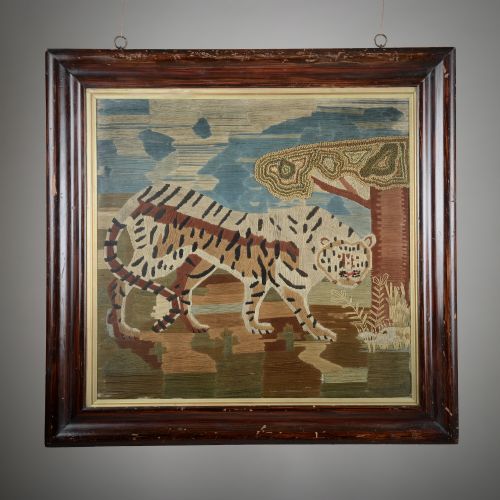
Other works depict specific animals like tigers or reproduce known artistic compositions in wool work.
How do I identify different styles?
Styles reflect their period of origin, ranging from 17th century Stuart and Baroque panels to Victorian folk art and Chinese motifs.
Examining the stitching techniques and subject matter helps connect each piece to its historical design context.