

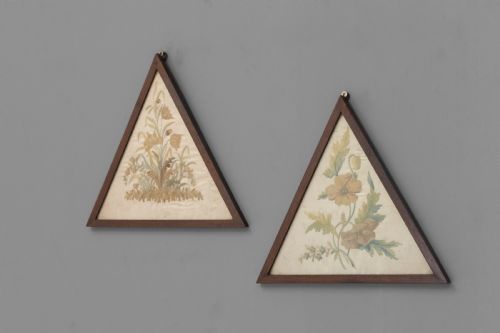


Framed Floral Embroidery
Framed floral embroidery brings centuries of textile art to your walls, capturing botanical motifs in silk, wool, and cotton across periods from the eighteenth century onwards.
Framed Floral Embroidery
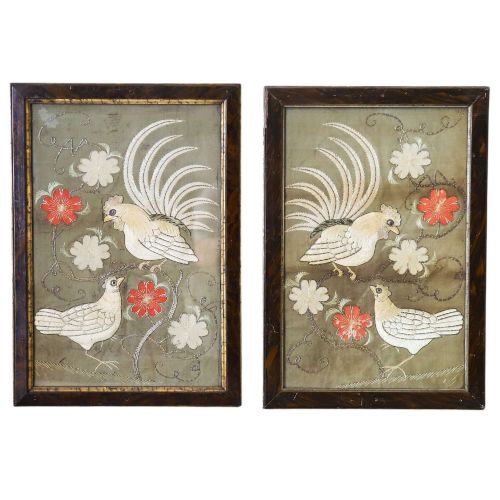
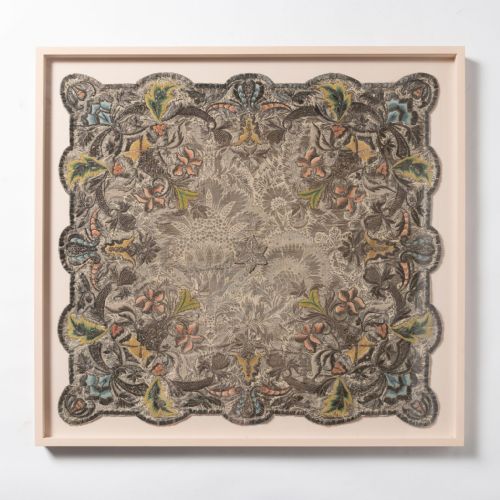
Framed floral embroidery encompasses wall art, needlework pictures, and mounted panels that display stitched botanical and avian designs. You will encounter English crewelwork, Chinese embroidered panels, Ottoman fragments, and Victorian needlework pictures displayed behind glass.
The selection ranges from eighteenth-century English needlework pictures to twentieth-century stitched samplers and floral needlework circles. These textile pieces preserve historical stitchwork within wooden frames, mahogany surrounds, and faux tortoiseshell cases.
Makers and makers' hands span various origins, including English country house workshops, French ateliers, Central Asian regions, and Chinese studios. Each piece brings domestic craft or courtly needle artistry into a wall-hanging format.
Materials and construction
Makers stitched onto linen, canvas, and cotton grounds using silk and wool threads to build up floral motifs and pictorial scenes. These textiles were then mounted inside wooden frames, occasionally protected by glass.
Support materials include mahogany and walnut for structural elements like stools and armchairs, while wall panels rely on tensioned backing to keep the silk and wool embroidery flat.
Listings feature silk, wool, linen, cotton, canvas, wood, mahogany, and glass across periods spanning the seventeenth to the twentieth centuries.
What separates the finest examples
Quality rests on the precision of the needlework and the complexity of the thread painting, particularly in silk panels where shading defines the floral petals and birds. Early English needlework pictures and fine Chinese embroideries show superior density in their stitch count.
The condition of the textile ground and the preservation of the original wooden frame influence the standing of a piece. Faded silks or damaged linen grounds alter the visual impact compared to tightly tensioned, clean panels.
The Framed Floral Embroidery Glossary
- Crewelwork
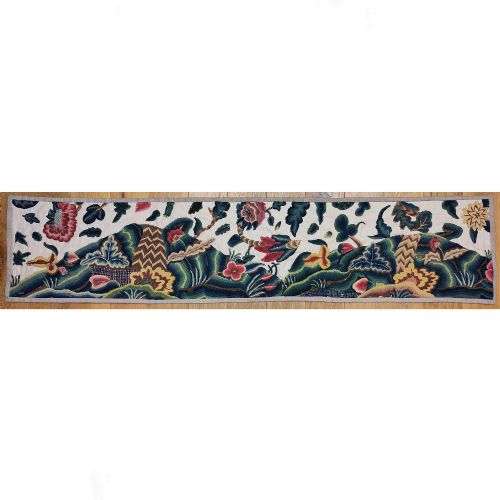
- Embroidery executed with wool yarn on a linen or cotton twill ground. This technique often appears in English wall panels and nineteenth-century armchairs.
- Needlework picture
- A pictorial composition stitched with thread on canvas or linen, created specifically to be framed and hung as art.
- Sampler
- A piece of stitching demonstrating a maker's proficiency with various alphabets and decorative motifs. These are frequently dated and signed by the maker.
- Suzani
- A type of embroidered tribal textile originating from Central Asia, worked in silk or cotton on a cotton ground.
Framed Floral Embroidery: Frequently Asked Questions
How do I hang a framed textile?
Hang these pieces away from direct sunlight to prevent the silk and wool threads from fading over time. Maintain stable room humidity to protect both the fabric and the wooden frame.
Ensure the hanging wire or brackets securely support the weight of the framed glass and wooden surround.
How can I tell the period?
Examine the materials used for the ground fabric, such as hand-woven linen versus later cotton bases. Stitch styles and framing materials also provide clues to whether a piece originates from the eighteenth century or the Victorian era.
Signatures, dates, and inscriptions worked directly into samplers offer direct evidence of origin.
Are all these pieces wall art?
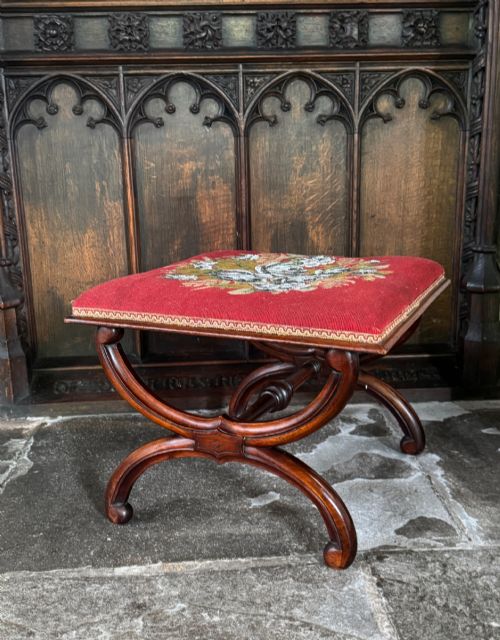
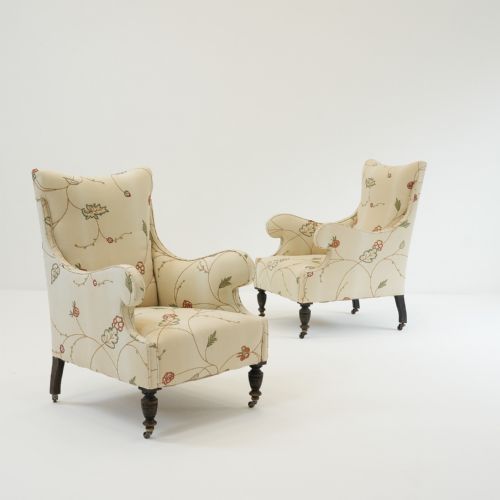
While most items are designed as wall art or framed panels, some examples take the form of functional furnishings. You will find antique embroidered panels incorporated into footstools and crewelwork armchairs.
Both wall-hung pictures and upholstered seating utilise the same historical needlework techniques.