


Edwardian Floral Needlepoint
Edwardian floral needlepoint pieces bring hand-worked botanical wool panels into domestic seating and screens.
Edwardian Floral Needlepoint
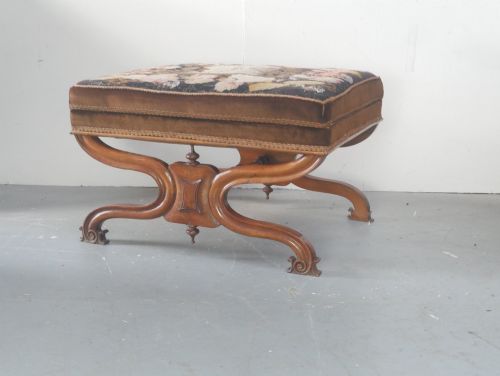
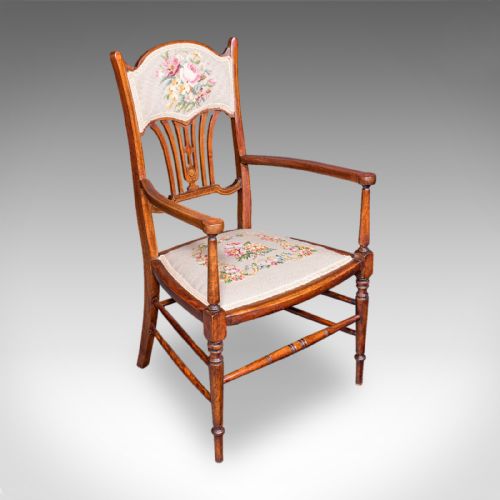
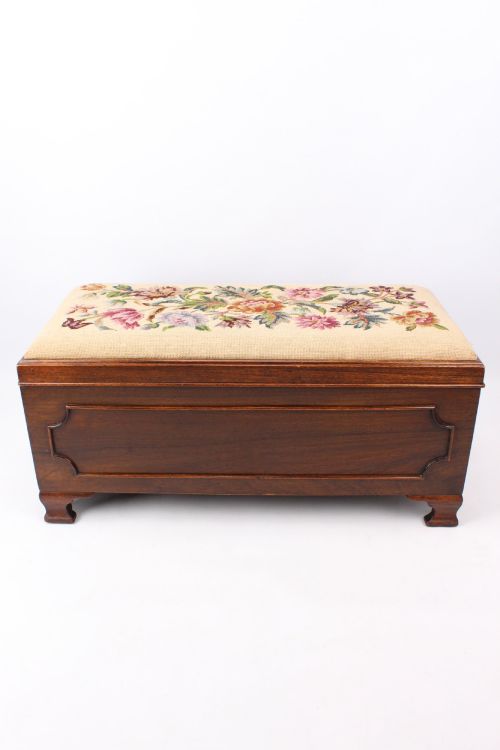
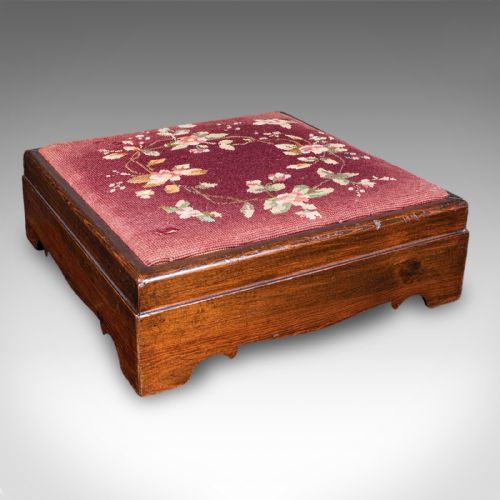
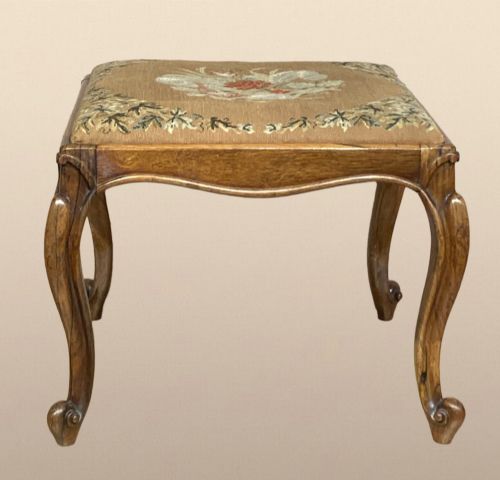
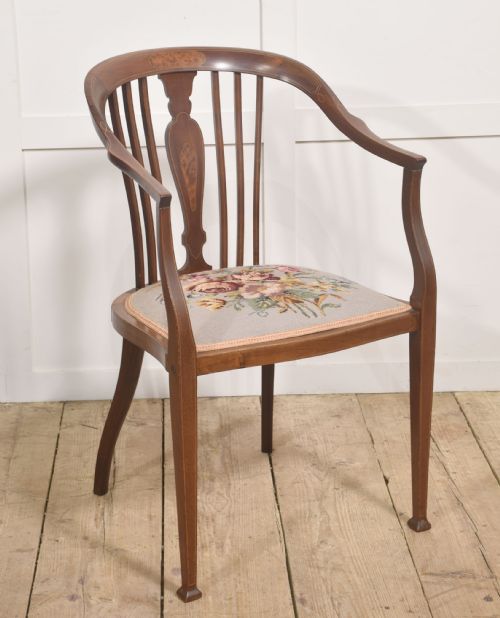
When a buyer searches for Edwardian floral needlepoint, they encounter antique furnishings and textiles that display stitched botanical motifs from the late nineteenth and early twentieth centuries. These objects typically combine domestic needlework panels with functional wooden frames such as footstools, nursing chairs, fire screens, and occasional seating.
The selections on this page span several decades, including pieces from the Edwardian era alongside Victorian and later nineteenth-century examples. Common formats include upholstered stools, armchairs, and framed textile panels designed for domestic comfort and parlour display.
Materials and Construction
The structural framework of these items relies on timber such as mahogany, walnut, beech, and pitch pine, shaped into cabriole legs, turned supports, or inlaid panels. Woods are frequently polished or stained to complement the domestic interior.
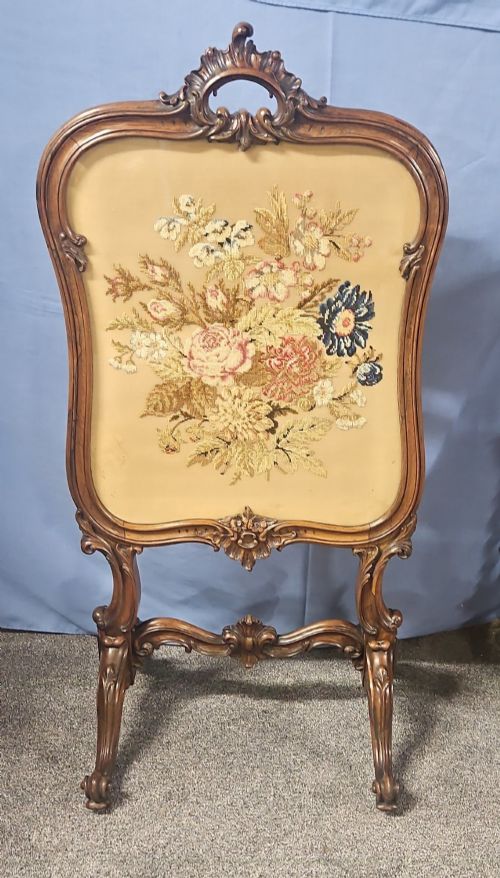
The textile elements utilise wool and tapestry stitching techniques, often referred to as petit point or needlework, fixed directly over upholstery stuffing or mounted within protective wooden fire screen frames under glass.
The listings span multiple timber types including mahogany, walnut, beech, and pitch pine.
Assessing Quality and Execution
The standard of an edwardian floral needlepoint piece rests upon the crispness of the timber carving, the tightness of the joinery, and the complexity of the wood inlay such as satinwood or marquetry. Superior examples feature well-proportioned frames with balanced structural supports.
Needlework quality depends on the density of the stitching, the intricacy of the botanical shading, and the condition of the wool threads. Panels that retain vibrant colouration and firm tension demonstrate better preservation.
Whytock and Reid
The Edwardian Floral Needlepoint Glossary
- Petit point
- A style of needlepoint worked on fine canvas using small tent stitches to create detailed pictorial or floral designs. This technique allows for subtle shading and intricate detail in textile panels.
- Fire screen
- A movable wooden frame holding a textile panel or glass screen, designed to shield occupants from the radiant heat of an open fireplace. They frequently display decorative needlework.
- Needlework
- A general term for decorative sewing and textile crafts created using a needle and thread on a fabric ground. In antique furniture, it describes stitched upholstery and wall panels.
- Tapestry
- A form of textile art traditionally woven on a loom, though the term is often applied loosely to heavy needlepoint embroidery. It provides durable surface decoration for chairs and stools.
Edwardian Floral Needlepoint: Frequently Asked Questions
How do I clean needlepoint panels?
Needlepoint panels require gentle surface cleaning with a soft brush to remove dust. Moisture should be avoided to prevent damage to the wool threads and underlying structure.
Professional textile conservation is recommended for deep cleaning or fragile historical pieces.
Are these chairs suitable for daily use?
Many antique chairs and stools remain structurally sound for regular sitting. Checking the stability of the timber joints ensures safe daily deployment.
Fragile or heavily worn needlework panels benefit from lighter use to preserve the historical textiles.
What is a fire screen used for?
Fire screens were originally placed in front of fireplaces to protect people's faces from excessive heat when fires were unlit or dying down. They also served as decorative room dividers.
Today, they function primarily as decorative items displaying framed needlework.
How do I date an Edwardian needlepoint piece?
Dating relies on examining the timber species, construction methods, and stylistic indicators of the frame. Edwardian items often display lighter woods and simpler revival styles compared to earlier Victorian counterparts.
The specific stitch density and wool types in the needlework also offer clues to the period of manufacture.