




Pair Needlepoint Pictures
Pair needlepoint pictures bring symmetry and texture to a wall, offering matched textile scenes framed in wood and gilt.
Pair Needlepoint Pictures
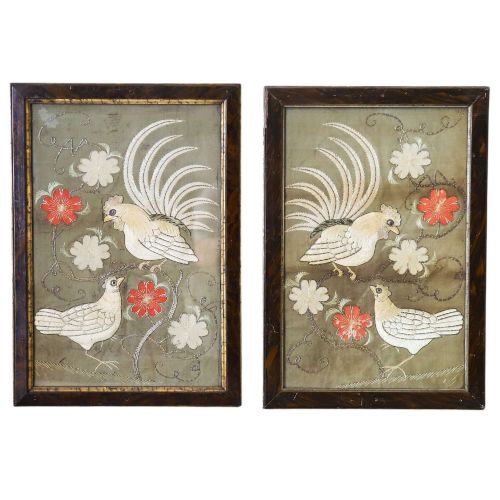
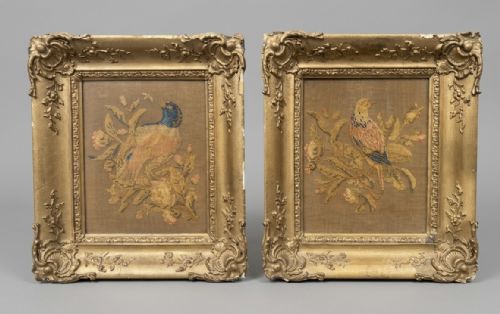
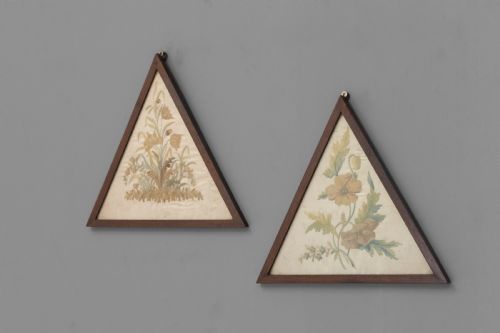
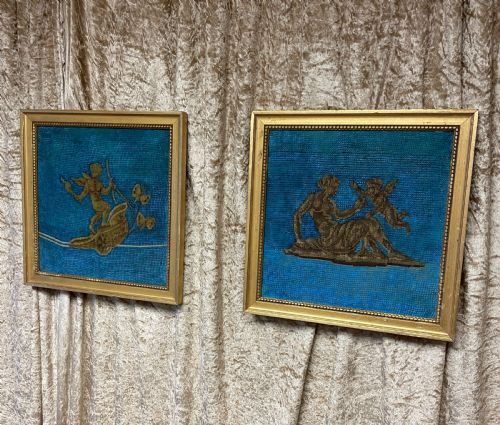
When you search for pair needlepoint pictures, you encounter matched sets of framed textile art spanning the 18th century, the Regency period, and the 19th century. These works take the form of wall art and framed embroidery, often depicting birds, cockerels, hens, and floral subjects in circular, oval, or rectangular formats.
The versions you are most likely to meet on this page include Regency silk embroideries set within gilt wood frames or mezzotint black glass, alongside 19th-century needlework panels and Chinese embroideries featuring garden birds and mandarin ducks.
Each pair balances composition across two distinct panels, designed to hang together as a matched set in domestic interiors. The materials range from wool and silk thread on fabric grounds to water-gilded and faux tortoiseshell frames.
Materials and construction
Maker execution relies on fine silk and wool threads worked onto fabric grounds using long stitch and needlepoint techniques to build detailed pictorial scenes of birds, flora, and figurative subjects.
Framing forms an integral part of the piece, utilising giltwood, gold leaf, water-gilded oval surrounds, and faux tortoiseshell, frequently complemented by mezzotint black glass plates.
Mandarin ducks make repeat appearances, reminding us that even historic stitchers loved a loyal waterbird.
Assessing quality and craftsmanship
Quality reveals itself in the fineness of the needlework and the fidelity of the silk or wool threads, where tighter, more controlled stitches render intricate details in plumage and floral petals.
The integrity and originality of the surrounding frame elevate a piece, particularly when retaining water gilding, original gilt wood, or period black glass rather than later replacements.
The Pair Needlepoint Pictures Glossary
- Needlepoint
- A type of counted or freehand canvas work embroidery stitched with wool or silk threads to form a dense pictorial surface.
- Regency
- A British design period spanning the early 19th century, known for neoclassical influence, refined elegance, and classical motifs.
- Giltwood
- Wood that has been coated with a thin layer of gold leaf or gilt powder, standard for high-status frames of the 18th and 19th centuries.
- Mezzotint glass
- Dark glass borders used on picture frames, particularly in the Regency era, to create a contrasting reflective margin around the artwork.
- Long stitch
- An embroidery technique using parallel or staggered stitches of varying lengths to create smooth pictorial shading.
Pair Needlepoint Pictures: Frequently Asked Questions
What periods do these pictures come from?
These decorative textile works date from the 18th century, the Georgian era, the Regency period, and across the 19th century.
Craftsmen and makers of these eras produced matched sets using silk, wool, and gilt framing tailored to contemporary interior tastes.
How were pair needlepoint pictures displayed?
They were hung symmetrically on drawing room and parlour walls, often flanking a mirror, fireplace, or architectural feature.
Their matched composition provided balance to period interior schemes, presenting corresponding subjects such as pairs of birds or floral arrangements.
What subjects typically appear on them?
Common subjects include garden birds, mandarin ducks, cockerels, hens, and detailed circular or oval floral compositions.
Chinese embroideries and English country house pieces frequently utilised avian and botanical motifs rendered in vibrant silk threads.
How do I identify a Regency frame?
Regency frames often incorporate specific elements like water-gilded surfaces or black mezzotint glass borders surrounding the textile.
These materials reflect the neoclassical aesthetic popular during the early 19th century and complement the fine silkwork within.