



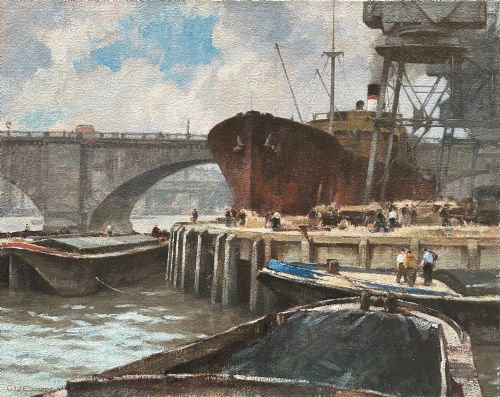
Vintage Nautical Oil Artwork
Vintage nautical oil artwork brings maritime history and open water scenes into rooms through period paintings.
Vintage Nautical Oil Artwork
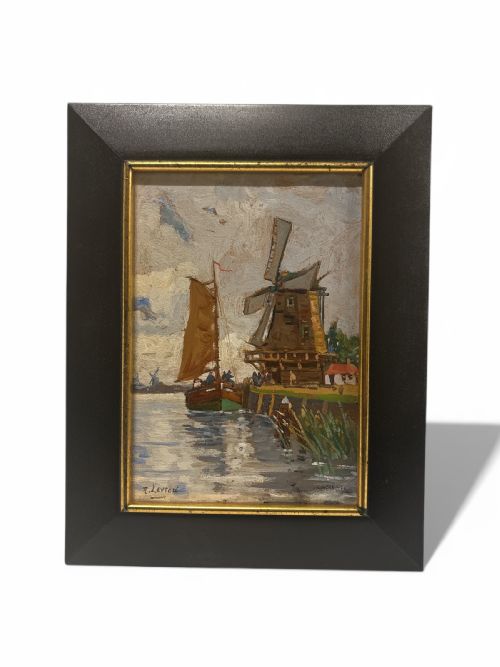
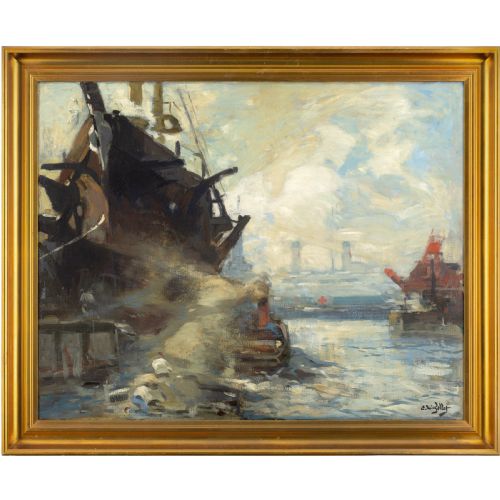
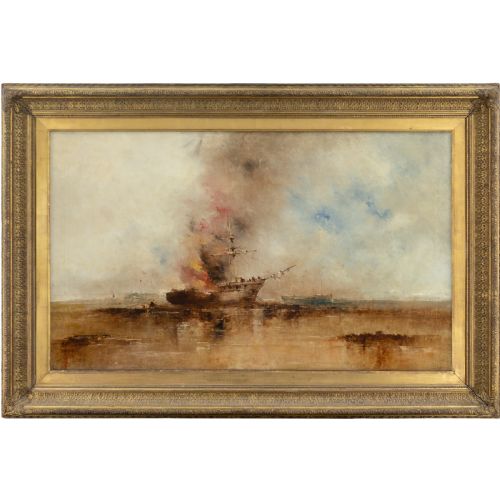
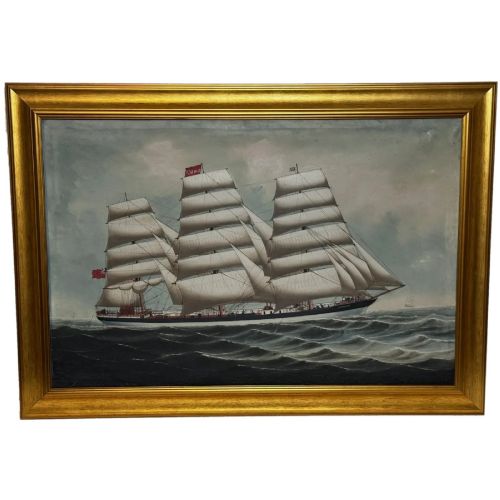
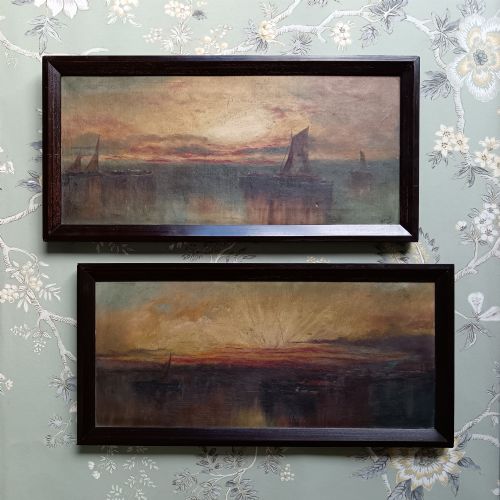
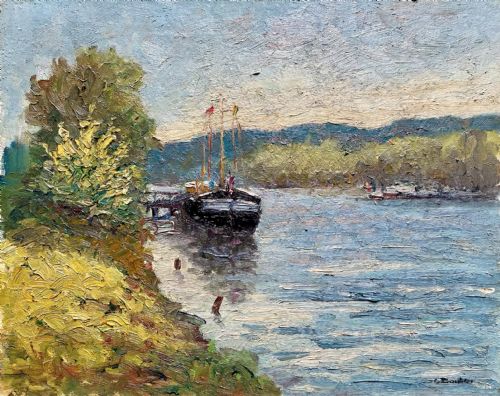
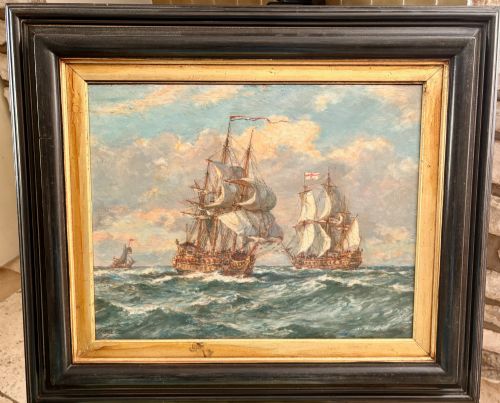
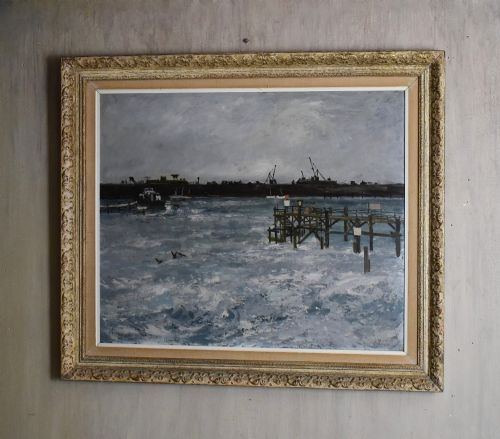
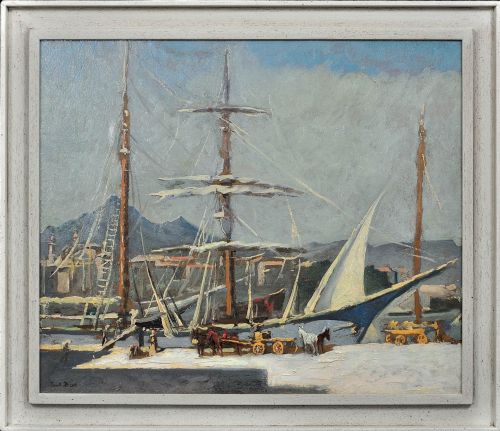
When buyers search for vintage nautical oil artwork, they encounter maritime scenes, coastal views and shipping subjects rendered in oil paint. These pieces capture historical vessels, stormy seas, and harbour life across various centuries.
The selection on this page relies heavily on works from the Victorian period, the Edwardian era, and the mid-twentieth century. Canvas and board serve as the primary supports for these painted maritime subjects.
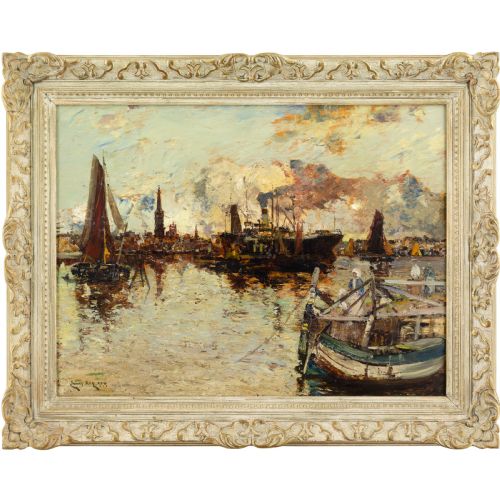
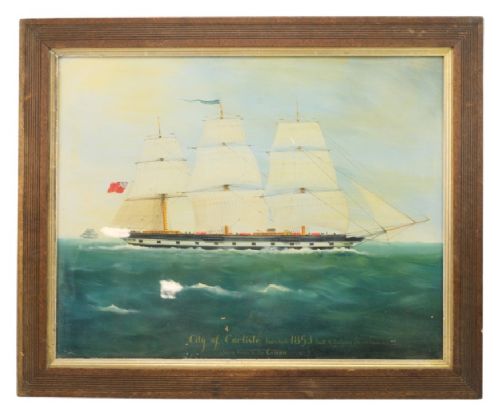
Forms range from intimate coastal studies to large paintings of tall ships and steamships. Gilt frames frequently accompany these works, preserving their period presentation.
How they were made
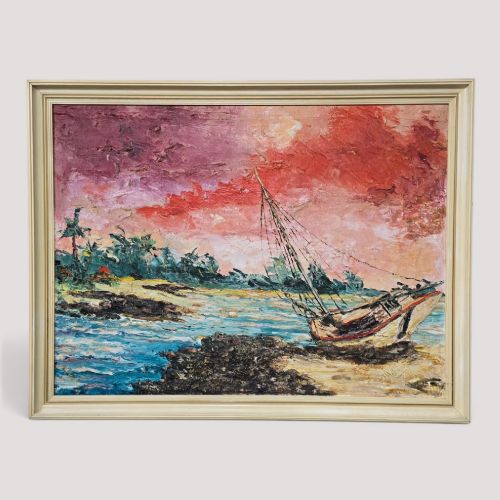
Artists utilised oil paint on canvas, board, and card to build up rich surfaces and textures. Ground pigments mixed with drying oils allowed for smooth blending in calmer waters and thick impasto applications for heavy seas.
Wooden frames, often finished with gilt or giltwood, were constructed to house the paintings. These frames completed the presentation and protected the edges of the canvas or board.
Several artists captured historical steamships alongside traditional wooden sailing ships as modern technology changed the seas.
What varies in quality
Execution and handling of the medium separate standard works from finer examples. Skilful brushwork captures the movement of water and the rigging of vessels with precision.
Condition of the painted surface and originality of the framing contribute to overall integrity. Works retaining their original gilt frames and stable paint layers represent stronger examples.
Eugène-Louis Gillot·William McAlpine·Reginald Arthur Borstel·James Kay RSW·Bernard Gribble·Peter Brannan·Paul Bret·Willem Bos·Lai Fong·William Henry Williamson·Abraham Hulk I·Elisabeth Bardon·Charles Napier Hemy·Edward Henry Eugene Fletcher
The Vintage Nautical Oil Artwork Glossary
- Impasto
- Paint applied thickly to a canvas or board so that it stands out from the surface. This technique allows artists to render the heavy texture of crashing waves.
- Giltwood
- Wood carved and covered with a thin layer of gold leaf or gold paint. This material forms the ornate frames seen around many period paintings.
- Seascape
- A type of artwork depicting the sea, ships, or coastal views. These subjects form the core of maritime painting traditions.
- Board
- A rigid flat material used as a support for painting instead of stretched canvas. Artists often utilised wooden boards or card for smaller works.
Vintage Nautical Oil Artwork: Frequently Asked Questions
What subjects do these paintings show?
These artworks depict sailing ships, steamships, coastal landscapes, and harbour scenes. Artists recorded naval vessels, fishing boats, and specific historical ships.
Compositions range from calm coastal anchorages to dramatic storms at sea. The imagery reflects maritime commerce, naval history, and coastal life.
How do I identify the period of a painting?
Dating relies on the style of the vessels depicted, the clothing of figures, and the framing materials. Edwardian and Victorian works often feature detailed rigging on sailing ships.
Signatures, framing styles, and the type of canvas or board provide further clues. Mid-twentieth-century pieces display looser brushwork and modern subject matter.
How should I hang and light these pieces?
Oil paintings benefit from stable indoor environments away from direct sunlight and excessive moisture. Consistent wall spaces preserve the condition of both the canvas and the frame.
Soft picture lighting enhances the colours and textures of the paint surface. Proper hanging hardware secures the weight of framed works safely to the wall.
What is the difference between canvas and board?
Canvas is fabric stretched over a wooden frame, offering a flexible surface that responds to atmospheric changes. Board provides a rigid, solid support often utilised for smaller paintings.
Both materials support oil paint effectively. Board pieces usually remain compact and flat without the need for re-tensioning.