


Vintage Music Seat
A vintage music seat brings character to a room, offering practical seating designed for musicians and dressing tables across past centuries.

Vintage Music Seat
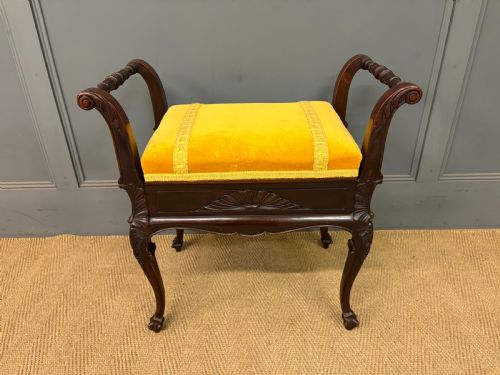
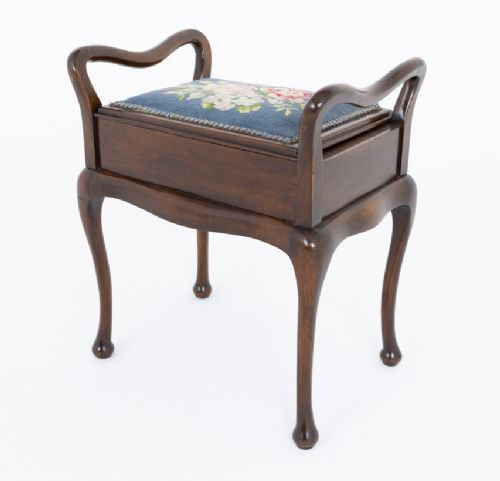
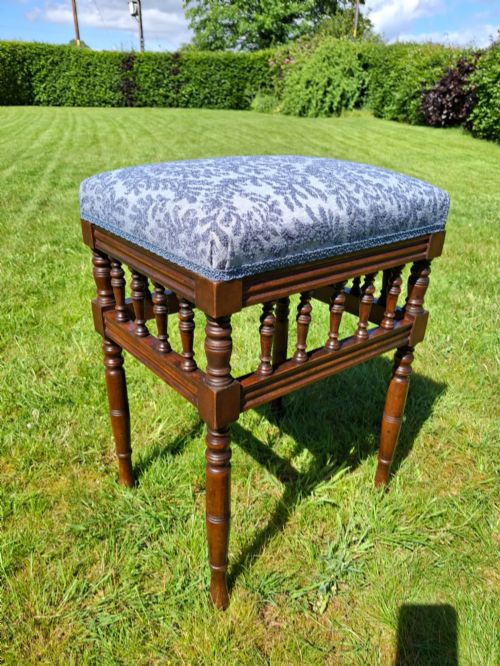
A vintage music seat encompasses piano stools, revolving music chairs, and duet seating designed for musicians at keyboards or harps. Most examples encountered here date from the Victorian and Edwardian eras, alongside pieces spanning the nineteenth century.
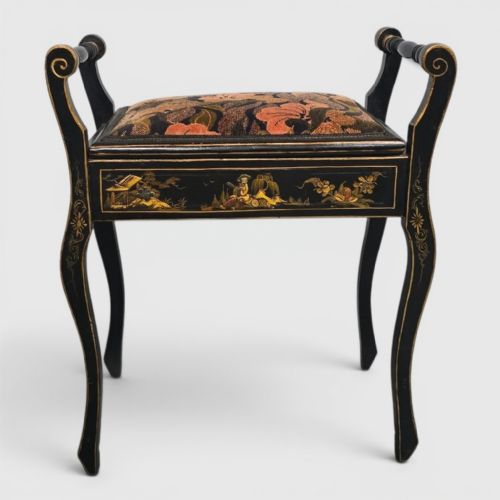
The selection ranges from single revolving stools to duet benches with storage compartments, plus occasional related items such as dressing chairs and musical figures. Mahogany, walnut, and rosewood form the primary wooden structures supporting various upholstered tops.
How they were made
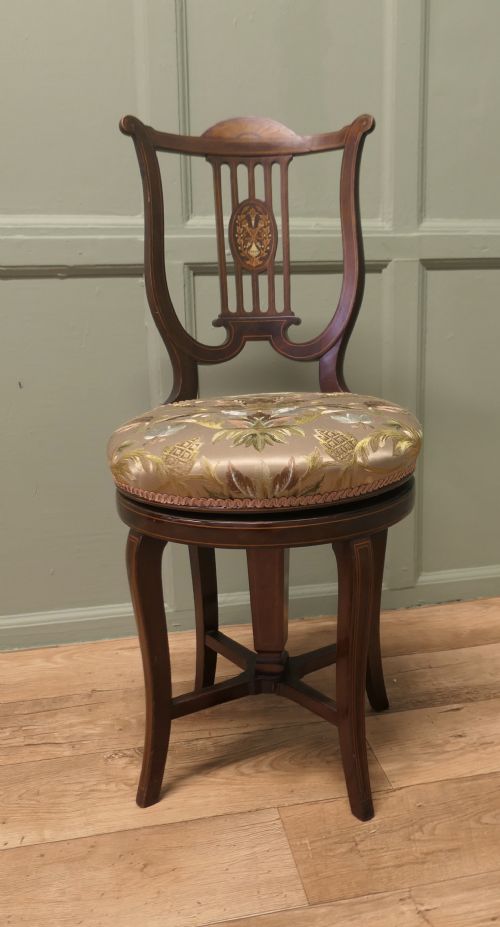
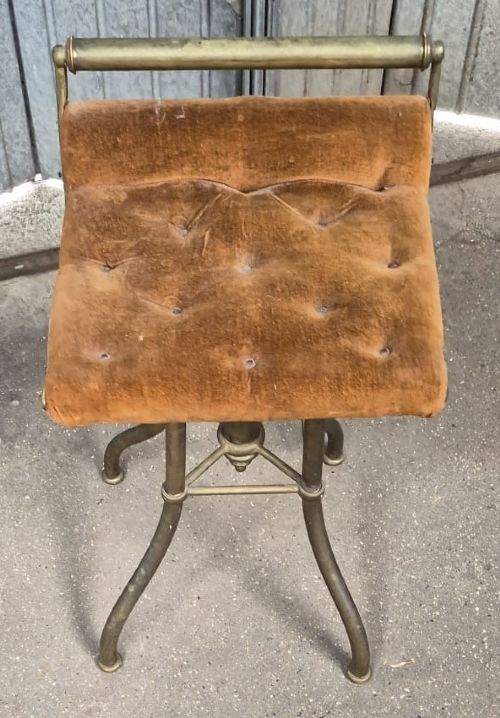
Cabinetmakers utilised hardwoods like mahogany, walnut, and rosewood, frequently shaping them into revolving mechanisms, brass frames, or fall-front storage compartments. Inlaid details and carved walnut elements reflect specific revival styles popular during the nineteenth and early twentieth centuries.
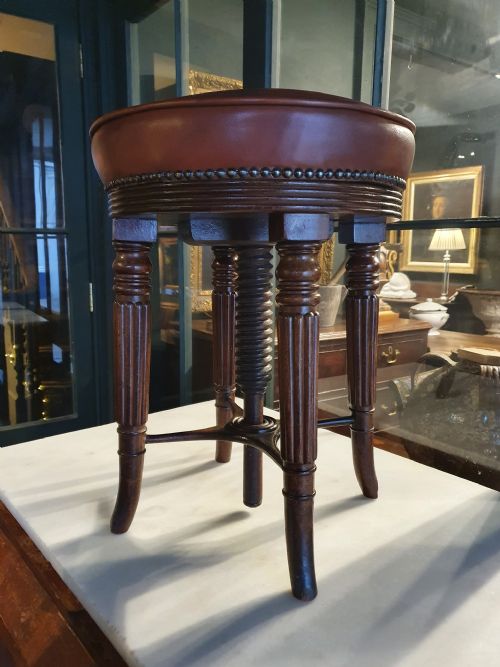
Upholstery techniques involved fabric, leather, velvet, and tapestry stretched over padded seats. Adjustable height mechanisms relied on threaded wooden screws or metal screw stems concealed beneath the cushion.
The listings feature mahogany as the dominant wood, alongside walnut, rosewood, and oak across Victorian, Edwardian, and Regency periods.
What varies in quality
Quality rests in the smoothness of the revolving mechanism and the integrity of the timber frame rather than merely surface polish. Pieces bearing maker attributions or complex joinery demonstrate superior workshop standards.
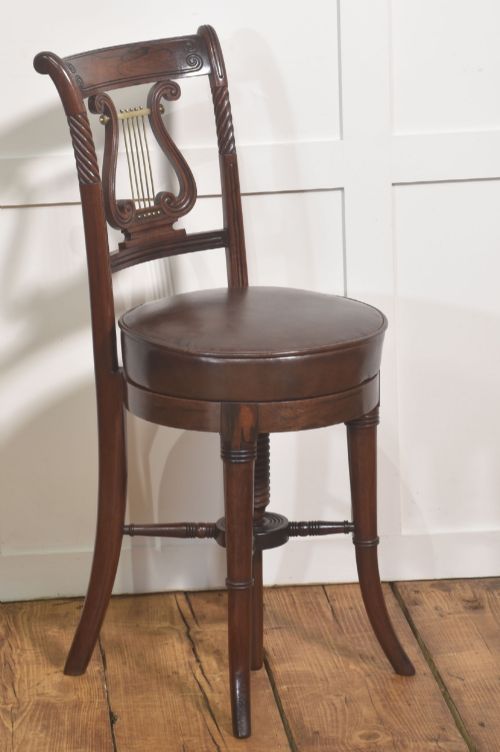
The refinement of carved details, such as lyre backs or inlaid banding, distinguishes standard production models from exceptional examples. Original upholstery materials and well-maintained adjustable screws elevate the desirability of a piece.
Gillows·Jas Shoolbred·James Shoolbred
The Vintage Music Seat Glossary
- Revolving
- A seat designed to turn on a central screw or spindle to adjust height or position. This mechanism allows the player to pivot easily towards sheet music or accompanists.
- Duet stool
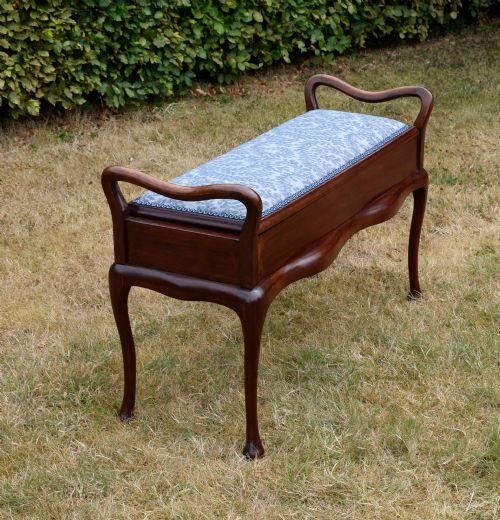
- A wider bench designed to seat two players simultaneously side by side. These often incorporate hinged seats revealing internal storage for sheet music.
- Fall-front
- A hinged front panel that drops downward to access internal shelving or storage compartments. It is commonly found on Edwardian and Victorian piano cabinets and stools.
- Lyre back
- A chair back shaped in the symmetrical outline of a classical lyre instrument. This motif recurs frequently in nineteenth-century music room seating.
- Sheraton Revival
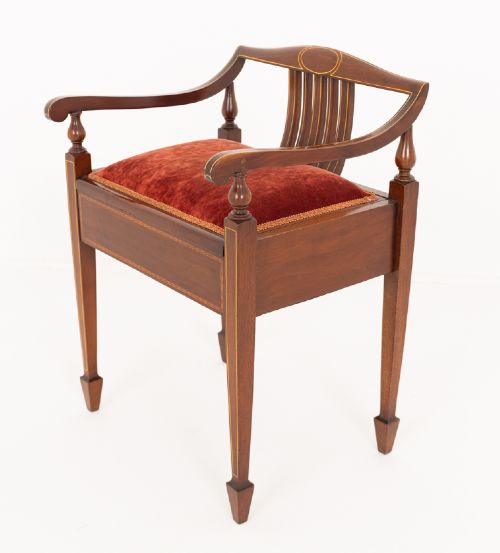
- A late nineteenth-century design movement recreating the lighter neoclassical styles of the eighteenth century. Pieces feature slender tapered legs and delicate satinwood or boxwood inlay.
Vintage Music Seat: Frequently Asked Questions
How do adjustable music seats work?
Most adjustable music seats utilise a threaded central wooden screw or metal spindle hidden beneath the upholstered top. Turning the seat clockwise or anticlockwise raises or lowers the height for the player.
Older models rely on steady hand-turned mechanisms which require smooth threading within the box frame to remain stable during use.
Can I use a piano stool at a dressing table?
Many piano stools and music chairs share dimensions and aesthetic qualities with period dressing table chairs. Their compact footprint and adjustable height make them suitable alternatives for modern vanities.
Stools featuring storage compartments also provide practical space for cosmetics and small bedroom accessories.
What is the difference between a solo and a duet stool?
Solo stools provide a compact, single-seat platform often featuring a revolving top for effortless pivoting. Duet stools are built much wider to accommodate two people sharing a bench for four-hand piano pieces.
Duet versions frequently incorporate hinged lids or fall-front panels to store larger collections of bound music sheets.
How do I identify a Victorian music seat?
Victorian music seats typically display heavier timbers such as rosewood or walnut, often featuring carved walnut frames, brass framing, or revolving screw mechanisms. Their stylistic vocabulary draws heavily upon nineteenth-century revival tastes.
Construction methods usually include visible hand-cut joinery and dense padding covered in velvet, tapestry, or leather.