


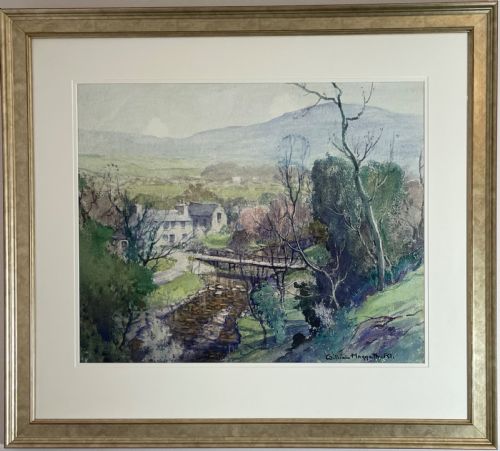


Vintage Mountain Landscape
These vintage mountain landscape works capture towering peaks and dramatic valleys across various media.
Vintage Mountain Landscape
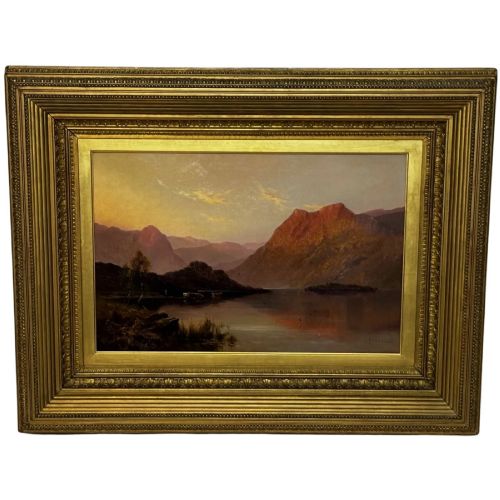
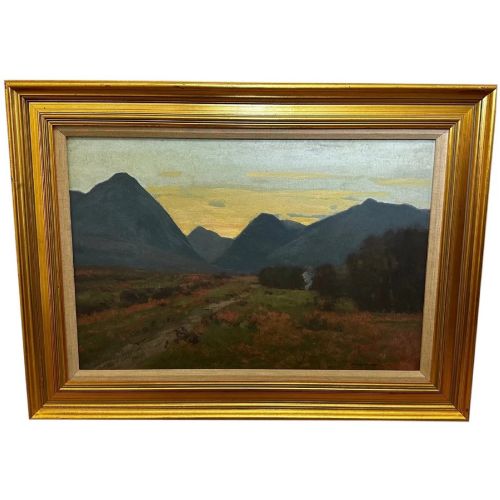
A vintage mountain landscape encompasses artworks depicting elevated terrain, rugged peaks, and remote valleys created during the nineteenth and twentieth centuries. Buyers frequently encounter watercolours and oil paintings recording regional topography from British, European, and international viewpoints.
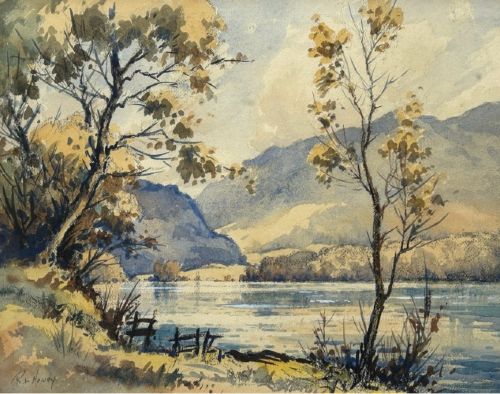
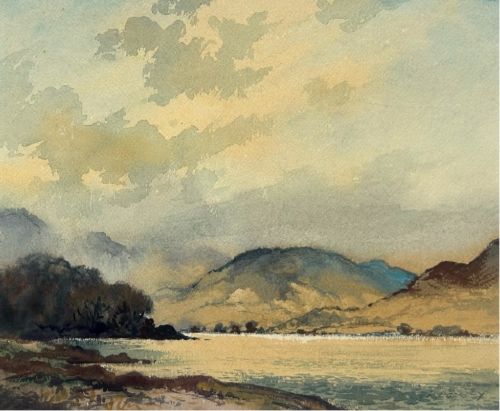
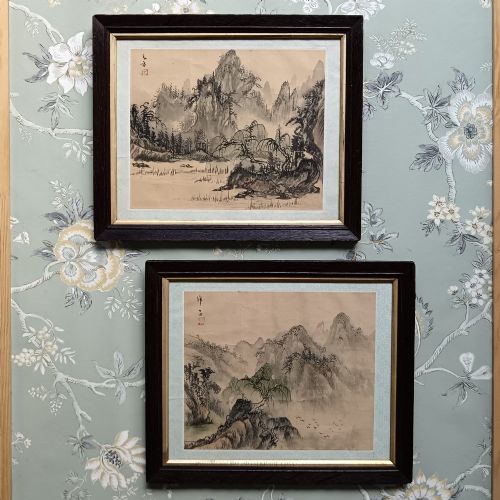
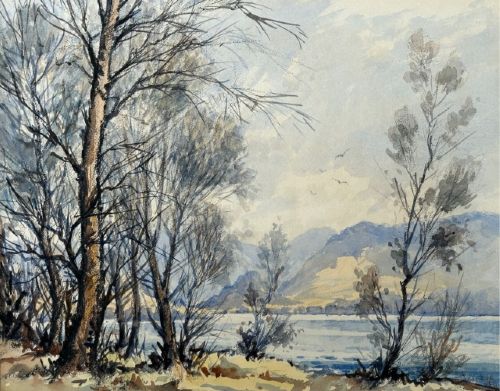
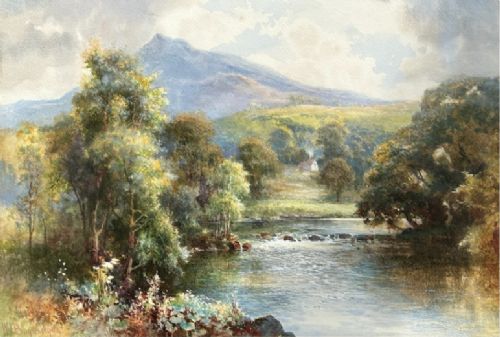
The selection ranges from Victorian Scottish highland scenes and English lake district watercolours to Chinese silk paintings and carved jade sculptures. Such works document both familiar European ranges and distant international terrain through diverse regional traditions.
Materials and construction methods
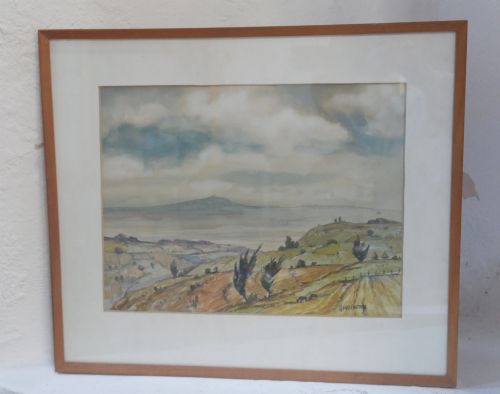
Artists record these upland views utilising oil paint on canvas or board, alongside delicate watercolours and gouache applied to paper. Canvas supports often carry heavier impasto, while paper works rely on transparent washes to delineate craggy topography.
Three-dimensional interpretations utilise carved materials such as jade and soapstone mounted on dedicated hardwood stands. Frames frequently incorporate period wood and gesso moulding to protect the delicate media within.
Some mountain streams are painted with such diligence you can practically hear the chilly water rushing past.
Distinguishing quality across examples
Technical execution separates standard topographical records from works by established regional artists who manipulate light and atmospheric perspective with greater control. The handling of difficult elements like mist, snow-capped summits, and water reflections demonstrates the creator's proficiency.
The preservation of the original support, surface pigment, and frame directly influences the standing of a piece. Intact artist signatures and documented studio provenance provide clearer attribution for collectors.
Alfred Fontville de Breanski Jr·Robert Leslie Howey·George Houston·William Joseph Boyes·William Hoggatt·Frank Hider·Giulio Cecchini·William Grant Murray·John Douglas Perrett·Edward Horace Thompson·Stanley Orchart·George Melvin Rennie·William Miller Frazer·George Turner·Hirst Walker·AJ Thornton·Noel Harry Leaver·Alfred de Breanski Sr·Samuel Towers·Milton Drinkwater·A Michaelis·Robert John Hammond·Orlando Greenwood
The Vintage Mountain Landscape Glossary
- Watercolour
- A paint consisting of pigment suspended in a water-soluble binder. It is traditionally applied to paper to achieve translucent washes of colour.
- Gouache
- An opaque water-based paint containing pigment mixed with a binding agent and white filler. It produces a heavier, more solid matte surface than standard watercolour.
- Gesso
- A plaster-like mixture applied to wooden panels or frames as a base for painting or gilding. It provides a smooth surface for subsequent layers.
- Provenance
- The chronological history of ownership and custody for a piece of art. Clear documentation helps establish authenticity.
Vintage Mountain Landscape: Frequently Asked Questions
What periods do these mountain artworks originate from?
The available selection spans from the nineteenth century through the Victorian and Edwardian eras into the mid-twentieth century. Works reflect stylistic shifts from traditional topographical recording toward impressionistic interpretations.
Specific decades represented include the 1900s, 1910s, 1920s, 1930s, 1950s, and 1960s. Each era applies its own distinct palette and handling to the upland subject matter.
How should I display watercolour landscape paintings?
Watercolours require framing behind glass to protect the paper substrate and water-soluble pigments from airborne moisture and atmospheric pollutants. Conservation-grade mount board prevents direct contact between the glass and the artwork surface.
Position pieces away from direct sunlight to prevent fading of sensitive pigments over time. Stable indoor humidity levels ensure the paper and supporting frame remain undamaged.
Are Chinese mountain sculptures made from natural stone?
Yes, carved examples utilise genuine minerals such as jade and soapstone. Artisans work directly with the natural variations in the stone to represent peaks, mists, and wooded terrain.
These pieces typically include fitted wooden stands carved specifically to support the contours of the mineral. The stone is polished to highlight its natural grain and colour.
How do I identify Scottish highland landscape paintings?
Scottish highland subjects frequently feature distinct topography including lochs, rugged glens, and roaming highland cattle. Artists working within this regional tradition often recorded locations such as Arran, Pitlochry, and the Hebrides.
Signatures from regional painters provide direct attribution to schools of Scottish impressionism and landscape painting active during the nineteenth and early twentieth centuries.