
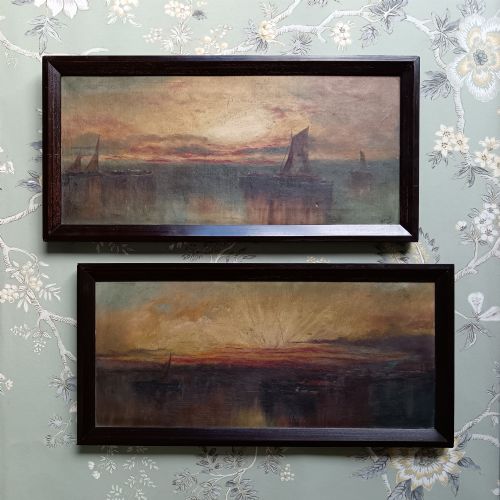
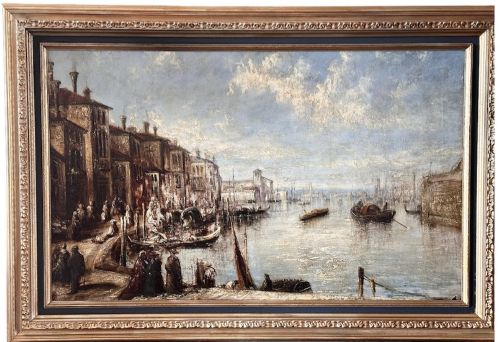


Atmospheric Oil Painting
An atmospheric oil painting captures light and mood on canvas, bringing deep texture and shifting weather into a room.
Atmospheric Oil Painting
When you search for an atmospheric oil painting, you encounter works spanning the nineteenth century through the mid-twentieth century. These pieces record landscapes, riversides, and coastal scenes with a focus on weather, light, and shadow.
The versions most common on this page include British Impressionist and Victorian landscapes, alongside Edwardian views and mid-century modernist boards. Painters render these subjects on canvas, wood, and panel, often using thick brushwork to suggest movement and air.
How they were made
Artists painted primarily with oil paint on stretched canvas, wooden boards, or wooden panels. Oil paint allows for slow drying times, enabling painters to blend tones directly on the support and build up rich layers of pigment.
Gilt frames often house these works, complementing the deep tones of the oil paint. Many pieces utilise plein air techniques, where artists worked outdoors to capture fleeting light and weather conditions directly from nature.
Listings feature works spanning from the nineteenth century through the 1960s, employing oil on canvas, board, and wood panel.
What varies in quality
Quality rests upon the artist's ability to handle light and atmosphere convincingly across the composition. Stronger works demonstrate a confident command of brushwork and colour harmony that unifies the sky, water, or landscape.
The depth of the pigment application and the preservation of the surface integrity also distinguish fine examples. Superior pieces retain their original tension and texture, showing genuine responsiveness to the natural subject matter.
B. Nash·Francis Moltino·Charles Leslie·Florence Hess·William Grant Murray·Gudrun Sibbons·Robert Lesley Howey·H. Hadfield Cubley·Edward Seago·Owen Bowen·Frank Shenton·Lillian M. Harrison·Kershaw Schofield·W.E.Atkinson·James Kay
The Atmospheric Oil Painting Glossary
- Oil on Canvas
- Pigment mixed with drying oil applied to a woven fabric support stretched over a wooden frame. This combination provides a resilient surface that accommodates varied brush techniques.
- Plein Air
- Painting executed outdoors rather than in a studio setting. This method helps artists capture direct observations of natural light and changing weather.
- Post-Impressionism
- An art movement extending beyond Impressionism that places emphasis on expressive forms and symbolic use of colour. Works in this style often use bolder strokes and heightened emotional resonance.
- Gilt
- A thin layer of gold leaf or gold paint applied to frame surfaces. This finish enhances the visual weight of the presentation.
Atmospheric Oil Painting: Frequently Asked Questions
How do I hang an oil painting?
Hang the work securely using appropriate wall fixings that match the weight of the frame and canvas. Position the centre of the picture at eye level to ensure comfortable viewing.
Keep the piece away from direct sunlight and damp walls to protect the oil paint and wooden stretcher bars over time.
What is Victorian impressionism?
Victorian impressionism combines nineteenth-century British landscape traditions with looser brushwork and a focus on atmospheric effects. Artists in this tradition sought to record the fleeting qualities of light and weather.
These works often depict rivers, mountains, and coastal scenes under changing skies, using layered oil paint to create depth.
How do I date an oil painting?
Examine the style, the stretcher construction, and any signatures or inscriptions on the reverse of the canvas or board. Nineteenth-century works often use different canvas preparations and framing styles compared to mid-century pieces.
Artist records and exhibition labels can also provide specific dates or tight chronological brackets for the creation of the work.