
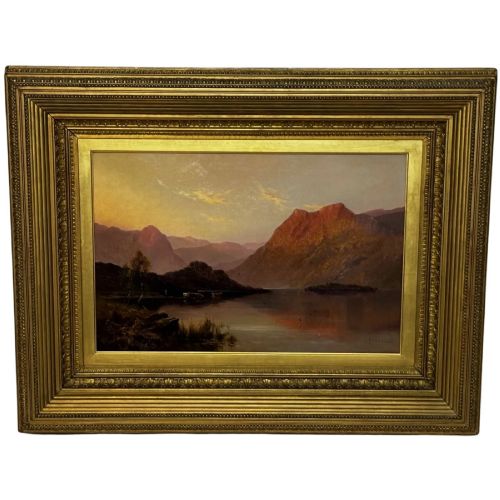
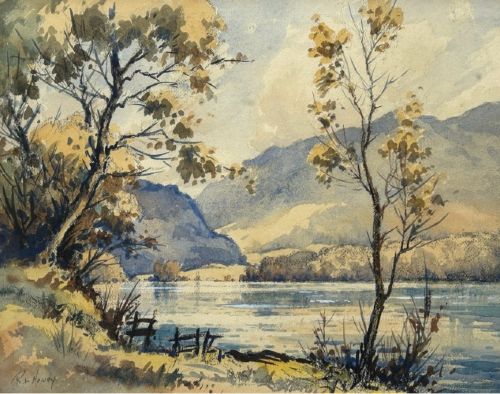
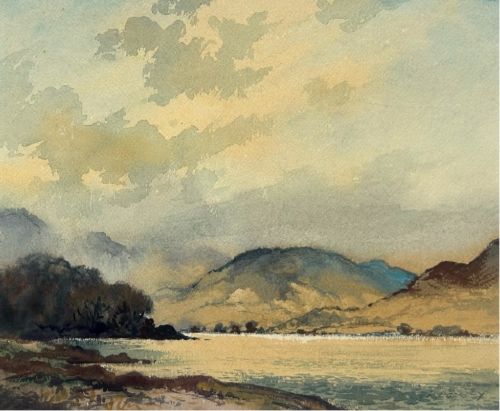
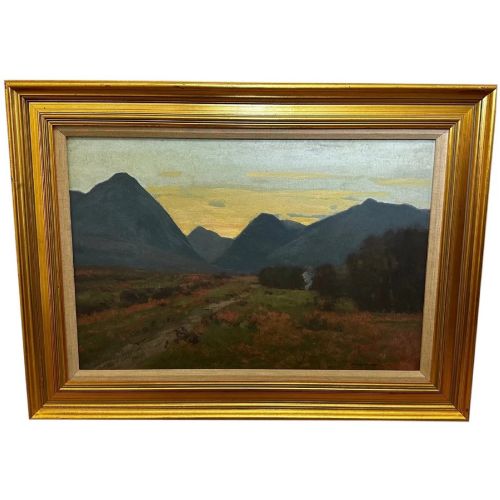


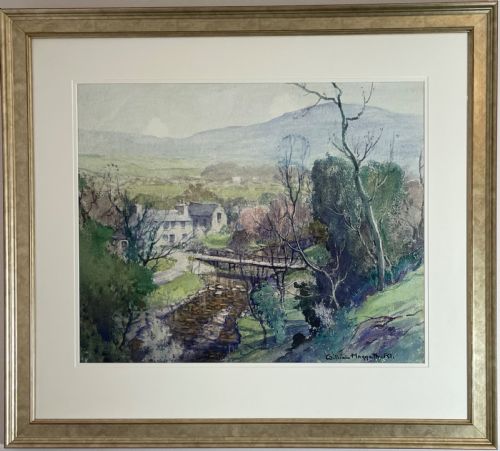


Vintage Mountain Landscape Art
Vintage mountain landscape art brings the scale and quiet of high ground indoors, capturing peaks and lakes in oils, watercolours, and silk.
Vintage Mountain Landscape Art
Vintage mountain landscape art encompasses painted and drawn views of high terrain, lakesides, and valleys produced from the Victorian era through the mid-twentieth century. Buyers searching this phrase encounter works ranging from traditional British and Scottish impressionist watercolours to substantial continental oil paintings.
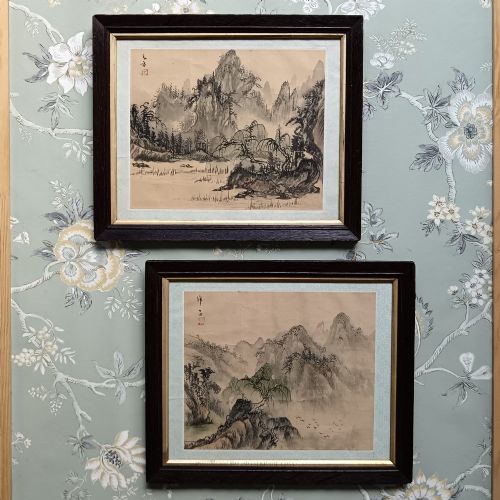
The material record on this page leans heavily towards works on paper and canvas, framed in wood and glass, alongside occasional carved jade sculptures and silk paintings. Framed watercolours and oil paintings from the early twentieth century appear most frequently in the current selection.
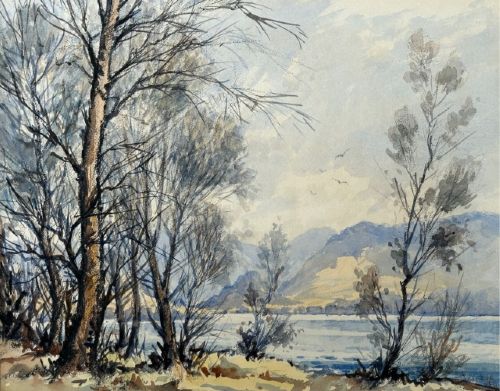
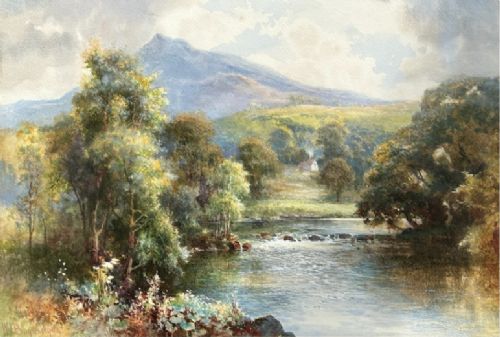
Geographic subjects span the Lake District, Scottish Highlands, Welsh river valleys, and Alpine peaks, alongside depictions of European and overseas topography. These pieces capture regional light and weather, recorded by artists working on location or in studios during the nineteenth and twentieth centuries.
Materials and technique
Artists deployed oil paint on canvas, board, and panel to build dense colour and texture, capturing the weight of snow-capped mountains and shadowed water. Watercolours and gouache on paper offer a lighter touch, recording fast-changing light across Cumbrian or Scottish hills.
Support materials include traditional linen canvas stretched over wooden frames, heavy watercolour paper, and carved gesso or hardwood stands for sculptural jade objects. Original frames in wood and gilt often accompany these works, preserving the piece as it was exhibited decades ago.
Geese frequently paddle across quiet river scenes while Highland cattle graze undisturbed beneath towering peaks.
Factors of distinction
Distinction in these works lies in the sureness of the brushwork and the artist's command of atmospheric depth, separating routine topographical recording from accomplished landscape painting. A strong composition uses light and shadow to pull the viewer into the valley or up the mountain slope.
Condition and originality also set works apart, particularly the survival of the original frame and the clarity of the paper or canvas surface. Pieces bearing clear signatures, exhibition histories, or artist studio stamps carry distinct documentary weight.
Alfred Fontville de Breanski Jr·Robert Leslie Howey·George Houston·William Joseph Boyes·William Hoggatt·Frank Hider·Giulio Cecchini·C Caldwell·William Grant Murray·John Douglas Perrett·Edward Horace Thompson·Stanley Orchart·George Melvin Rennie·William Miller Frazer·George Turner·Hirst Walker·AJ Thornton·Noel Harry Leaver·Alfred de Breanski Sr·Samuel Towers·Milton Drinkwater·A Michaelis·Robert John Hammond·Orlando Greenwood
The Vintage Mountain Landscape Art Glossary
- Gouache
- An opaque watercolour paint that dries to a matte finish, allowing artists to build solid areas of light against darker mountain backgrounds.
- Impressionism
- A style focused on the accurate depiction of light in its changing qualities, seen across various British and European landscape schools in this selection.
- Panel
- A rigid wooden support used by painters as an alternative to stretched canvas, common in nineteenth-century oil sketches.
- Watercolour
- A paint consisting of pigment suspended in a water-based solution, traditionally applied to heavy paper to capture transparent washes of mountain air and water.
Vintage Mountain Landscape Art: Frequently Asked Questions
What subjects do these paintings show?
The works depict high terrain, lakes, rivers, and valleys, focusing on regions such as the English Lake District, the Scottish Highlands, and the Alps.
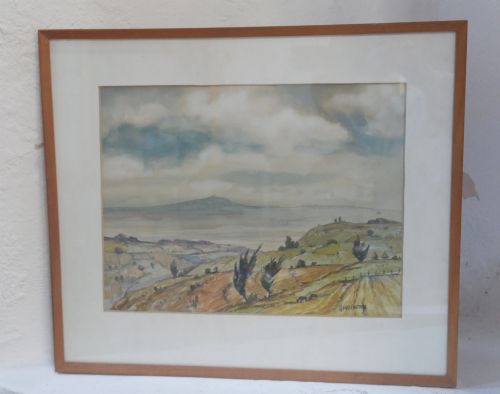
Subjects also extend to overseas landscapes, including views from Kenya, New Zealand, and China.
How should I frame and display them?
Many pieces retain their original wood or gilt frames, which complement the period of the artwork and protect the edges of the canvas or paper.
Watercolours and drawings under glass require placement away from direct sunlight to prevent fading of the pigments over time.
How do I date a mountain landscape?
Dating relies on recorded artist active periods, framing styles, and inscriptions verso, such as artist studio sale stamps or exhibition labels.
Materials also offer clues, with nineteenth-century works often appearing on wood panels or heavy canvas while mid-century pieces utilise specific grades of watercolour paper.