


Vintage Mirrored Candle Sconce
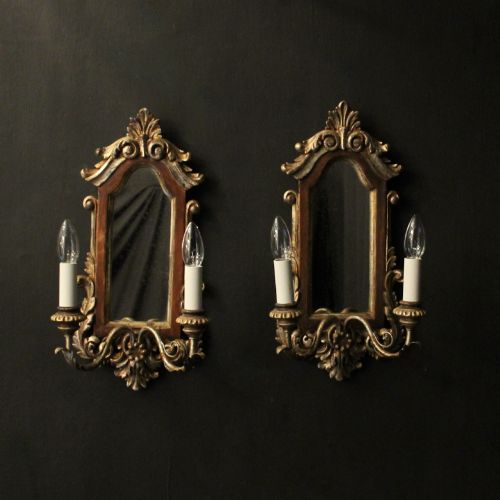
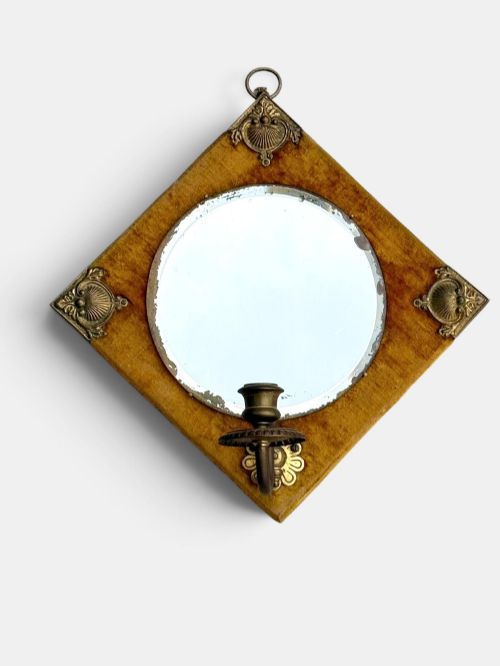
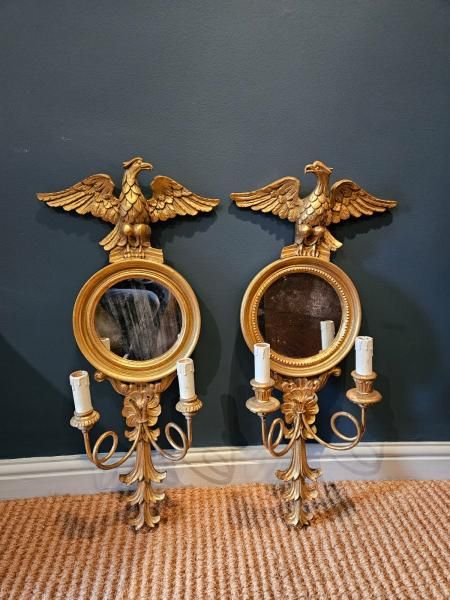
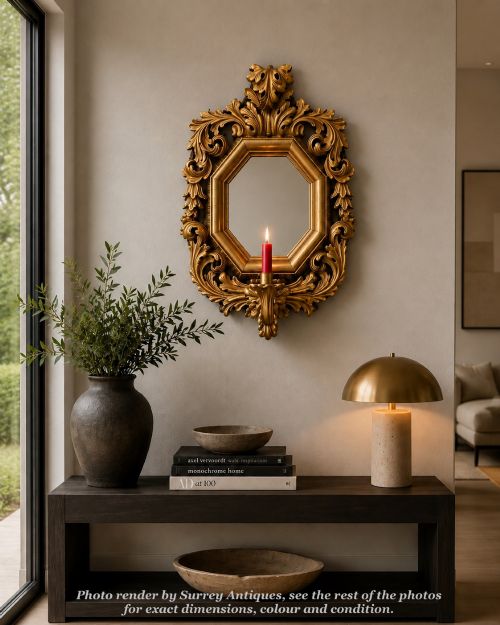
These vintage mirrored candle sconces multiply candlelight across a room through polished glass plates and reflective frames.
Vintage Mirrored Candle Sconce
A vintage mirrored candle sconce combines a wall-mounted reflective glass plate with one or more projecting candle arms. When you search for vintage mirrored candle sconce, you encounter wall lights designed to cast shimmering light across interiors by bouncing flame illumination from a silvered surface.
The selections available here span diverse historical periods including the Victorian and Edwardian eras, alongside pieces dated through 1880, 1900, 1910, 1920, and 1930. Forms range from French chateau girandoles to Florentine baroque twin-arm wall sconces and North Indian mirrored sconces.
Makers and workshops often utilised ornate framing to house the central glass panels. You will find wall mirrors and wall lights alongside cheval mirrors fitted with articulated candle holders, capturing the decorative vernacular of nineteenth and early twentieth century domestic lighting.
Materials and construction methods
Makers constructed these wall lights using substantial timber, brass, bronze, and giltwood frames shaped to hold delicate mirror glass panels. Craftsmen applied gesso layers beneath surface gilding on wooden frames, or cast detailed metal mounts in brass and bronze.
Support arms for candles were engineered to project securely from the reflective backplate, utilising articulated joints in certain cheval and wall-mounted formats. Mirror plates were typically silvered on the reverse and secured within rebated frames using traditional joinery and metal fixings.
Materials recorded across the inventory include glass, brass, giltwood, gesso, gilt bronze, and gilt brass.
Distinctions in craftsmanship and condition
Quality reveals itself in the depth of hand-carved detail on gesso and giltwood frames, or the crispness of cast bronze and brass ornamentation. Superior examples maintain intact original gilding and heavy plate glass with authentic silvering degradation rather than modern replacements.
The structural integration of the candle arms relative to the central mirror backplate determines overall integrity. Pieces that exhibit precise joinery, balanced proportions, and well-preserved surface patination represent the upper tiers of the surviving range.
E.G Paris
The Vintage Mirrored Candle Sconce Glossary
- Girandole
- A branched wall-mounted candle sconce incorporating a mirror backplate. This form reflects and multiplies the flickering light of the candles into the room.
- Giltwood
- Timber that has been coated with a thin layer of gold leaf over a prepared gesso ground. It provides a luminous, reflective surface for decorative frames.
- Gesso
- A plaster-like mixture applied to wooden frames and carved before gilding. It allows for intricate relief ornamentation and crisp decorative detailing.
- Bronze
- An alloy of copper and tin utilised for casting robust and ornate wall sconce frames. It accommodates fine chased detailing and rich patination.
- Cheval mirror
- A freestanding mirror mounted in a frame that allows it to tilt. Certain examples incorporate articulated brass candle holders attached directly to the structure.
Vintage Mirrored Candle Sconce: Frequently Asked Questions
What is a girandole mirror?
A girandole mirror is a specialised wall light featuring an integrated candle bracket mounted directly in front of or upon the reflective glass. These pieces were designed to maximise illumination in dim rooms by bouncing candlelight off the silvered surface.
They appear in various regional styles, including Florentine baroque carvings and French rococo revival designs, serving both decorative and practical lighting functions.
How were these sconces mounted?
These wall lights attach directly to vertical surfaces via integrated hanging loops or brackets fixed to the reverse of the wooden or metal frames. The weight of the mirror plate and metal candle arms requires secure placement into structural wall studs.
Heavier bronze and carved giltwood formats demand robust wall fixings to support the combined weight of the glass and projecting candle branches safely.
How do I date a sconce?
Dating relies on examining the construction materials, frame styles, and the manufacturing characteristics of the mirror glass. Victorian and Edwardian pieces often display specific decorative motifs like arts and crafts brass mounts or neoclassical framing.
Evidence of period manufacturing techniques, such as hand-cut gesso or specific bronze casting signatures, helps narrow down the decade of production between the nineteenth and early twentieth centuries.
Can these hold real candles?
Most surviving sconces retain their original candle holders or sockets designed for standard taper candles. Care must be taken to match the candle diameter securely to the metal or brass drip pans to prevent wax spillage onto the frame.
Using modern dripless candles helps protect delicate antique gilding and historic mirror glass surfaces from heat damage and wax accumulation during use.