




Brass Mirror Candle Holder
These brass mirror candle holders combine reflective glass with metal mounts to cast a warm, ambient glow across a room.
Brass Mirror Candle Holder
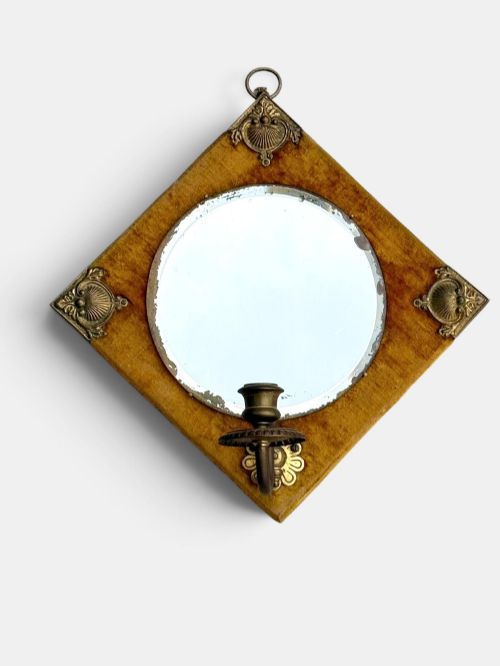
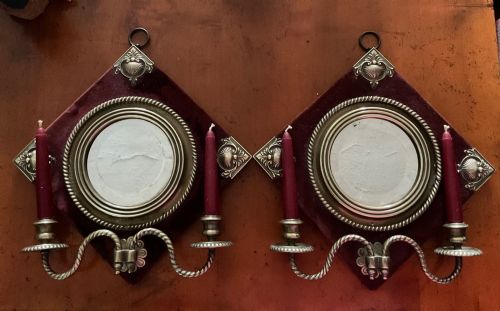
A brass mirror candle holder functions primarily as a decorative wall sconce or tabletop glass piece designed to multiply the light of a single candle through its reflective surface. When you search for a brass mirror candle holder, you encounter forms that span Victorian, Edwardian, and nineteenth-century periods, utilising brass frames alongside materials such as glass, velvet, wood, and ormolu.
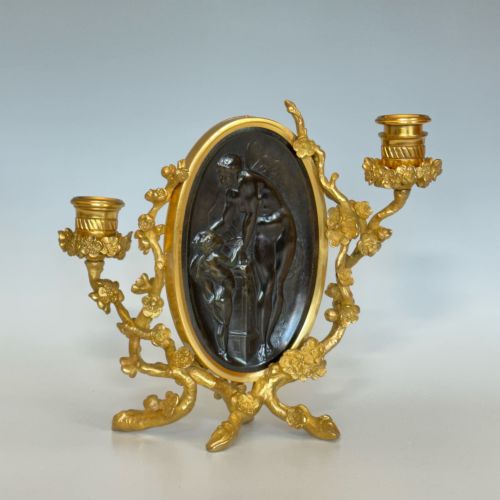
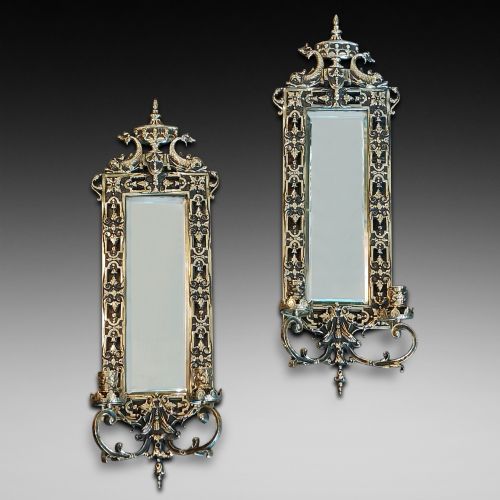
The objects appearing on this page include wall mirrors with integrated mounts, wall sconces, table mirrors, and cheval mirrors fitted with articulated candle holders. Styles range from French Rococo and Arts and Crafts to Anglo-Indian, Chinoiserie, Aesthetic Movement, and Grand Regency designs.
Pairs of girandoles and mirrored wall sconces dominate the selection, often originating from English, French, and North Indian workshops during the mid-to-late nineteenth century and the turn of the twentieth century.
How They Were Made
The construction of these pieces relies heavily on cast and sheet brass frames, which support bevelled or flat mirror glass plates set into timber, velvet, or gilt metal backings. Artisans secured candle arms directly to the heavy metal mounts using traditional fastening techniques suited to the weight of the bronze, ormolu, and copper components.
Makers integrated reflective glass with intricate metalwork, combining polished brass with crystal drops, carved wood, and applied fabric backings such as velvet to create stable wall-hanging or freestanding pieces. The resulting assemblies balance the structural rigidity of brass with the delicate optics of historical mirror plates.
Materials documented across the available pieces include brass, glass, velvet, wood, ormolu, mirror glass, gilt bronze, and copper.
What Varies in Quality
The standard of execution in these pieces depends on the crispness of the brass casting, the depth of the chasing, and the integration of secondary materials like ormolu, copper, and crystal. Finer examples display meticulous attention to detail in the decorative mounts and balanced proportions between the mirror plate and the candle arms.
The integrity of the original mirror glass and the stability of the structural framing distinguish different tiers of manufacture. Pieces featuring well-preserved gilding, original velvet or wood backings, and securely articulated candle holders demonstrate superior period craftsmanship.
Thiebaut Freres
The Brass Mirror Candle Holder Glossary
- Girandole
- A branched wall sconce fitted with a mirror to reflect and amplify candlelight. These fixtures often feature elaborate brass or gilt frames designed to hold multiple candles.
- Ormolu
- Gilded bronze used extensively for decorative mounts on nineteenth-century furnishings and decorative objects. This technique provides a rich, durable golden finish to brass and bronze surfaces.
- Cheval mirror
- A freestanding full-length mirror suspended in a frame that allows it to tilt. Certain nineteenth-century variants include articulated brass candle holders attached directly to the frame.
- Aesthetic Movement
- A late nineteenth-century design style emphasising visual beauty over narrative or moral content. Pieces from this period often incorporate mixed metals like brass and copper.
- Chinoiserie
- European artistic styles reflecting Chinese motifs and techniques. These designs appear on decorative mirrors and sconces produced during the Victorian and Edwardian eras.
Brass Mirror Candle Holder: Frequently Asked Questions
What is a girandole mirror?
A girandole is a specialised wall mirror featuring integrated candle arms designed to project light into a room. The reflective glass acts as a multiplier for the flickering flame.
Historically placed between windows or above mantelpieces, these fixtures served a dual purpose of illumination and decoration before the advent of electric lighting.
How were brass mirror candle holders used?
These pieces hung on walls or stood on tables to capture and scatter the dim light of candles. The polished brass and mirrored glass maximised the available illumination in dark Victorian and Edwardian interiors.
They were frequently mounted in pairs to balance the visual weight and light distribution across a parlour, hallway, or dining room.
How do I distinguish Victorian from Edwardian pieces?
Victorian pieces often display heavier ornamentation, including ornate French Rococo or exuberant Aesthetic Movement designs, utilising robust brass frames and rich velvet backings. They typically date from the mid-to-late nineteenth century.
Edwardian examples, emerging around the turn of the twentieth century, frequently adopt cleaner Arts and Crafts or simplified Chinoiserie lines with lighter structural elements.
Are the candle holders on cheval mirrors original?
Articulated brass candle holders on nineteenth-century cheval mirrors were designed to swing outward to illuminate the person using the glass. Evaluating the metal patina, mounting screws, and wear patterns helps determine if the fittings match the age of the main frame.
These functional arms complement the dual role of the mirror as both a reflective dressing aid and a light source.