

Gold Mirrored Wall Sconce
A gold mirrored wall sconce captures candlelight in reflecting glass, illuminating rooms with historic elegance.
Gold Mirrored Wall Sconce
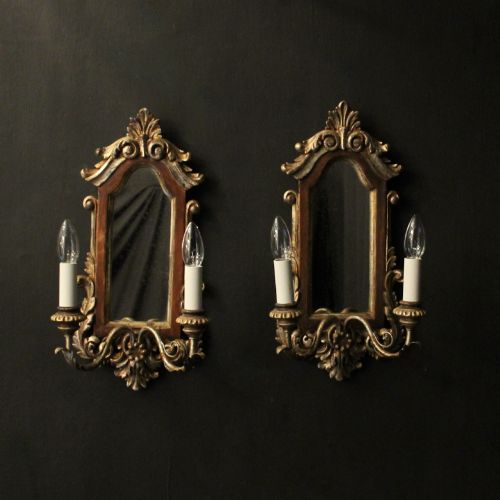
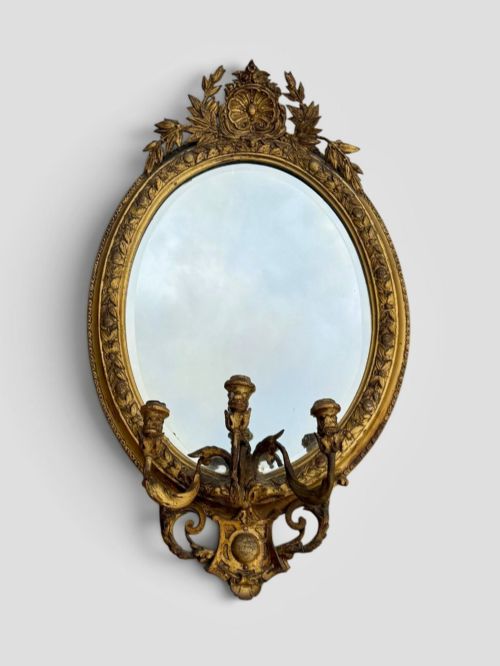
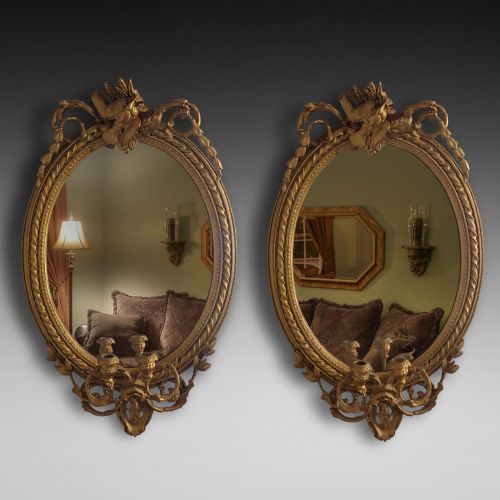
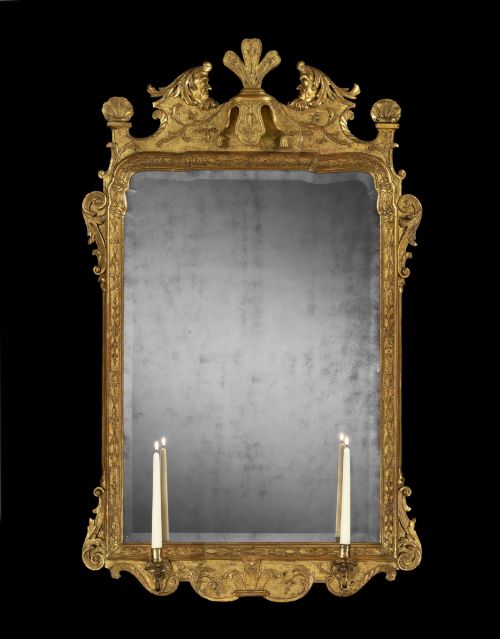
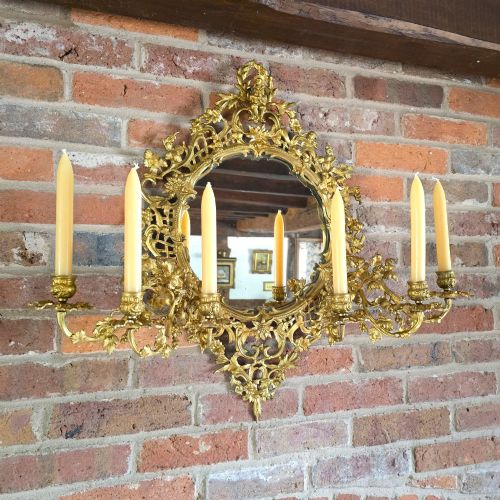
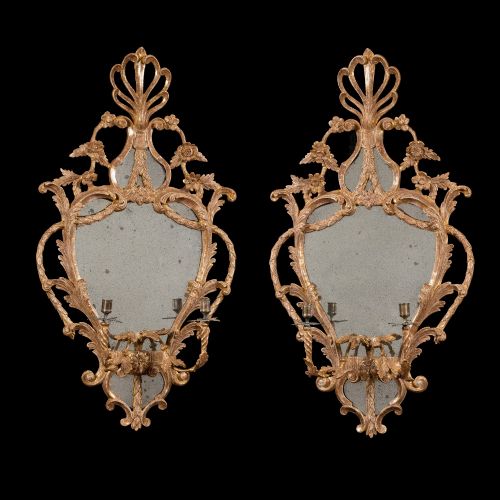
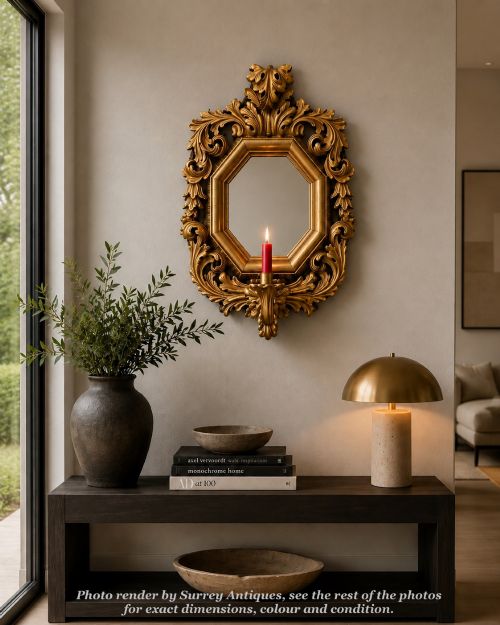
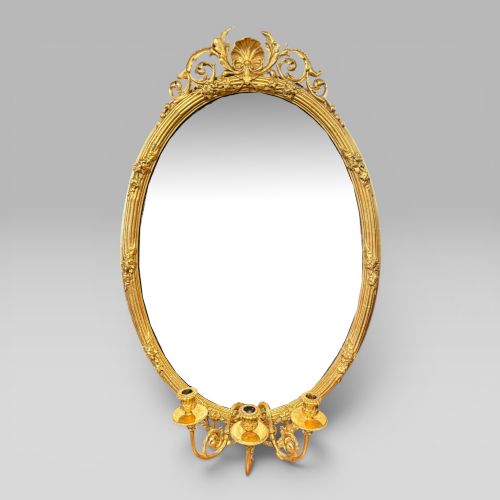
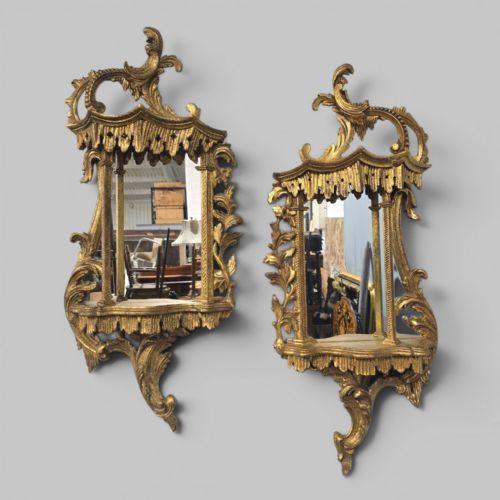
A gold mirrored wall sconce combines a reflective glass plate with a gilded wooden or metal frame, often fitted with candle arms or brackets. These pieces emerge from periods spanning the eighteenth century through to the early twentieth century, taking forms such as girandoles, convex mirrors, and wall display shelves.
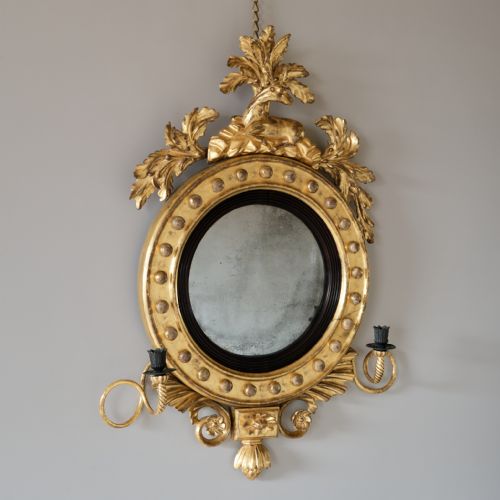
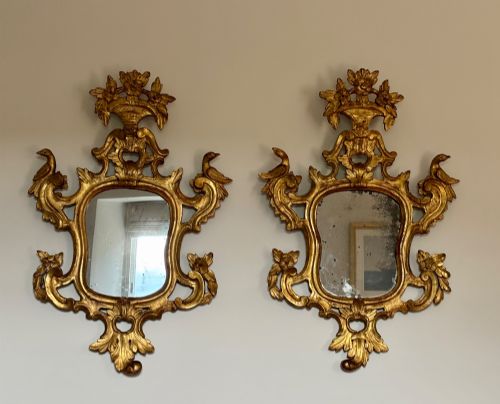
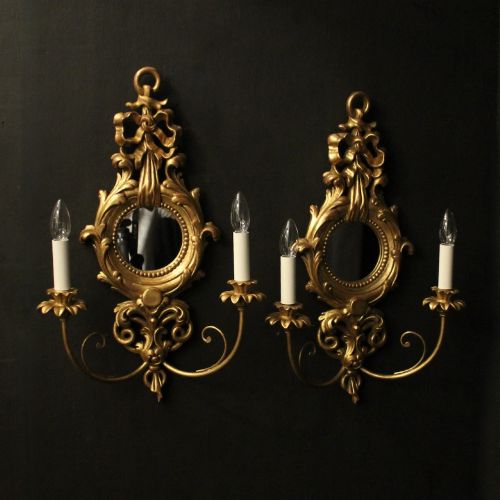
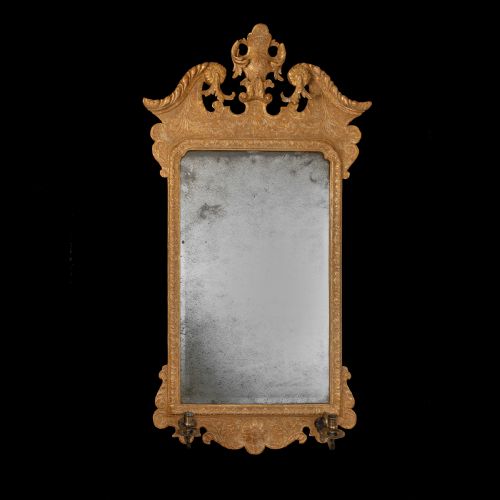
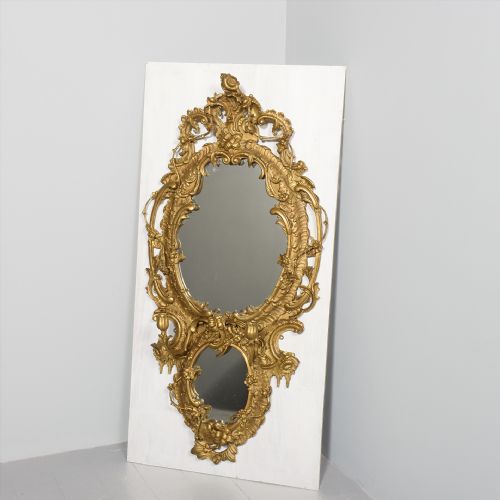
Buyers will encounter various regional interpretations on this page, including ornate Italian Rococo cartouche designs, Florentine twin-arm girandoles, and French ormolu wall lights. The selection ranges from substantial Regency convex mirrors to carved George I and George II gesso pieces designed to multiply ambient light in reception rooms.
Materials and construction
Carvers shaped soft woods like pine before applying layers of gesso, a mixture of chalk and glue, which was then smoothed and carved into intricate scrollwork and floral motifs. Artisans finished these surfaces by laying fine gold leaf or applying liquid gilt paint over the prepared ground.
Mirrored glass plates, including early examples with foxed patination, were set into the carved wooden frames alongside brass, ormolu, or gilt metal components for candle branches. Joinery relied on traditional pegging and secured rebates to hold the heavy reflective plates safely within their decorative surrounds.
Convex mirrors were once dubbed eye of God glasses, traditionally hung in shops so merchants could watch customers without turning round.
Assessing quality
Quality rests in the crispness of the hand-carving and the depth of the gilding, where layered gold leaf reflects light with a warmth absent in flat painted surfaces. Finer items retain their original carved wooden frames and early mercury or silvered mirror plates rather than later replacements.
Proportion and structural integrity dictate the standing of a piece, especially on girandoles where branch attachments must join the main frame securely. The sophistication of the period styling, from restrained Regency convex circles to elaborate Rococo asymmetry, determines the relative distinction of each example.
Benjamin Goodison
The Gold Mirrored Wall Sconce Glossary
- Girandole
- A decorative wall mirror fitted with branching arms for holding candles. These fixtures reflect the candlelight to brighten dark paneled rooms.
- Gesso
- A preparation of chalk, gypsum, and glue used as a base for gilding on wood. Artisans carved intricate relief patterns directly into this hardened mixture.
- Giltwood
- Timber that has been coated with thin leaves of gold or gold-colored metal. It provides a durable, reflective surface favored in formal historic interiors.
- Convex mirror
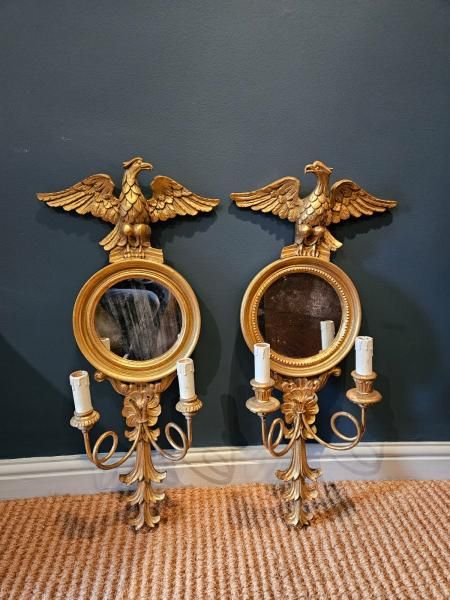
- A round mirror with a bulging spherical glass surface that provides a wide-angle reflection of the interior. They often feature gilded frames adorned with carved balls or eagle crests.
- Foxed plate
- A mirror glass showing dark spots, speckling, and oxidation caused by age. This natural degradation develops as the silver backing reacts slowly over decades.
Gold Mirrored Wall Sconce: Frequently Asked Questions
How do I hang a heavy antique wall sconce?
Secure these pieces directly into wall studs or use appropriate heavy-duty masonry fixings, as carved gesso and mirrored glass create substantial weight. Professional installation is recommended to support the cantilevered pull of candle arms.
Ensure the hanging wire or brackets attached to the reverse match the structural load of the specific frame.
Were these sconces used for candles or electricity?
Original eighteenth and nineteenth-century examples were designed exclusively for candles, utilising the reflective mirror plate to multiply the flickering light in darkened rooms.
Many surviving pieces retain their historic candle sockets, though some have been adapted for electric wiring during later restorations.
How do I clean antique gilded frames and mirror glass?
Dust gilded surfaces gently with a soft, dry brush to protect the delicate gold leaf layer from abrasion or moisture damage. Avoid modern chemical solvents on both the frame and the antique glass.
Clean the mirror plate sparingly with a dry cloth or a barely damp microfibre cloth, keeping liquids away from the wooden edges.
How can I tell an eighteenth-century sconce from a later revival piece?
Examine the construction of the wooden backing, the composition of the gesso, and the character of the mirror plate for signs of age. Eighteenth-century pieces show hand-cut joinery, oxidized backings, and wear patterns consistent with long use.
Revival pieces from the Victorian or later periods often utilise machine-sawn timber and more uniform, modern silvering techniques.