
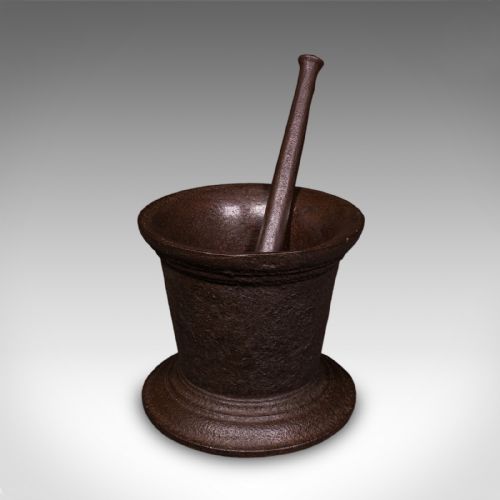


Vintage Metal Mortar
These heavy vintage metal mortar vessels are tactile survivors of centuries spent crushing herbs, pigments, and medicines in domestic and apothecary kitchens.
Vintage Metal Mortar
A vintage metal mortar is a heavy bowl designed for grinding and pounding substances with a matching pestle. When you search for a vintage metal mortar, you encounter functional kitchen and apothecary implements spanning from the seventeenth century through to the Victorian era.
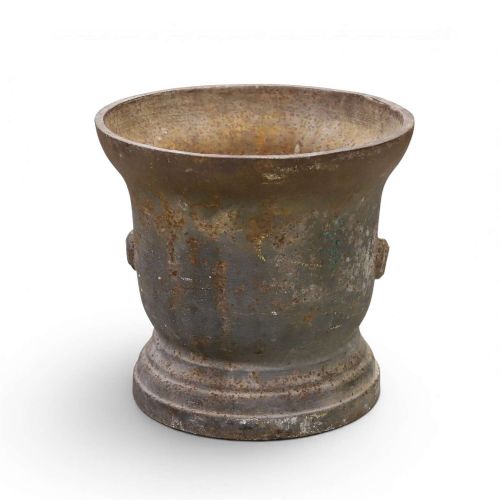
The selections available here range from small domestic kitchen aids to monumental dye makers' vessels weighing over a hundred pounds. Most examples you meet on this page take the form of bronze, brass, or cast iron bowls originating from English, French, and Dutch workshops.
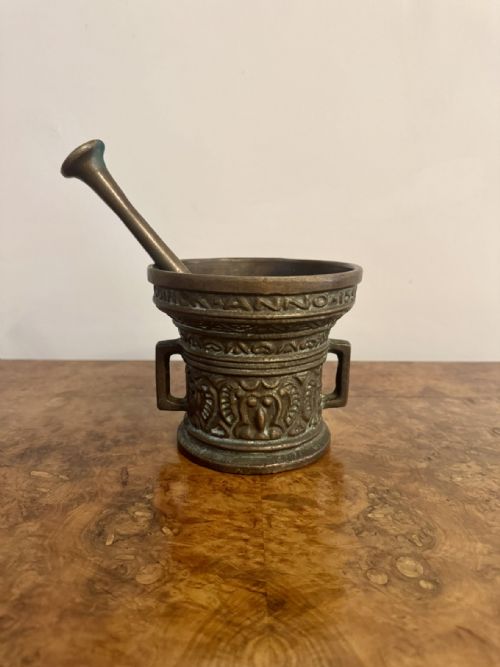
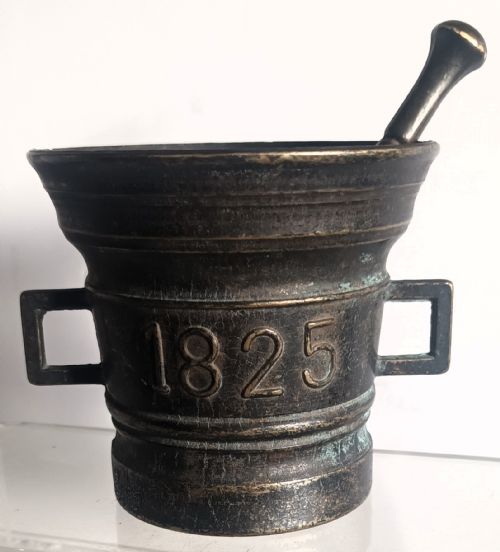
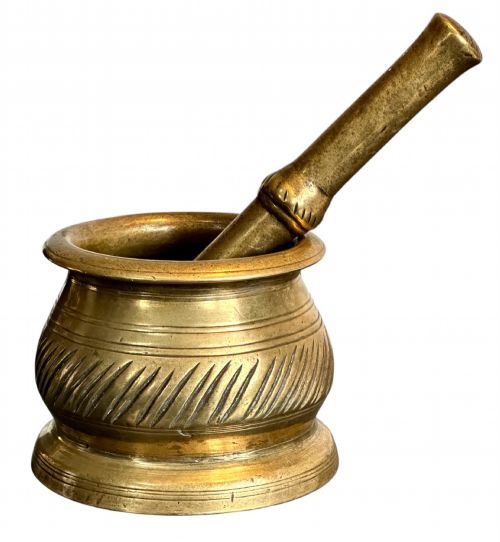
Many of these surviving vessels retain their original pestles, presenting complete sets used historically by chemists, cooks, and tradesmen. Their forms stretch from plain utilitarian shapes to heavily decorated Gothic Revival and Renaissance Revival designs.
What varies in quality
Quality in a vintage metal mortar rests on the purity and weight of the metal alloy, with heavy bell metal and dense bronze commanding greater respect than lighter brass. The crispness of the cast decoration and the survival of a matching period pestle elevate certain examples above standard utilitarian kitchenware.
Proportion and stability define the superior pieces, alongside a pleasing tactile weight that shows substantial material depth. Age-related wear should appear natural and even, reflecting centuries of honest labour rather than modern modification.
The listings on this page span several centuries, including seventeenth century pieces, Georgian examples, and Victorian apothecary aids.
The Vintage Metal Mortar Glossary
- Mortar
- A heavy bowl used with a pestle for grinding or crushing materials. Early examples were cast in bronze or brass for domestic and apothecary use.
- Pestle
- A heavy tool with a rounded end used for pounding and grinding substances inside a mortar. Finding a matched period pestle alongside the bowl completes the set.
- Bell metal
- An alloy of copper and tin traditionally used for casting bells, prized in mortars for its resonant tone and durability. It yields a particularly fine surface finish when polished.
- Apothecary
- A historical practitioner who prepared and sold medicines and drugs. Many surviving mortars served in these shops for pulverising medicinal ingredients.
Vintage Metal Mortar: Frequently Asked Questions
How were these mortars used historically?
These vessels served in kitchens, chemist shops, and dye works to crush herbs, spices, medicines, and raw pigments into fine powders. Cooks and apothecaries relied on the heavy weight of the metal to keep the bowl stable during vigorous pounding.
Over centuries, this daily friction wore smooth paths inside the bowls, leaving physical evidence of active service in domestic and trade settings.
Can I still use an antique mortar for cooking?
Many bronze and brass examples remain structurally sound enough for grinding dry spices and herbs in a modern kitchen. You should check the alloy composition and clean the interior thoroughly before preparing food.
Heavier cast iron or industrial dye mortars require careful assessment, as some historical metals are better suited for display than culinary use.
How do I identify a seventeenth century mortar?
Seventeenth century mortars typically feature thick-walled bronze casting with simpler, robust profiles and occasional flared rims. Decoration often includes subtle mouldings or simple ribbing rather than elaborate revival motifs.
Comparing the alloy colour and the wear patterns helps distinguish these early kitchen and apothecary tools from later nineteenth century revival pieces.
Why do some mortars have handles?
Cast handles or lugs allowed the maker to secure or steady the heavy bowl while pounding tough substances with the pestle. These projections also made it easier to lift and pour the crushed contents out of the vessel.
Handle styles vary by region and period, offering useful clues to the origin and date of the piece.