




Herb Spice Grinder
An herb spice grinder brings centuries of heavy metal and turned timber into the kitchen, offering the tactile weight needed to crush seeds and roots properly.
Herb Spice Grinder
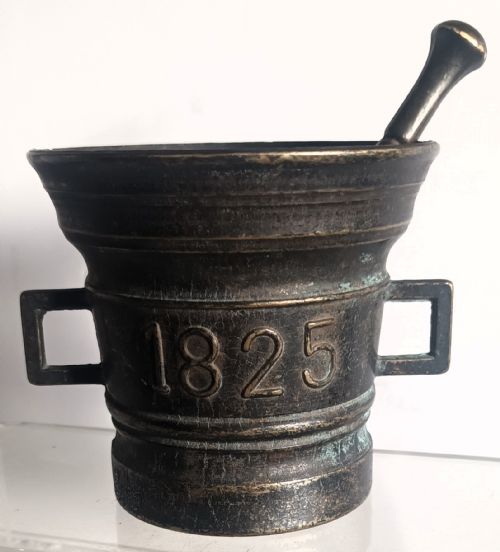
An herb spice grinder most frequently appears in the listings as a traditional mortar and pestle made for kitchen or apothecary use. These implements span several centuries, with particular representation from the Georgian, Victorian, and Edwardian periods.
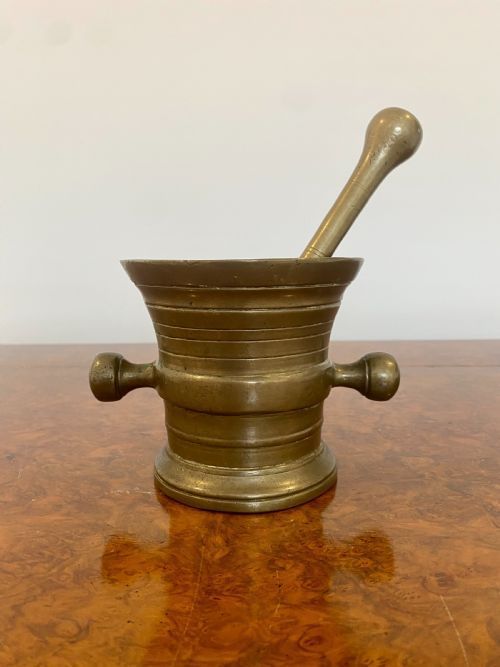
The objects take the form of heavy bowls paired with striking handles, designed to pulverise dry materials through sheer physical force. Origins range from English workshops to Dutch production, reflecting utilitarian domestic and medical needs.
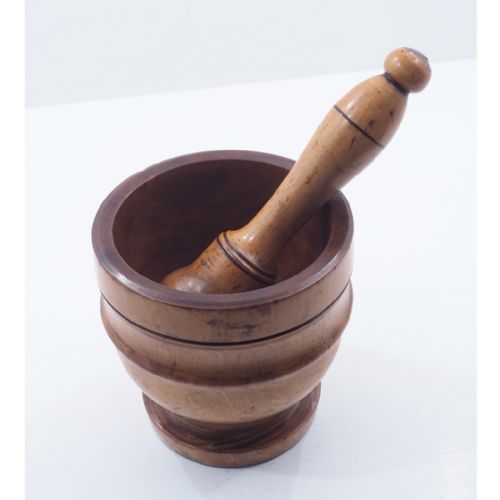
Buyers encounter forms executed in heavy metals alongside turned wooden vessels, showing how preparation tools evolved across different eras. Each survivor retains the distinct proportions dictated by its original function on the counter or shelf.
Materials and construction
Makers shaped bronze and brass through casting, pouring molten metal into moulds to create thick-walled bowls that could withstand repeated impact. These metal examples often feature decorative rims or flared bases formed during the initial casting process.
Turned wood versions utilise dense timbers such as olive wood, beech, and lignum vitae, shaped on a lathe to form smooth cylindrical vessels. This technique exploits the natural grain of hardwood to provide durable containers for dry botanicals.
Several heavy bronze mortars possess flared rims originally designed to catch flying peppercorns during aggressive seventeenth-century kitchen sessions.
Assessing quality
Quality rests upon the heft of the metal and the integrity of the timber, where substantial wall thickness denotes a vessel built for heavy apothecary work rather than light domestic display. A well-balanced pestle that fits the contours of its bowl indicates a tool made for effective crushing.
The clarity of cast details on metal surfaces and the crisp execution of turned rings on wooden pieces separate standard utilitarian items from finer examples. Surviving tools that retain their matching pestles demonstrate a higher degree of completeness.
The Herb Spice Grinder Glossary
- Mortar
- The heavy bowl in which substances are crushed or ground with a pestle. It provides a stable base designed to resist the force of impact.
- Pestle
- The heavy handheld tool used to pound and grind materials against the interior of the mortar. Its shape mirrors the inner curve of the bowl.
- Lignum vitae
- An extremely dense and heavy wood derived from trees in the genus Guaiacum. It was frequently utilised for turned kitchen implements requiring high durability.
- Apothecary
- A historical practitioner who prepared and sold medicines and drugs. Their workspace relied heavily on durable metal and ceramic grinding vessels.
Herb Spice Grinder: Frequently Asked Questions
How do I clean an old metal grinder?
Historic metal vessels should be cleaned gently with warm water and a soft cloth to preserve the accumulated surface character.
Harsh chemical polishes and abrasive pads remove the dark patination that develops over centuries of handling.
Can I still use these for cooking?
Many bronze and brass examples remain structurally sound enough to crush dry spices and seeds on a regular basis.
Wooden or ceramic versions require careful inspection of the interior surface to ensure no cracking has occurred over time.
What is the difference between brass and bronze?
Bronze primarily consists of copper alloyed with tin, producing a darker tone and high tensile strength suited for heavy pounding.
Brass is an alloy of copper and zinc, generally displaying a brighter golden hue and slightly softer physical properties.
Why are some pestles made of wood?
Turned timbers like olive wood and beech offered a lighter alternative to metal pestles while remaining tough enough for daily botanical work.
Wooden pestles also prevented excessive wear when used alongside certain softer ceramic or wooden bowls.