
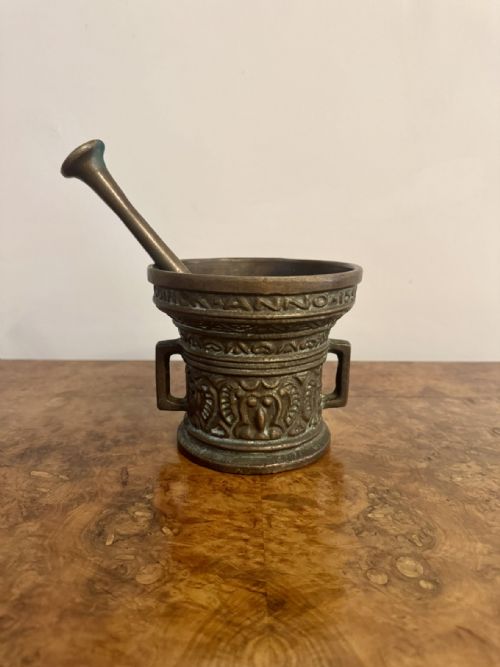
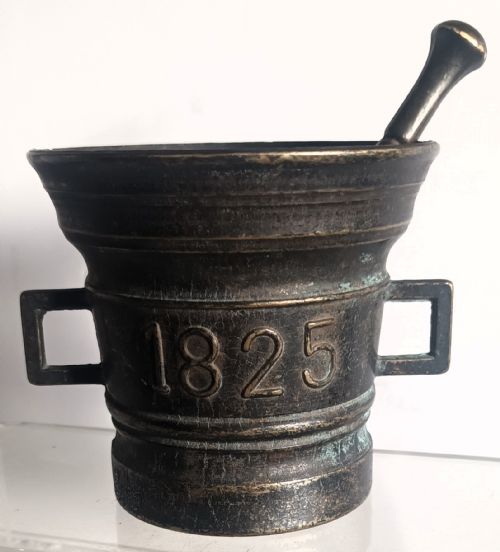
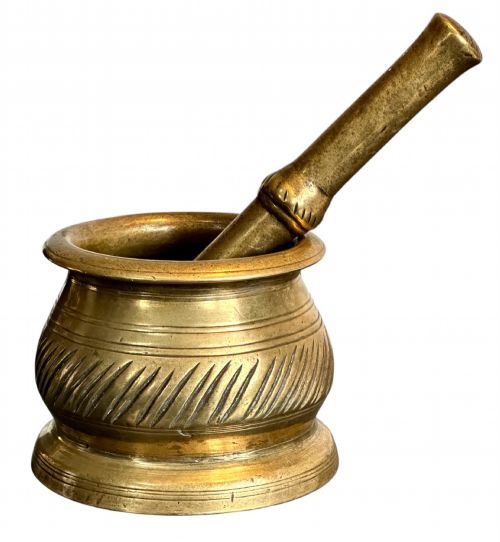


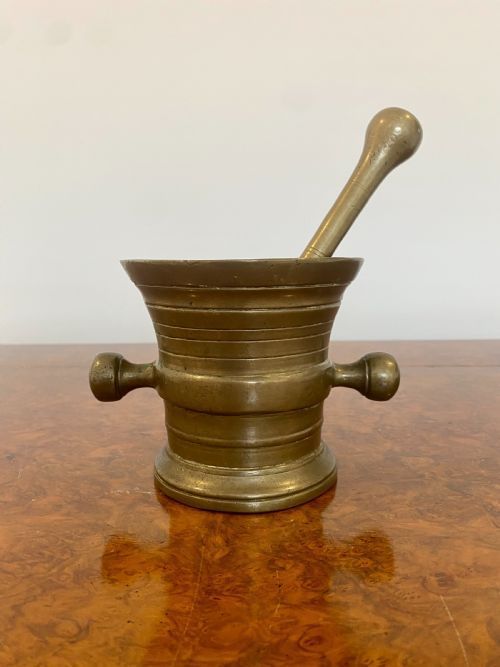

Vintage Metal Grinder
These vintage metal grinder pieces are heavy apothecary and kitchen vessels used for centuries to reduce herbs and chemicals, prized for their dense cast bronze and brass forms.
Vintage Metal Grinder
A vintage metal grinder typically takes the form of a mortar and pestle, functioning as a robust domestic or apothecary implement designed for crushing and grinding dry ingredients. You will frequently encounter heavy bronze or brass examples dating from the seventeenth century through to the Victorian era.
Materials and construction
These pieces rely entirely on metal casting techniques, utilising durable copper alloys such as bronze, brass, cast bronze, bell metal, and cast brass. Molten metal was poured into moulds to create thick, rigid walls capable of withstanding heavy impact from a matching pestle.
Surface finish is achieved through the casting process itself, sometimes augmented with cast decorative bands, ribbed bodies, or turned details. The resulting vessels possess considerable heft, designed to remain completely stable during vigorous grinding.
Many a weary apprentice spent hours pounding stubborn roots into dust, leaving their own invisible history baked into the metal.
Distinguishing quality
Quality rests in the crispness of the cast decoration and the purity of the alloy, where bell metal and high-grade bronze yield a superior resonance and a finer surface texture. Pieces featuring clear period specific ornament, such as Gothic Revival or Dutch Baroque detailing, stand apart from plain utilitarian counterparts.
Proportion and weight define the higher tier of these grinders, with well-balanced vessels maintaining their original matching pestle. The integrity of the cast wall thickness and the absence of later alterations separate standard workshop output from exceptional examples.
The Vintage Metal Grinder Glossary
- Mortar and pestle
- A mortar is the heavy bowl and the pestle is the club-shaped hand tool used to crush substances against the interior. Together they form the complete grinding set.
- Bell metal
- A hard alloy used for casting bells, consisting primarily of copper and tin, which produces a particularly resonant and durable vessel. It appears frequently in early kitchen and apothecary items.
- Apothecary
- Pertaining to the preparation and sale of medicines, denoting vessels used historically by chemists and pharmacists for compounding remedies. These often display standardised proportions for professional use.
- Renaissance Revival
- A nineteenth-century architectural and decorative style that revived classical forms from the fifteenth and sixteenth centuries. Pieces carrying this label incorporate historical motifs into later metalware.
Vintage Metal Grinder: Frequently Asked Questions
How do I date a bronze mortar?
Dating relies on stylistic clues, such as Gothic Revival or Dutch Baroque motifs, alongside the casting method and wear patterns evident on the interior base. Earlier seventeenth-century pieces often display simpler, robust utilitarian shapes compared to highly decorated Victorian iterations.
Examining the composition of the alloy, whether bronze, bell metal, or brass, also helps narrow the period of manufacture when combined with provenance or dealer records.
Were these used for cooking or medicine?
They served both domestic and professional purposes, functioning in home kitchens for spices and in chemist shops for compounding medicinal powders. English apothecary and kitchen vessels often overlap in design, as households required heavy grinders for daily culinary tasks.
The presence of pestles alongside mortars indicates active use rather than purely decorative display on a shelf or sideboard.
Why are these metal grinders so heavy?
The substantial weight is essential for stability, ensuring the vessel does not rock or crack when heavy pressure is applied through the pestle. Cast bronze and brass provided the necessary density to withstand centuries of rigorous pounding without shifting.
This heavy metal construction also prevented the ingredients from escaping over the rim during the grinding process.
How should I clean a vintage brass mortar?
Maintenance generally requires only a soft cloth to remove dust, preserving the dark patination accumulated over centuries of age and handling. Aggressive polishing removes the historical surface character that collectors value most in antique metalware.
If cleaning is necessary, avoid harsh chemical agents that can strip the natural oxidation from the bronze or brass surface.