



Cast Bronze Apothecary
These cast bronze apothecary vessels are heavy utilitarian implements of the kitchen and chemist, sought for their robust presence and age.
Cast Bronze Apothecary
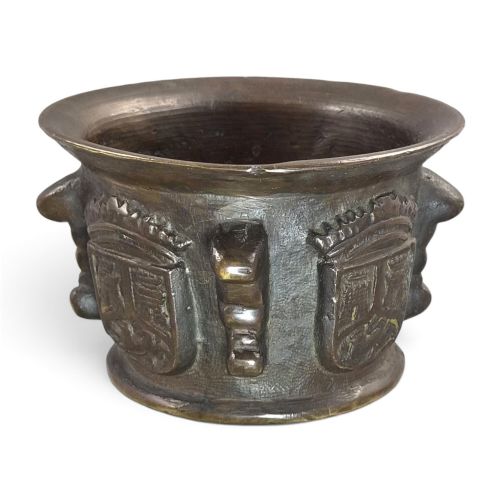
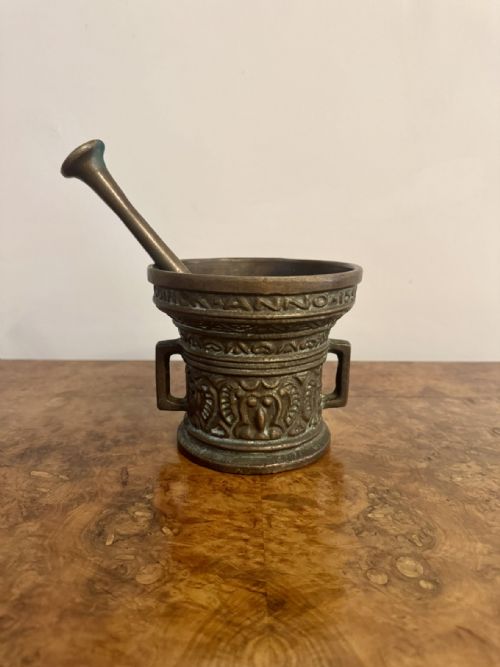
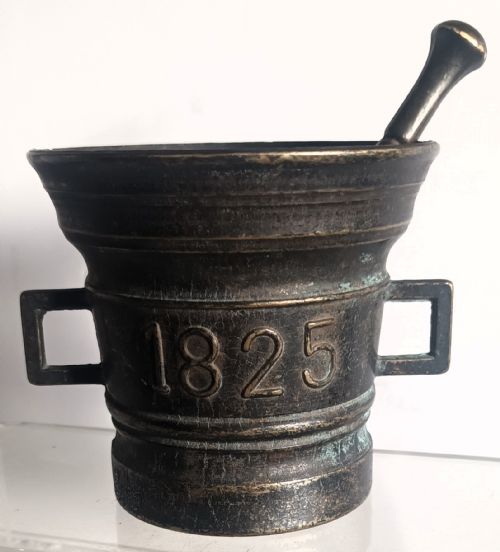
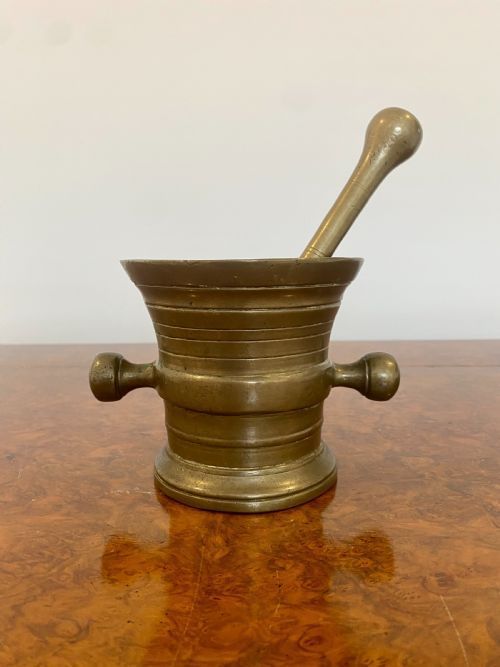
When you search for cast bronze apothecary vessels, you are looking at heavy utility mortars and pestles designed for grinding medicinal ingredients or kitchen herbs. The pieces on this page span several centuries, reaching back to the seventeenth century and moving through the Georgian and Victorian eras. English examples sit alongside Spanish Baroque, Dutch, and continental pieces, showing a variety of regional casting traditions.
The most common form you will meet is the mortar and pestle set, often cast in heavy bronze or bell metal. These range from plain working vessels to those decorated with heraldic arms, Tudor roses, or Gothic revival details. They appear individually or occasionally in small groups, reflecting their historic use in apothecary shops, kitchens, and chemists.
How they were made
These vessels were produced using traditional foundry methods, where molten bronze or bell metal was poured into sand or loam moulds. The metal alloy typically combined copper with tin, giving the vessels a dense structure and a resonant quality when struck. After casting, the surface was often left with the distinct texture of the mould or finished with simple turning marks.
Pestles were cast in matching bronze or iron to withstand the heavy downward force required for crushing. Many surfaces show the natural ageing of the metal, developing deep patinas over centuries of handling and use in apothecary and kitchen settings.
Listings on this site feature bronze, bell metal, and iron materials across seventeenth, eighteenth, and nineteenth-century periods.
What varies in quality
Quality in these pieces lies in the crispness of the cast decoration and the integrity of the metal body. Vessels featuring detailed heraldic arms, Tudor roses, or sharp ribbing show a higher level of foundry skill than plain working examples. The survival of the matching pestle also elevates a piece, as many original pestles have been lost or replaced over time.
The thickness of the bronze wall and the balance of the vessel indicate the care taken in production. Heavier, well-proportioned mortars with stable bases and rich, undisturbed patinas represent the better end of the surviving range.
The Cast Bronze Apothecary Glossary
- Mortar
- A heavy bowl-shaped vessel used for crushing and grinding materials with a pestle. They are typically cast in bronze, bell metal, or brass.
- Pestle
- A heavy tool with a rounded end used to pound and grind substances in a mortar. Original matching pestles are highly valued by collectors.
- Bell Metal
- An alloy of copper and tin traditionally used for casting bells, known for its high resonance and durability. It was frequently utilised for apothecary mortars.
- Patina
- The surface sheen and colour developed on bronze over centuries through oxidation and handling. A deep patina indicates considerable age and original condition.
Cast Bronze Apothecary: Frequently Asked Questions
How do I date a bronze mortar?
Dating relies on the style of the casting, decorative motifs such as Tudor roses or heraldic arms, and the profile of the rim and base. Seventeenth-century examples often display distinct ribbing and heavier proportions compared to later Georgian or Victorian pieces.
Changes in foundry techniques and the evolution of apothecary forms also help narrow down the period, though many traditional shapes remained in use for generations.
Are pestles usually original to the mortars?
Many surviving mortars have lost their original pestles over centuries of active use in kitchens and dispensaries. Finding a set where the pestle matches the bronze alloy, wear pattern, and period of the mortar is uncommon.
When a matched pestle does accompany a mortar, it significantly enhances the completeness and character of the piece.
What is the difference between bronze and bell metal?
Bell metal is a specific, harder alloy of bronze containing a higher proportion of tin, traditionally chosen for its ability to produce a clear, resonant tone. Apothecary mortars cast in bell metal tend to have a slightly brighter metallic colour and superior durability under heavy impact.
Standard bronze alloys used for these vessels contain varying proportions of copper, tin, and sometimes lead, resulting in a heavier and more subdued appearance.
How should I clean an antique mortar?
Antique mortars require minimal intervention to preserve their historic surface and accumulated patina. Gentle dusting with a dry cloth is usually sufficient for regular maintenance.
Harsh metal cleaners or abrasive polishes should be avoided, as they strip away the aged bronze skin and destroy the evidence of centuries of use.