

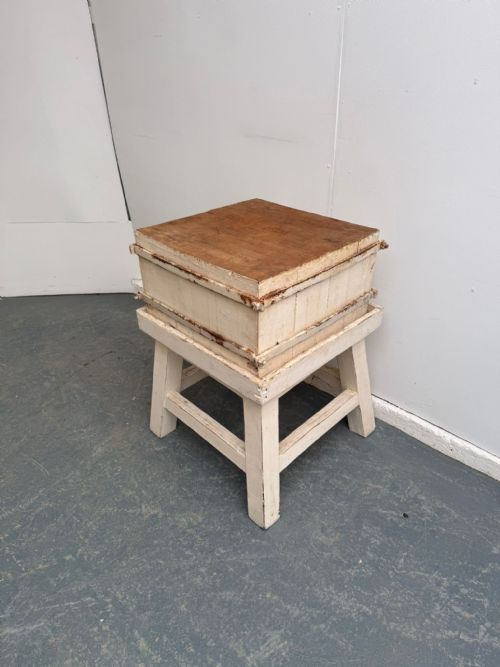


Vintage Meat Block
These heavy-duty vintage meat block pieces bring utilitarian history straight into the kitchen.
Vintage Meat Block
A vintage meat block serves as a sturdy preparation surface built for heavy culinary use in trade and domestic settings. Buyers seeking a vintage meat block encounter robust examples ranging from compact chopping blocks to large kitchen islands.
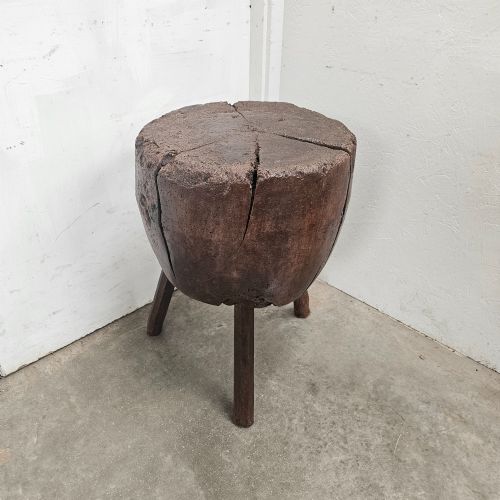
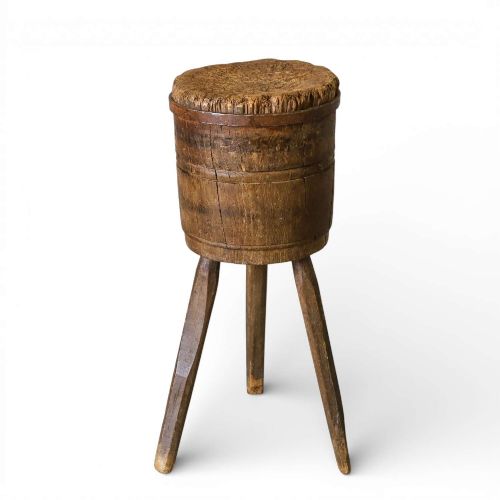
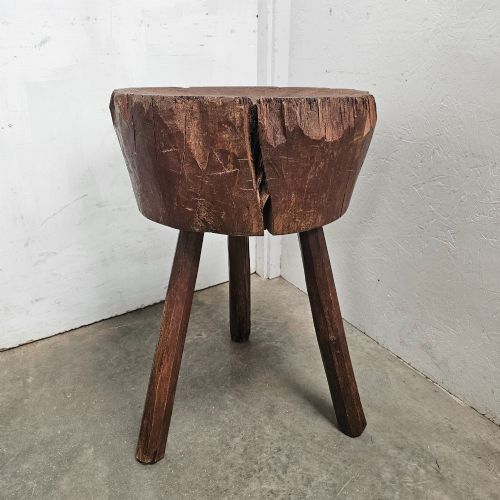
The selection includes French provincial kitchen chopping blocks, primitive beech game blocks, and Hungarian painted pieces. Many retain the substantial wooden tops and structural stands characteristic of hard daily labour.
Origins stretch from nineteenth-century workshops into the early twentieth century, spanning English and continental European traditions. These pieces function today as central kitchen furnishings that anchor a room with industrial weight.
How they were made
Construction relies upon thick end-grain or side-grain timbers designed to withstand heavy cleaver strikes without splitting. Craftsmen utilised dense hardwoods such as beech, oak, elm, and general hardwood, often supported by softwood frames.
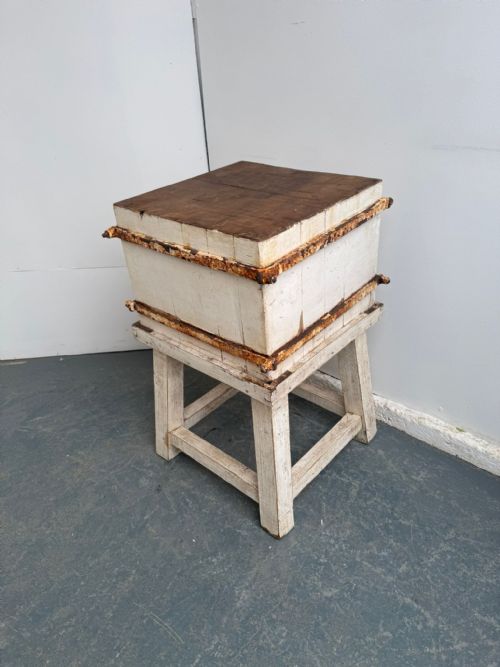
Metal components provide essential structural reinforcement to counteract the immense pressure of butchery. Iron braces, bronzed mounts, and sturdy stands secure the massive wooden tops against shifting during use.
Some Hungarian blocks arrived wearing thick coats of white paint, hiding decades of butcher shop history beneath cheerful domestic facades.
What varies in quality
The grade of a vintage meat block depends primarily on the density and integrity of the timber used for the top. Deeply scarred working surfaces demonstrate authentic utility, whereas overly manicured timber loses historical depth.
Original hardware such as bronzed mounts, iron bracing, and manufacturer stampings separate standard utility items from distinguished workshop pieces. The harmony between the original stand and the heavy top dictates overall sculptural presence.
Trussant & Cie·Hennes France
The Vintage Meat Block Glossary
- End-grain
- Wood arranged so the growth rings face upward to create a self-healing chopping surface. This orientation absorbs the impact of blades effectively.
- Butchers block
- A heavy table designed for cutting meat in commercial or domestic spaces. These objects usually feature thick multi-layered wooden tops.
- Primitive
- Describes items made with basic tools and straightforward construction methods. These pieces emphasise functional utility over refined decorative finish.
- Bronzed mount
- Metal fittings treated to resemble bronze for decorative and structural reinforcement. They appear on select twentieth-century examples.
Vintage Meat Block: Frequently Asked Questions
How do I clean a vintage meat block?
Scrape the surface gently to remove debris and wipe down with warm soapy water rather than soaking the wood. Regular application of food-safe mineral oil preserves the dense grain.
Avoid harsh chemical detergents that strip natural oils from the timber. Proper drying prevents warping across the thick wooden top.
Can I use it for daily chopping?
These blocks were originally engineered for heavy butchery work and handle kitchen preparation with ease. The thick timber absorbs daily wear while developing further patina.
Ensure the surface remains conditioned to prevent moisture absorption. Modern food safety standards are met through regular oiling and cleaning.
How do I date a meat block?
Examine the construction joints, timber selection, and any visible manufacturer markings or metal mounts. Nineteenth-century examples often display simpler primitive frames compared to later industrial variants.
Paint remnants and wear patterns offer further clues regarding age. Hungarian and French pieces exhibit distinct regional joinery traditions.
Are original stands necessary?
Original stands maintain the historical integrity and proper working height of the piece. Many nineteenth-century and twentieth-century blocks were paired with matching wooden or iron bases.
Alternative bases occasionally support tops separated from their original frames over time. Matching stands provide the correct structural balance for heavy loads.