
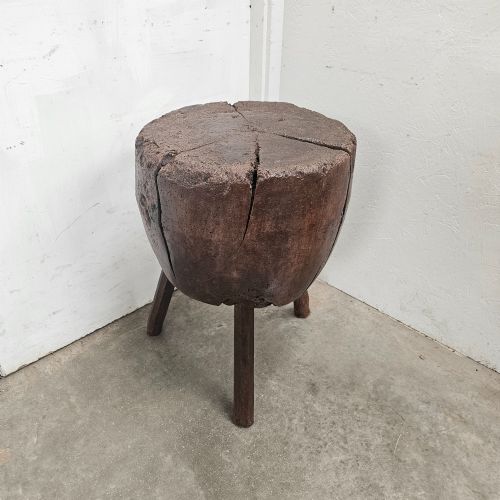
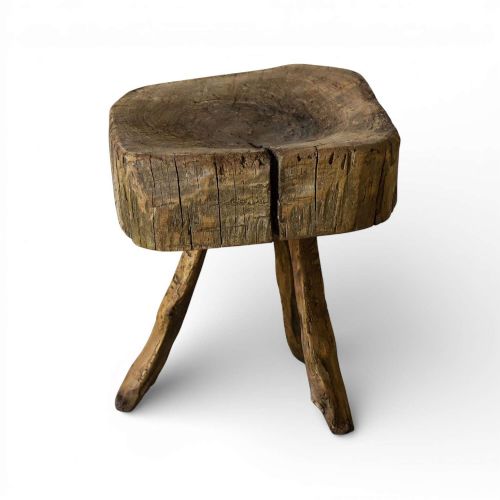
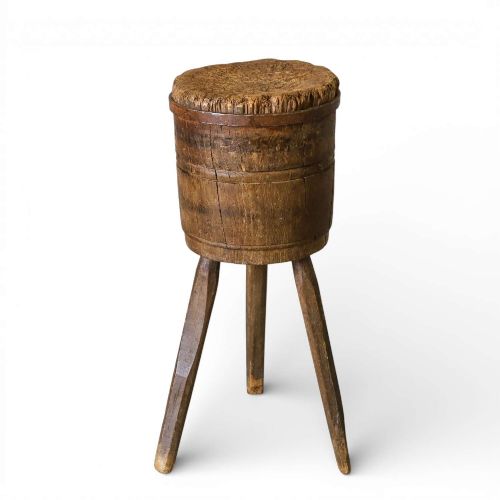
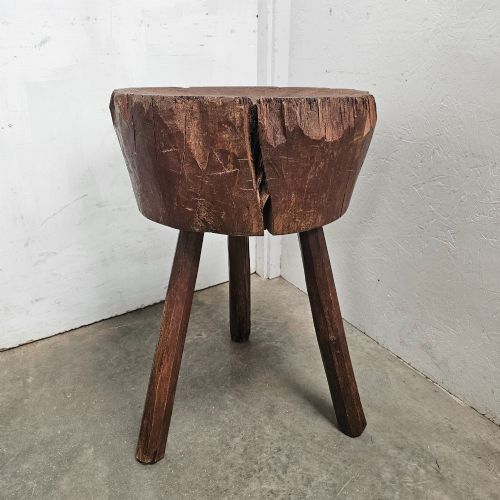


Tripod Chopping Block
A tripod chopping block brings honest utility and sculptural weight to a modern interior, offering a sturdy surface shaped by decades of practical kitchen work.
Tripod Chopping Block
A tripod chopping block is a heavy-duty working surface raised on three legs, historically used for food preparation and butchery. When you search for a tripod chopping block, you encounter pieces designed for robust domestic or commercial tasks in rural kitchens and game rooms.
The pieces listed on this page predominantly date from the nineteenth century, including examples from around eighteen-ninety and nineteen hundred, alongside vintage nineteen-thirty pieces. They manifest in vernacular rural, French provincial, and primitive country styles.
Construction and materials
These blocks are built from dense hardwoods such as oak, elm, and beech, chosen for their ability to withstand heavy impact without splitting. The working surfaces are fashioned from thick timber sections or tree trunks, retaining the natural grain and scars of daily use.
The supporting structures rely on three legs, sometimes formed from original gnarled timber or integrated with metal and iron bracing. Simple rustic carpentry techniques secure the heavy tops firmly to the tripod bases, ensuring stability under pressure.
Some nineteenth-century blocks stand upon wonderfully crooked gnarled legs that give them a distinctly spirited posture in the kitchen.
Assessing quality
Quality in these pieces rests upon the integrity of the timber and the character of the base. A superior block displays a deeply patinated top shaped by genuine wear, paired with original legs that provide secure balance without wobbling.
The harmony between the massive wooden block and its tripod support dictates visual success. Finer examples retain untouched patination across the wood and maintain their structural honesty without excessive modern restoration.
The Tripod Chopping Block Glossary
- Game block
- A specialised heavy timber block used historically for dressing game and poultry. These surfaces are typically thicker and show deeper scoring from steel blades.
- Charcuterie block
- A smaller or specifically shaped chopping block utilised for preparing and presenting cured meats. They often possess a more sculptural quality suited to display.
- Vernacular rural
- A design style shaped by local traditions and available materials rather than academic architectural rules. It prioritises function and straightforward construction above ornament.
- Gnarled legs
- Support legs formed from twisted, knotty timber branches that lend an organic and sculptural silhouette. They reflect the opportunistic use of natural wood shapes in rustic furniture.
Tripod Chopping Block: Frequently Asked Questions
What is a tripod chopping block?
A tripod chopping block is a heavy wooden preparation surface supported by three legs, originating from vernacular rural and butcher shop traditions.
These pieces combine thick timber slabs with sturdy bases designed to handle the heavy demands of food preparation.
How were tripod chopping blocks used?
They served as dedicated stations for chopping meat, game preparation, and general kitchen tasks in domestic and commercial settings.
The heavy three-legged design kept the block stable on uneven stone floors found in historic kitchens and outbuildings.
How do I care for a antique chopping block?
Maintain the wood by applying food-safe mineral oils or natural waxes to prevent the historic timber from drying out.
Keep the block away from direct heat sources and excessive moisture to preserve the patination and structural stability.
How can I date an old chopping block?
Dating relies on assessing the tool marks, timber species, wear patterns, and the construction methods used on the legs and top.
Nineteenth-century examples frequently display hand-hewn surfaces and traditional joinery distinct from later twentieth-century production.