



Vintage Chopping Block
These heavy-duty chopping blocks bring honest utilitarian function and tactile warmth to any kitchen.
Vintage Chopping Block
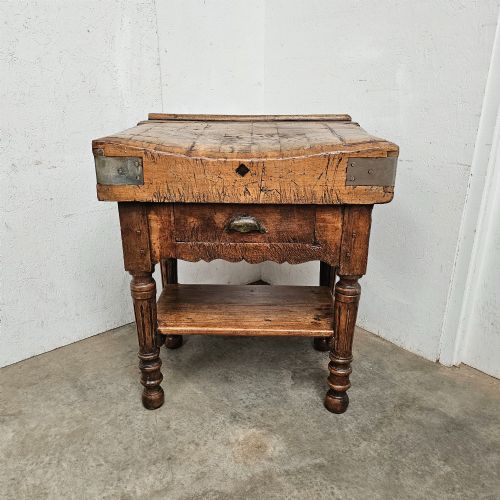
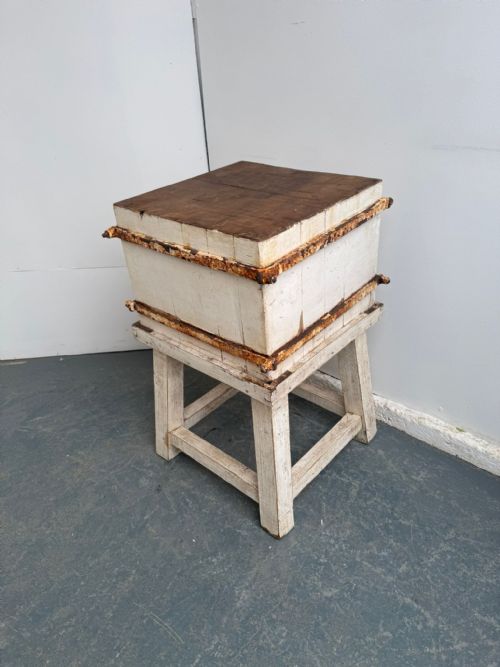
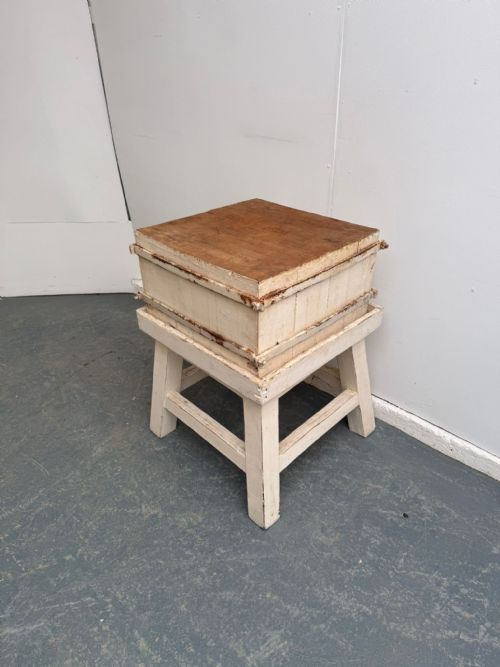
A vintage chopping block serves as a robust surface for food preparation, originating from working kitchens and commercial butcher shops of the nineteenth and twentieth centuries. These sturdy pieces appear in forms such as standalone chopping blocks, game blocks, and kitchen islands set upon timber stands or iron bases.
Buyers seeking a vintage chopping block will find examples spanning the Victorian era through the nineteen-fifties, with a strong representation of French provincial styles. Many survive as thick end-grain or side-grain timber blocks mounted on original legs, bearing the deep indentations of daily use.
Materials and construction
These blocks utilise dense timbers such as beech, oak, elm, and assorted hardwoods chosen for their ability to withstand heavy impact without splintering. Many are constructed from thick sections of wood joined together to create a solid working surface, occasionally reinforced with iron brackets or metal mounts.
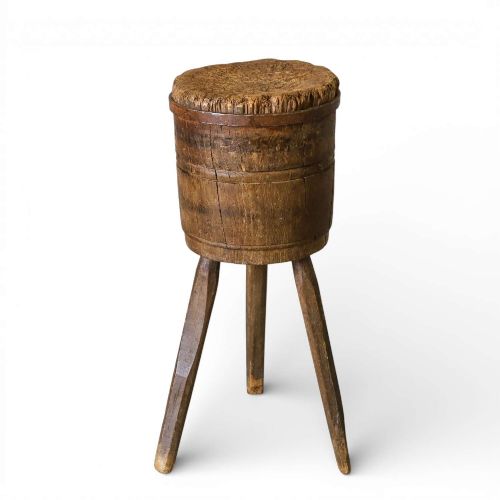
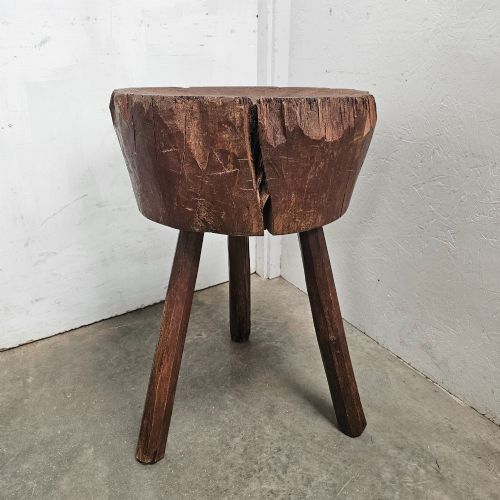
Supports range from simple softwood frames and painted stands to decorative bases and tripod legs. Some pieces incorporate metal elements, glass tops, or painted finishes, reflecting the transition from commercial preparation spaces to domestic furniture.
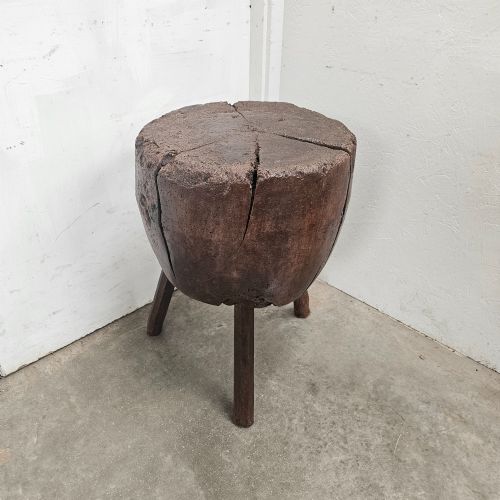
Several French game blocks retain the deep, honest chops of nineteenth-century poulterers who worked before breakfast.
Markers of distinction
Quality in these pieces rests upon the integrity of the timber block and the originality of its base. A thick, well-seasoned hardwood top with deep surface character outclasses a thinned or overly sanded replacement, while original stands and maker details elevate a piece above standard utility items.
Construction details such as solid jointing, authentic metal mounts, and retained structural stability distinguish superior examples. The balance between a substantial working surface and a proportional base determines the overall presence of the object.
The Vintage Chopping Block Glossary
- End-grain
- A timber surface cut across the growth rings, presenting the hardest wearing face for heavy chopping blocks. This grain orientation heals slightly under heavy blows.
- Game block
- A specialised heavy timber block traditionally used for butchering game, often fashioned from a solid tree trunk section. These pieces date predominantly to the nineteenth century.
- Hardwood
- Dense timber derived from broad-leaved trees such as beech, oak, and elm, utilised for the primary working surfaces. These woods resist indentation and moisture absorption.
- Primitive country
- A style category describing vernacular furniture made with straightforward carpentry techniques and local materials, lacking formal ornamentation. These items prioritize utility over refinement.
Vintage Chopping Block: Frequently Asked Questions
How do I clean a vintage chopping block?
Maintain the timber surface by scraping away food residue and wiping with a damp cloth and mild soap. Avoid soaking the wood or running it through modern dishwashers.
Regularly nourish the dry hardwood with food-safe mineral oil or beeswax to preserve the grain and prevent splitting over time.
Can I use these blocks for food preparation?
Many of these blocks remain entirely functional for daily culinary tasks, provided the surface is properly cleaned and treated. The dense end-grain timber is well-suited for heavy chopping.
Some collectors choose to place a protective glass top over the historic surface to preserve the original patina and marks of use.
What is the difference between a game block and a standard block?
Game blocks are typically manufactured from a solid tree trunk section rather than joined lengths of timber. They present a more rustic, primitive form originating from nineteenth-century rural use.
Standard chopping blocks usually feature laminated or joined rectangular timber tops set upon custom stands or kitchen island bases.
How do I date a vintage chopping block?
Examine the construction methods, tool marks, and materials to establish an approximate period. Nineteenth-century examples often display hand-hewn surfaces and heavy tree trunk construction, whereas twentieth-century pieces incorporate standardised stands and painted finishes.
Makers' stamps, metal mounts, and regional French provincial styles provide additional clues for determining age.