

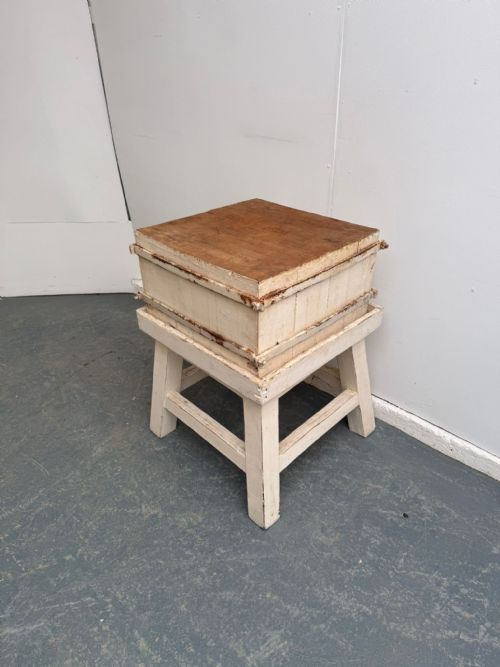


Timber Chopping Block
These timber chopping block pieces are heavy working surfaces built for durability, offering practical preparation space and enduring utility.
Timber Chopping Block
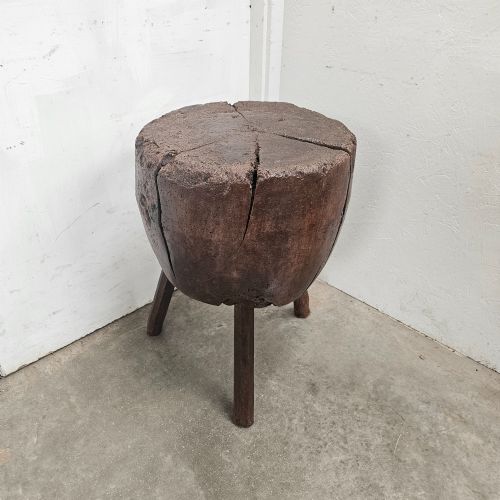
A timber chopping block serves as a heavy-duty preparation surface, originating from functional kitchens, butcher shops and game larders. The pieces found here predominantly span the nineteenth century and the early twentieth century, reflecting industrial and agricultural origins.
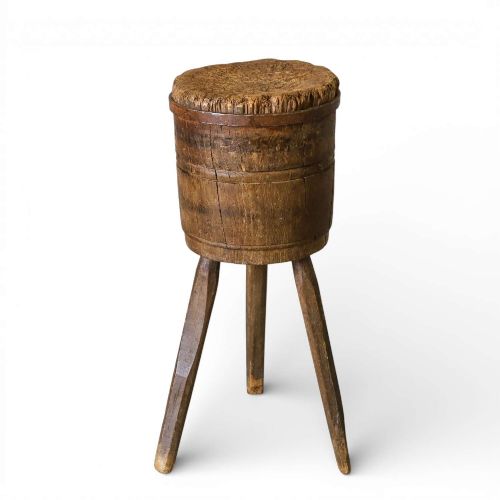
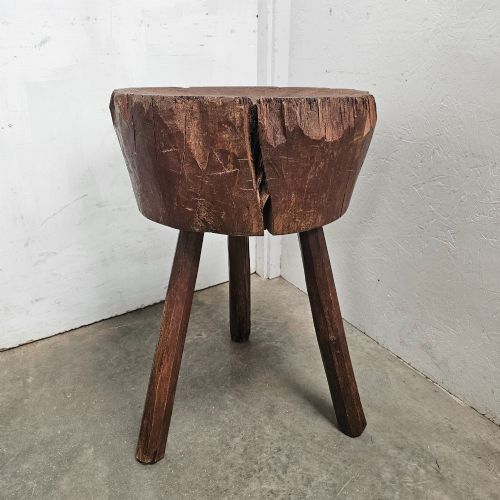
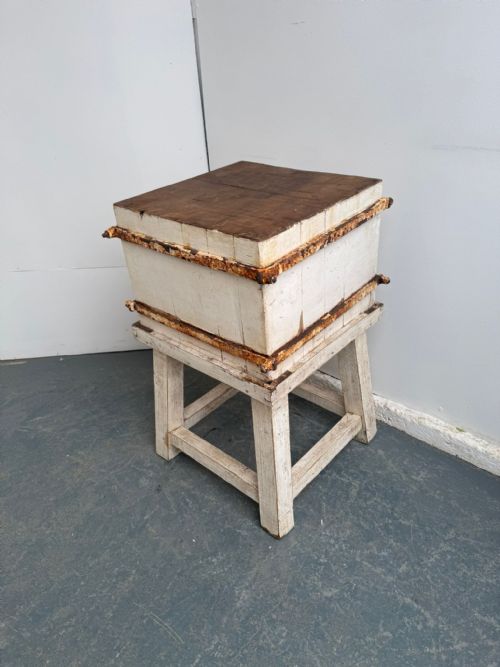
Buyers frequently encounter French provincial examples alongside Hungarian and English variants. Forms range from standalone tree trunk sections to structured kitchen islands and side tables.
The style spans primitive country and rustic vernacular to Victorian industrial designs. Each block carries the distinct marks of heavy daily use, showing deep surface grain and patination.
How they were made
Makers constructed these blocks from dense hardwoods such as oak, beech, elm and general hardwood, occasionally combining softwood elements. These woods were chosen for their resilience against continuous impact and heavy cutting.
Construction techniques often involved massive end-grain or cross-section sections fixed to sturdy legs or left as solid tree trunk blocks. Some examples incorporate iron, metal or bronzed mounts to reinforce the heavy timber frames.
Listings feature periods from the nineteenth century through to nineteen thirty, utilising oak, beech, elm, metal and paint.
What varies in quality
Quality rests in the integrity of the timber block and the honesty of its working surface. Thick, dense end-grain sections show superior wear characteristics compared to softer timber assemblies.
Originality of the base structure and associated mounts elevates a piece. Retained paint finishes, stable joinery and intact metalwork distinguish domestic items from purely utilitarian workshop survivors.
Hennes France
The Timber Chopping Block Glossary
- End-grain
- Timber cut across the growth rings to present a dense, self-healing surface for chopping. This orientation prevents knife blades from dulling quickly.
- Tree trunk block
- A solid section of a tree trunk utilised directly as a heavy chopping base. These monolithic pieces display natural growth splits and heavy wear.
- Game block
- A specialised block historically used for preparing game birds and small animals. They often feature specific proportions suited to rural larders.
- Bronzed mounts
- Cast metal reinforcement finished to resemble bronze, fitted to secure heavy wooden joints. They add structural rigidity to high-stress areas.
- Primitive
- Describing items made without sophisticated workshop machinery, relying on straightforward utilitarian construction. Such pieces prioritize function over ornament.
Timber Chopping Block: Frequently Asked Questions
What are timber chopping blocks made of?
These pieces are constructed predominantly from dense hardwoods including oak, beech, elm and general hardwood. Some examples incorporate metal, iron and softwood components.
Heavier blocks utilise solid tree trunk sections or thick multi-timber assemblies designed to withstand heavy daily impact.
How were these blocks originally used?
They served as heavy working surfaces in butcher shops, game larders and country kitchens for preparing meat and produce. Their solid mass provided a stable platform for cleavers and heavy knives.
Over decades of use, the timber surfaces absorbed oils and sustained deep chop marks from professional food preparation.
How do I care for a vintage block?
Maintain the timber by applying food-safe oils periodically to prevent the wood from drying out and splitting. Avoid harsh detergents and excessive water immersion during cleaning.
Treating the surface with natural beeswax helps preserve the historic grain and dry patination built up over generations.
How can I tell the period?
Dating relies on construction methods, timber selection, and the style of any associated ironwork or mounts. Nineteenth-century examples often feature hand-hewn bases and heavier tree trunk forms.
Twentieth-century pieces can introduce structured legs, painted finishes or engineered mounts such as bronzed hardware.