




Vintage Marquetry Writing Slope
A vintage marquetry writing slope is a fitted box for correspondence, offering hinged surfaces and timber decoration that elevate desk organisation.
Vintage Marquetry Writing Slope
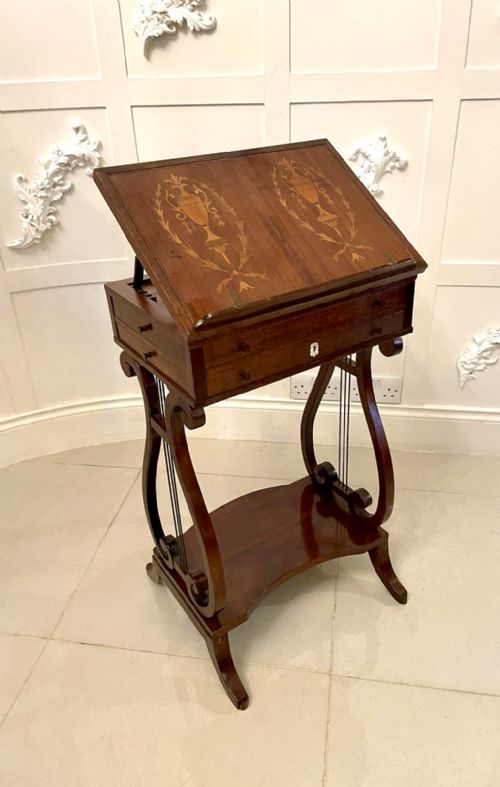
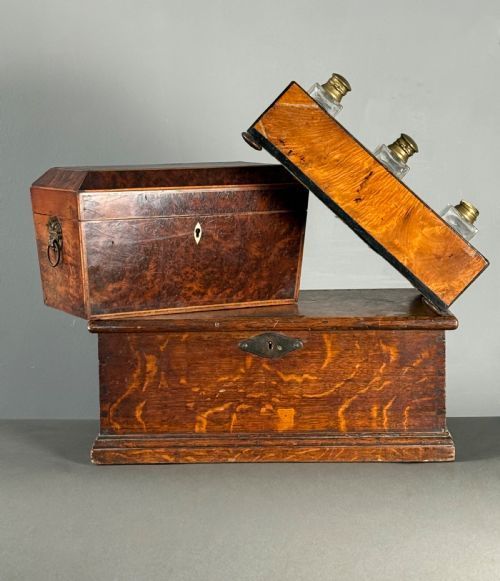
A vintage marquetry writing slope encompasses small timber boxes and larger desks designed for correspondence and storage. The selection includes Victorian and Edwardian examples alongside 18th-century forms, reflecting varied periods of British and continental design.
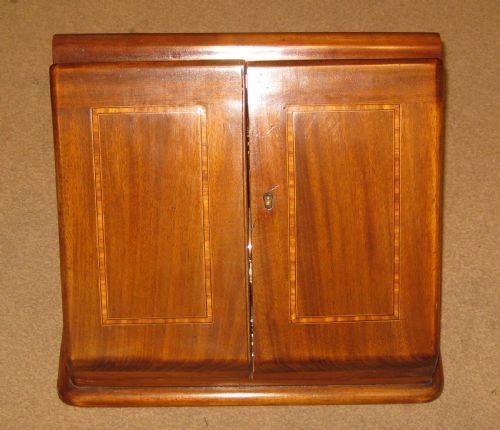
Makers utilised walnut, mahogany, and rosewood as foundational timbers, enriching the surfaces with contrasting woods and geometric or floral motifs. Forms range from portable travelling boxes to bureau de dame desks and stationery cabinets.
Materials and construction
Craftsmen built these pieces using solid timbers like mahogany, walnut, and rosewood, applying fruitwood and satinwood veneers to create decorative patterns. Brass mounts and handles provided structural reinforcement and contrast against the dark woods.
Inlay and marquetry techniques involved cutting intricate pieces of different woods and mother of pearl to form detailed pictorial or geometric designs across the lids and drawer fronts.
Secret compartments hidden beneath stationery dividers remain a delightful mechanical surprise waiting to be discovered inside these antique boxes.
Assessing quality
Quality rests upon the precision of the timber matching and the complexity of the veneer work integrated into the box lid or desk front. Finer examples display meticulous attention to interior fittings, including glass inkwells and secret compartments.
The choice of primary wood, whether dense rosewood or figured walnut, alongside the crispness of brass detailing, distinguishes standard utility boxes from more ambitious decorative items.
The Vintage Marquetry Writing Slope Glossary
- Marquetry
- Decorative veneer applied to furniture in patterns using different woods, metals, or shell. This technique creates pictorial scenes or symmetrical ornamentation across flat surfaces.
- Writing slope
- A portable box with a sloping hinged lid that opens to form a desk surface for writing letters. Interiors typically feature compartments for pens and ink.
- Bureau de dame
- A lady's small writing desk, often featuring a cylinder top or fitted interior. These pieces date across the nineteenth century.
- Stationery cabinet
- A desktop cabinet designed for holding paper and envelopes, frequently incorporating tambour doors or hinged panels.
Vintage Marquetry Writing Slope: Frequently Asked Questions
What is a vintage marquetry writing slope used for?
These pieces served as portable desks for writing letters and storing stationery supplies securely during the nineteenth century and earlier. Today, they function as decorative desktop organizers or writing surfaces.
Collectors appreciate the internal compartments designed for inkwells, pens, and paper, which reveal the thoughtful mechanics of historical portable writing furniture.
How do I identify a Victorian slope?
Victorian examples often feature walnut or mahogany timbers paired with brass escutcheons and fitted velvet writing surfaces inside. The joinery and hardware styles align with nineteenth-century manufacturing methods.
Examining the internal partitions and the specific style of the marquetry inlay helps separate Victorian pieces from earlier Georgian or later Edwardian iterations.
What woods were used in these slopes?
Cabinetmakers relied on durable hardwoods such as mahogany, walnut, and rosewood to construct the primary body of the box. Satinwood and fruitwood were frequently employed for contrasting inlay work.
Mother-of-pearl and bone details sometimes appear alongside these timbers, adding texture and brightness to the decorative surface patterns.
Are these pieces suitable for daily use?
Many of these boxes remain robust enough for occasional correspondence or holding modern stationery items. Care must be taken to protect antique wood finishes and original interior linings from moisture.
Placing them on stable surfaces away from direct sunlight preserves both the structural timber and the intricate veneer work.