





Vintage Marine Landscape Watercolour
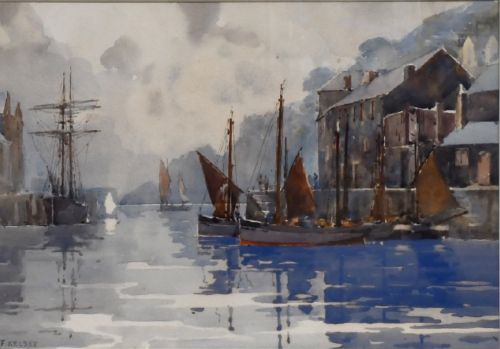
When you search for a vintage marine landscape watercolour, you are looking at original maritime scenes executed on paper during the nineteenth and twentieth centuries.
Vintage Marine Landscape Watercolour
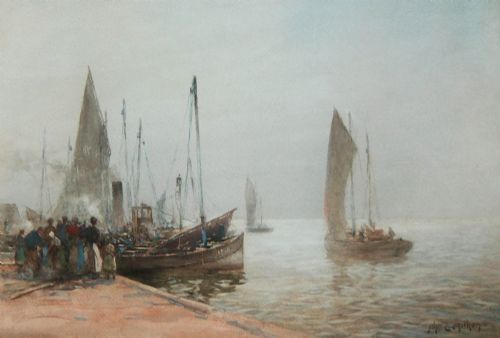
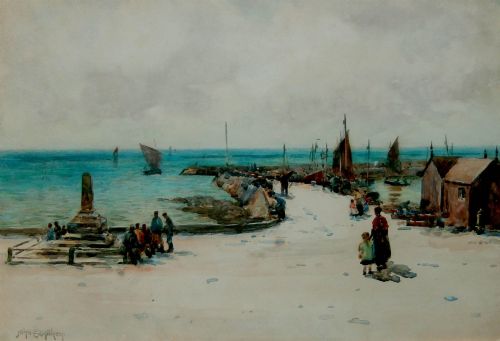
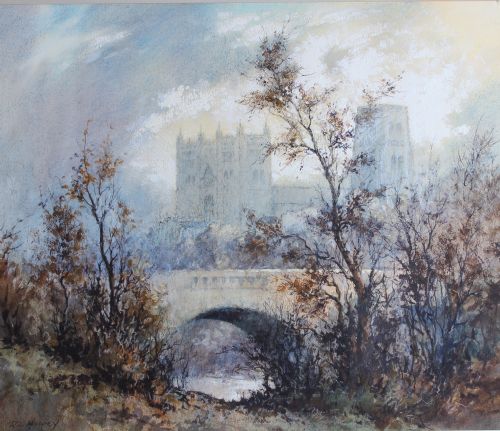
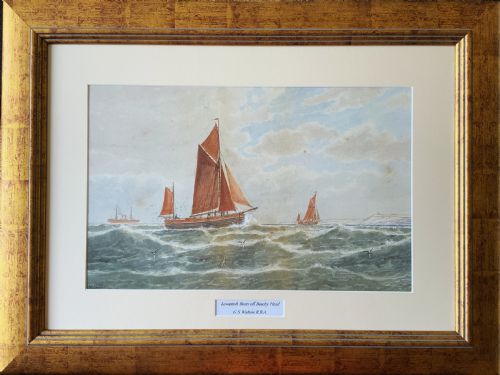
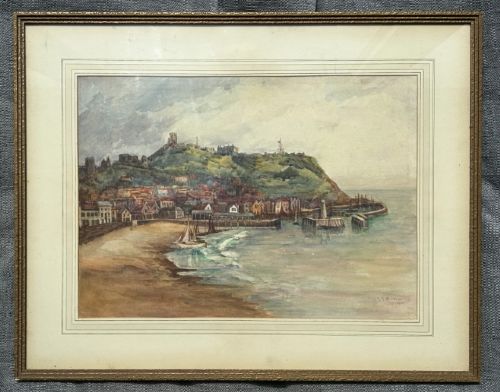
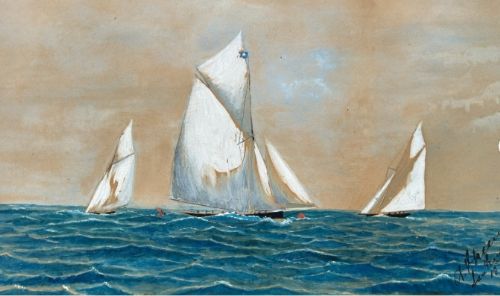
A vintage marine landscape watercolour captures coastal views, harbours, estuaries, and shipping scenes, often framed behind glass in wood or gilt wood surrounds. These works range from late Victorian depictions of English fishing ports to mid-twentieth-century coastal studies.
The most common examples on this page date from the Edwardian era through the interwar years, showing British and European coastal topography. Artists typically recorded working harbours, sandy bays, and tidal rivers with sailing vessels or steam packets.
Subjects frequently centre on specific geographic locations such as Yorkshire fishing villages, Cornish harbours, or continental waterways like the Venetian canals. Such watercolours combine topographical record with atmospheric depictions of sea and sky.
Materials and technique
Artists painted these marine landscapes using watercolour pigment applied to paper supports, occasionally combining washes with bodycolour to highlight foam, sails, or clouds. The paper was often mounted beneath glass to protect the water-soluble pigments from moisture and atmospheric dust.
Framing materials generally consisted of wood or gilt wood mouldings that complemented the tone of the painting. Technical execution relied on transparent washes for water and sky, paired with more opaque brushwork for architectural elements and shipping.
Several artists clearly preferred painting Whitby harbour above all else, leaving behind an entire visual archive of its bustling quays.
What separates the work
Quality rests upon the artist's handling of light, atmosphere, and movement in coastal conditions, distinguishing accomplished depictions of water and weather from stiff topographical illustrations. Superior works demonstrate confident brushwork in rendering shifting light over sea surfaces and complex rigging.
The degree of finished detail in the architecture, vessels, and figures also marks the upper range of these paintings. Provenance, specific regional interest, and contemporary signatures add distinction to individual sheets.
James E. Aitken·John E. Aitken·William Banks Fortescue·Robert Leslie Howey·George Stanfield Walters·Frank Kelsey·F A Roylance·William Frederick Settle·Alfred George Morgan·Lionel Horsnell·John Bedloe Goddard·William Lee Hankey·Fred Lawson·Edward Seago·Thomas Bush Hardy·Tom Clough·William Tuck·Fred Waugh·John McDougal·George Hamilton Constantine·Frederick William Booty·Charles Harmony Harrison·R P Noble·William Wyld·Frederick Stuart Richardson
The Vintage Marine Landscape Watercolour Glossary
- Watercolour pigment
- Finely ground colour particles suspended in a water-soluble binder, used directly on paper.
- Bodycolour
- Watercolour paint mixed with a white pigment to render it opaque, used for highlights on water and clouds.
- Gilt wood
- Wood framing treated with a thin layer of gold leaf or metallic gilt finish, standard for period presentation.
- Maritime
- Pertaining to the sea, shipping, navigation, and coastal environments depicted within the artwork.
Vintage Marine Landscape Watercolour: Frequently Asked Questions
How old are these watercolours?
The pieces span from the late nineteenth century through the 1950s, with a strong representation of Edwardian and interwar examples.
Dates are established through artist signatures, period framing, and recorded exhibition histories.
Where were these scenes painted?
Subjects focus heavily on British coastal locations, particularly Yorkshire ports like Whitby and Staithes, alongside Cornish fishing villages and Thames estuary views.
Several works also record continental European scenes, including Dutch waterways and Venetian canals.
How should I frame and hang them?
These watercolours are best displayed away from direct sunlight to prevent fading of the pigment on paper.
Maintaining them behind glass within their wood or gilt wood frames protects the delicate paper surface from ambient humidity.
What styles do these paintings represent?
The inventory encompasses Victorian maritime realism, Edwardian realism, and British Impressionism.
Artists balanced traditional topographical accuracy with looser impressionistic interpretations of coastal light and atmosphere.