



Antique Cornwall Landscape Artwork
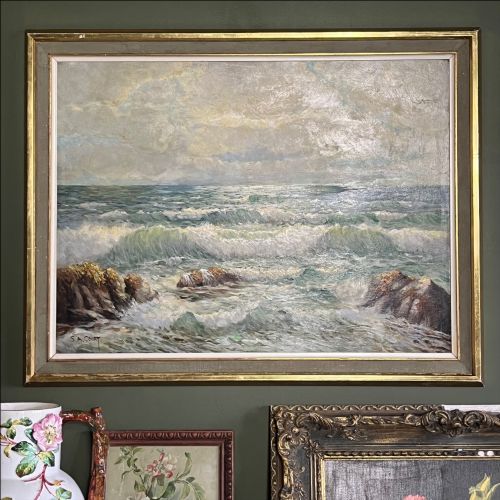
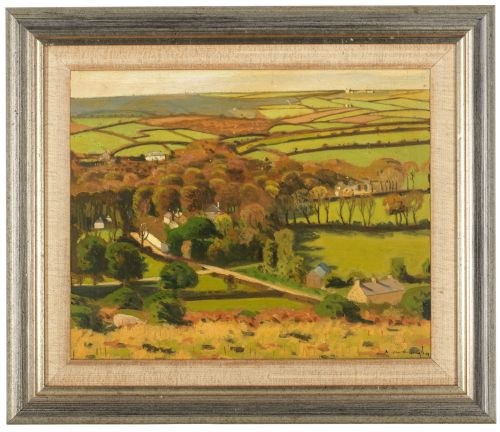
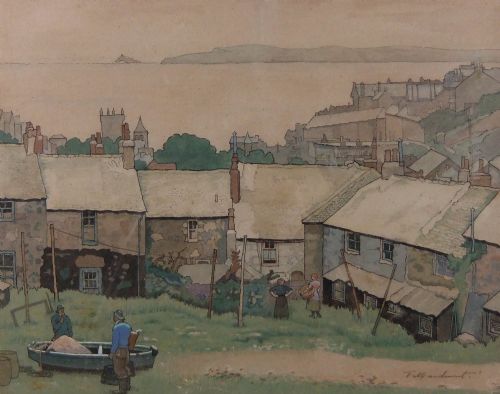
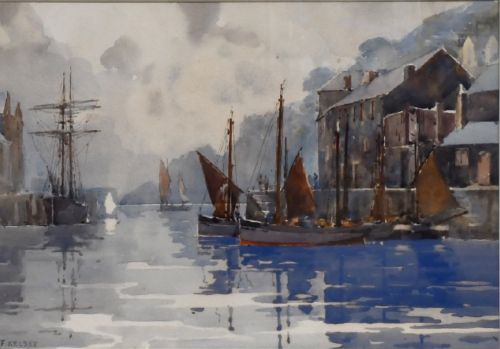
These antique cornwall landscape artwork pieces capture the rugged coasts and harbours of the south-west, offering buyers a direct view into historic maritime communities.
Antique Cornwall Landscape Artwork
An antique cornwall landscape artwork brings the distinct light and dramatic shores of the south-west directly into a room. These pieces range from detailed harbour views to expansive coastal vistas across various decades.
Buyers are most likely to meet works executed in watercolour or oil on canvas, capturing specific locations such as St Ives, Polperro, and Mousehole. These depictions vary from traditional topographical views to broader interpretations by regional schools.
The selections span the Victorian era through the early decades of the twentieth century, reflecting a period of intense artistic interest in the Cornish coastline. Each piece documents a specific site as it appeared to artists working on the spot.
Materials and Methods
Artists relied primarily on oil paint applied to canvas or wood panels, alongside watercolours worked on paper. These materials were chosen for their durability and their ability to render the shifting coastal weather and light.
Frames typically incorporate wood, gesso, and glass to protect the painted or drawn surface. The physical construction reflects the standard framing practices of the nineteenth and early twentieth centuries.
Artists occasionally braved unpredictable Cornish tides and sea spray to capture harbours precisely at low water.
Distinctions in Quality
Quality rests upon the artist's ability to handle the specific atmospheric conditions and light unique to the Cornish coast. Stronger works demonstrate a confident brushwork or wash that captures the movement of water and the weight of coastal skies.
The clarity of provenance and the strength of the composition separate standard topographical records from works of greater artistic ambition. Pieces that successfully convey the local topography while maintaining painterly cohesion command closer attention.
William Banks Fortescue·Thomas Maidment·Frank Kelsey·George F Pennington·Edward Matthew Elliott·George Turland Goosey·William Pitt·Joseph Farquharson·Frederick Stuart Richardson·William Lambert Bell·Walter Sweet·Hendrik Yan Wolter·S J Lamorna Birch·Herbert James·William Edward Webb·Arthur Joseph Meadows·John Baragwanath King
The Antique Cornwall Landscape Artwork Glossary
- Newlyn School
- A colony of artists based in Cornwall who worked closely with nature and plein air methods. Their output defined much of the regional aesthetic during the late nineteenth and early twentieth centuries.
- Watercolour
- A paint consisting of pigment suspended in a water-soluble vehicle, frequently applied to paper in these Cornish coastal views. It allows for rapid washes and delicate tonal shifts.
- Oil on Canvas
- A medium utilising pigments bound in a drying oil, stretched across a wooden frame. This combination permitted artists to build rich textures and deep tones suitable for maritime scenes.
- Gesso
- A plaster-like mixture applied to wood frames to provide a smooth surface for gilding or painting. It forms the rigid base beneath many period frame decorations.
Antique Cornwall Landscape Artwork: Frequently Asked Questions
What subjects appear in these works?
The compositions focus heavily on Cornish harbours, coastal cliffs, and maritime scenes. Locations such as St Ives, Polperro, and Mousehole recur frequently.
Artists also recorded local landmarks like St Michael's Mount and surrounding village scenes, documenting the working life and topography of the region.
How should I hang these artworks?
These pieces require placement away from direct sunlight and excessive moisture to protect paper, canvas, and gilt gesso frames. Wall space with stable ambient temperature suits them best.
Matching the frame style to the surrounding interior helps integrate these historical maritime views into modern living spaces without competing with other decor.
How do I identify the period?
Dating relies on stylistic markers, framing materials, and artist signatures documented in the record. Victorian examples often show tighter detail, while later pieces lean towards Impressionist brushwork.
Mediums also offer clues, with nineteenth-century watercolours and early twentieth-century oils reflecting the changing practices of successive artistic generations.
Who painted these scenes?
The creators include both locally embedded figures and visiting artists associated with groups like the Newlyn School and St Ives School. Many exhibited widely during their lifetimes.
Signatures on the works connect individual pieces to known painters who recorded the changing landscape of Cornwall across the Victorian and Edwardian periods.