


Vintage Marine Folk Art
Vintage marine folk art brings the raw, hand-crafted history of the sea straight into your room, combining the grit of nineteenth-century maritime life with genuine folk expression.
Vintage Marine Folk Art
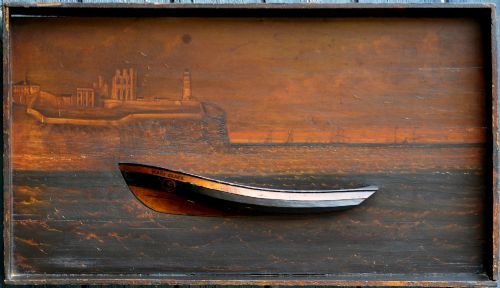
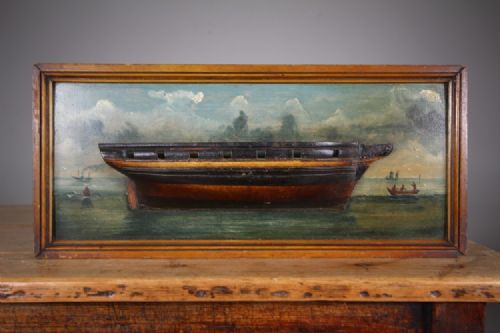
When you search for vintage marine folk art, you encounter a distinct collection of objects shaped by maritime culture and nineteenth-century craftsmanship. The selection centres heavily on nineteenth-century and Victorian pieces, ranging from intricate dioramas of clippers and barques to carved whalebone and half hull ship models.
You are most likely to meet detailed maritime dioramas alongside practical walking sticks, oil paintings depicting Scottish fisher folk, and Pacific Island or Inuit tribal carvings. These items bridge domestic decorative arts and the rugged reality of seafaring history, capturing ships like the Glynllifon and Queen Anne in wood, canvas, and paint.
The objects reflect diverse regional origins, from Cornish coastal workshops to Scottish schools and remote island communities. Each piece carries the tangible evidence of its maritime context, offering a direct link to the sailors, makers, and coastal communities of the Victorian era and early twentieth century.
How they were made
Makers utilised available materials directly from their environment, frequently working with wood, paint, metal, and glass to construct detailed maritime dioramas. Hull models were meticulously shaped from timber, while dioramas combined painted canvas backgrounds with layered cut-out rigging and miniature vessels.
Carvers employed bone, horn, and whalebone for sculptural work, such as walking sticks and statues, relying on simple hand tools to achieve striking detail. Oil paintings on canvas and paper utilised traditional pigments to record coastal scenes and figures with lasting depth.
Victorian sailors carved walking sticks from interlocking shark vertebrae, turning a predator's spine into a sturdy promenade accessory.
What varies in quality
Quality rests primarily in the ambition of the construction and the fidelity of the maker's hand, distinguishing simple utilitarian objects from deeply expressive works. A sophisticated diorama achieves a strong sense of perspective and depth within its glass case, whereas a simpler model relies on basic forms.
The choice of materials and the preservation of original paint layers also divide the range. Pieces retaining their early surfaces and uncompromised structural integrity hold a stronger visual coherence than those altered by later interventions.
The Vintage Marine Folk Art Glossary
- Maritime diorama
- A three-dimensional box containing a model ship set against a painted canvas background, often including miniature rigging and waves. These enclosed scenes protect fragile paper and textile elements from dust.
- Half hull ship model
- A wooden representation of one side of a ship's hull, mounted on a board to display the vessel's lines and proportions. Shipyards originally used these to plan naval architecture before full construction.
- Whalebone
- Material derived from baleen or skeletal remains of whales, utilised by sailors and indigenous carvers for small sculptures and walking sticks. This dense medium accepts fine incised detail and polishes smoothly.
- Barque
- A sailing vessel with three or more masts, having the foremast and mainmast square-rigged and the mizzenmast fore-and-aft rigged. This configuration was common for merchant shipping during the nineteenth century.
- Shark vertebrae
- Discs from a shark's spinal column threaded onto a central core to form the shaft of a walking stick. Makers prized these bones for their natural patterned rings.
Vintage Marine Folk Art: Frequently Asked Questions
What is vintage marine folk art?
Vintage marine folk art encompasses hand-made objects created by sailors, coastal communities, and self-taught artisans during the nineteenth and early twentieth centuries. These pieces reflect a direct engagement with the sea, utilising materials like wood, bone, canvas, and oil paint.
The category includes shadow-box dioramas of sailing ships, half hull models, carved walking sticks, and coastal paintings. Each item tells a distinct story of maritime life and traditional craftsmanship.
How were maritime dioramas displayed?
Maritime dioramas were typically housed within wooden shadow boxes fronted by glass to protect the delicate models inside. Sailors and local craftsmen constructed these cases to preserve painted canvas backgrounds and intricate rigging from sea air and dust.
Displaying them on shelves or mounting them on walls allowed owners to showcase specific vessels like the Queen Anne or the Glynllifon. The enclosed glass design ensured the layered paper and textile elements survived in domestic spaces.
How do I identify nineteenth-century pieces?
Identifying nineteenth-century pieces involves examining the materials, construction techniques, and regional styles typical of the Victorian period. Look for hand-carved wooden components, early oil pigments on canvas, and traditional joinery methods that predate modern manufacturing.
Makers often integrated natural materials such as horn, bone, and whalebone in ways characteristic of nineteenth-century seafaring culture. Comparing the style of rigging and hull shaping to documented ships from the era helps confirm the period.
Where did these folk art pieces originate?
These objects originated in coastal ports, aboard working ships, and within remote island communities across the globe. Cornish workshops, Scottish fishing villages, and Pacific outposts all contributed distinct vernacular styles to the broader category of maritime craft.
Indigenous carvers in regions like the Arctic also produced distinct whalebone sculptures for trade or personal use. This diverse geography means pieces range from British clipper models to Inuit and Pacific Island artefacts.