



Vintage Marine Artwork Framed
Vintage marine artwork framed brings the power of the open ocean and historic shipping directly to the wall in oils, watercolours, and gouache.
Vintage Marine Artwork Framed
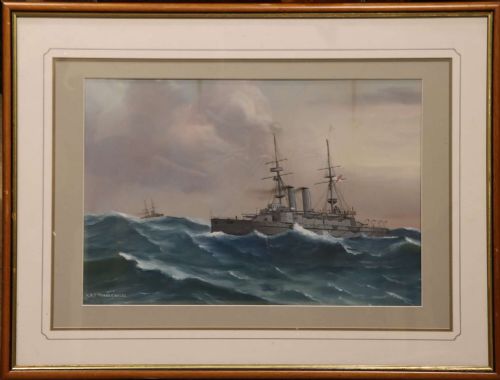
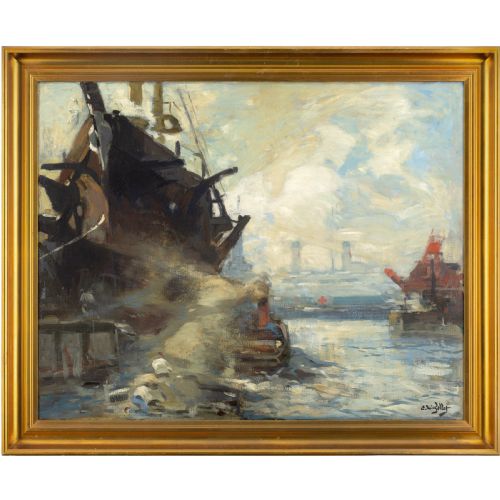
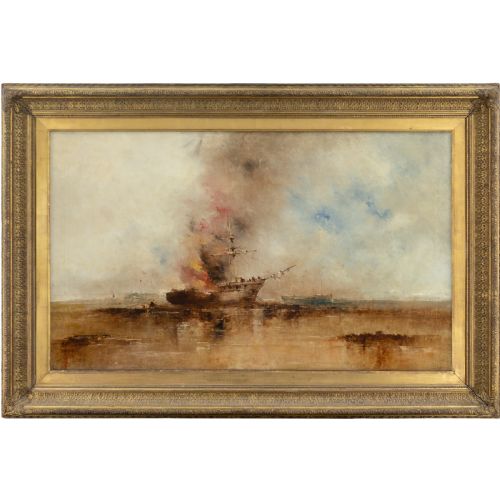
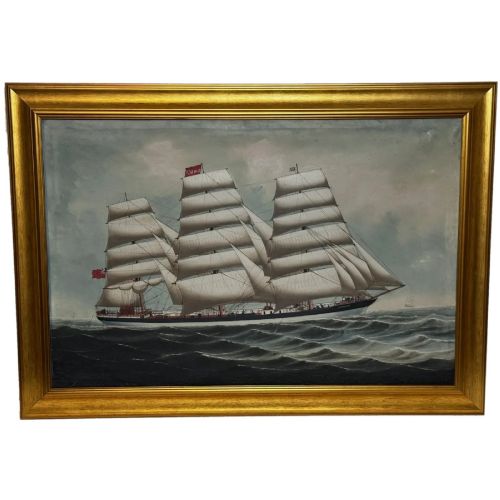
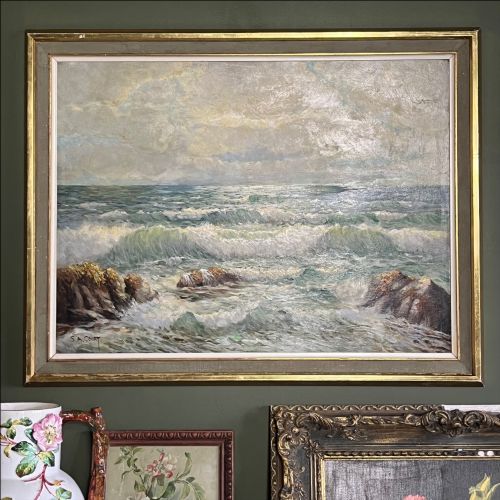
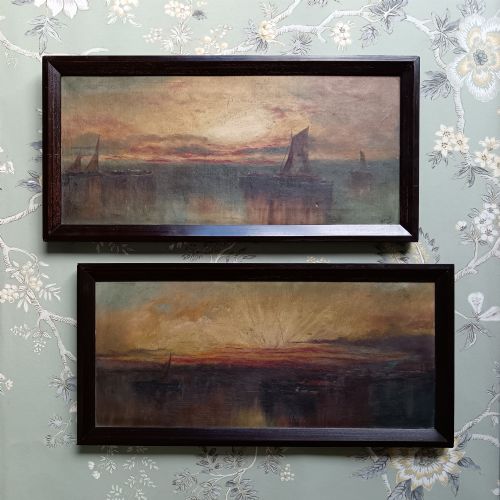
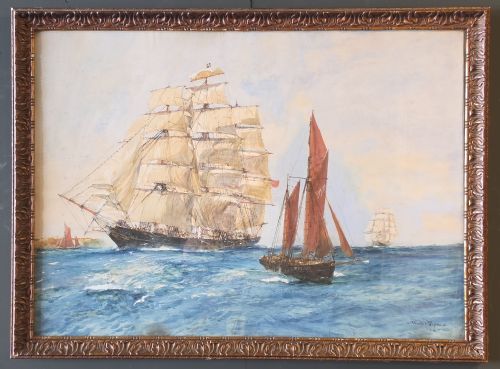
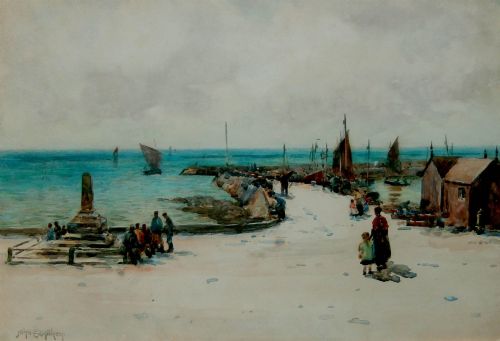
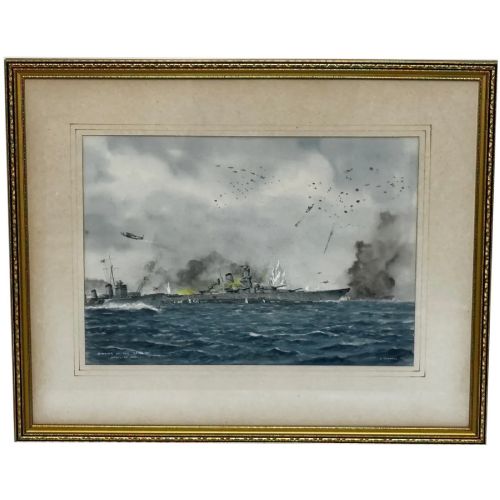
Vintage marine artwork framed encompasses oil paintings, watercolours, and gouaches depicting coastal scenes, naval battles, harbour views, and deep-water shipping. These works range from late nineteenth-century depictions of steamships and three-masted barks to mid-century coastal landscapes and harbour studies.
Buyers will encounter framed pieces executed on canvas, wood board, paper, and gouache support. Styles span Victorian marine traditions, Edwardian maritime watercolours, British impressionism, and mid-century modern interpretations of the sea.
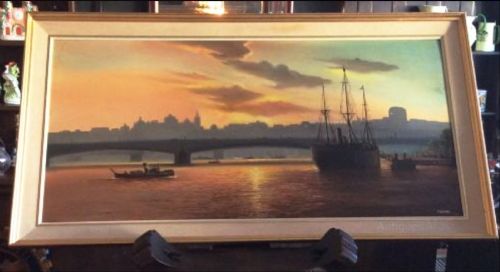
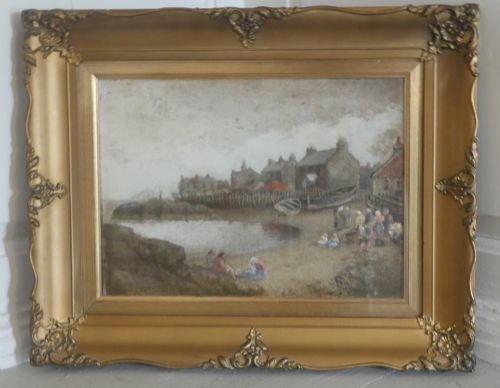
The selection includes panoramic London Thames views, Cornish fishing ports, wartime hospital ships, and international harbours from Sicily to Rotterdam. Most examples arrive protected behind glass for works on paper or set within period gilt wood frames for oils.
How they were made
Painters utilised oil paint on canvas or wooden board to capture the heavy textures of rolling seas and cloud-laden coastal skies, sometimes working en plein air directly on the shore. Watercolours and gouache on paper required rapid, precise brushwork to record fast-moving maritime weather and detailed rigging on historical vessels.
Framing forms an integral part of these works, with many pieces housed in period gilt wood frames that complement the tonal shifts of nineteenth and twentieth-century marine palettes. Glass protects delicate paper supports, while robust wooden stretchers support large oil canvases against warping.
Several artists braved stormy seas just to get the rigging quite right.
What varies in quality
The strength of the composition and the accuracy of maritime detail distinguish the finest examples from standard decorative works. Master painters demonstrate a deep understanding of vessel architecture, rigging, and wave dynamics, whereas lesser pieces rely on formulaic seascapes without specific topographical or nautical grounding.
Condition of the medium and the integrity of the original frame affect the overall standing of a piece. Stable oil surfaces free from extensive flaking and watercolours retaining their original pigment vibrancy represent the upper tier of the range.
Clifford Hanney·Eugène-Louis Gillot·William McAlpine·Reginald Arthur Borstel·Sidney A. Court·B. Nash·Edward Mills·Charles Edward Dixon·John E. Aitken·Eric Tufnell·William Banks Fortescue·Frank Watson Wood·Bernard Gribble·Frank William Scarbrough·F. Corpuz·Clive Browne·Peter Brannan·Paul Bret·Bernard Benedict Hemy·Willem Bos·Lai Fong·Nicholas Condy·William Henry Williamson·Alexander Harwood
The Vintage Marine Artwork Framed Glossary
- Gouache
- An opaque water-based paint that dries to a matte finish, frequently utilised alongside watercolour to add bright highlights to shipping spray and cloud forms.
- En plein air
- The practice of painting outdoors directly in front of the subject, allowing the artist to capture immediate shifts in coastal light and weather.
- Barque
- A sailing vessel with three or more masts, commonly depicted in nineteenth-century historical marine paintings and commercial shipping portraits.
- Maritime
- Pertaining to the sea, navigation, shipping, and coastal communities, serving as the core subject matter for this entire category of artwork.
Vintage Marine Artwork Framed: Frequently Asked Questions
How do I hang heavy framed oil paintings safely?
Heavy oil paintings on canvas require sturdy picture hooks fixed directly into wall studs or appropriate masonry fixings rather than standard plaster plugs. Ensure the hanging wire and D-rings on the original frame are secure and capable of supporting the weight before mounting.
Position the artwork at eye level to ensure the horizon line sits naturally in the field of view. Keep frames away from direct heat sources and strong sunlight to protect both the canvas and the gilt wood moulding.
What is the difference between marine oils and watercolours?
Oils offer rich textures and deep pigment layers that excel at capturing heavy seas, dramatic storm clouds, and the glossy hulls of working ships. Watercolours on paper provide a lighter, luminous quality well suited to misty coastal mornings and detailed harbour architecture.
Watercolours require protective glass to prevent atmospheric damage to the paper support. Oil paintings on canvas or board remain exposed to the air, benefiting instead from occasional gentle dusting with a soft brush.
How do I date an antique marine painting?
Dating relies on identifying the style of the vessels depicted, such as three-masted barks, steamships, or twentieth-century naval craft. Clothing styles of any figures on the shore or deck also provide clear chronological markers.
Signatures, artist dates, and framing materials offer further confirmation of the period. Examination of the canvas stretcher, backing boards, and old gallery labels often reveals specific exhibition or creation dates.
Can I display vintage maritime art in a modern interior?
Maritime artwork bridges traditional and contemporary spaces through strong compositions and striking tonal contrasts. Monochromatic seascapes and moody evening skies pair effortlessly with minimalist furnishings and neutral walls.
Grouping smaller watercolours together creates a striking gallery wall effect, while a single large oil painting serves as a powerful focal point in a living room or study.