



Vintage Marble Wall Table
A vintage marble wall table brings architectural weight and a cool stone surface to an entrance hall, combining solid masonry with decorative framing.
Vintage Marble Wall Table
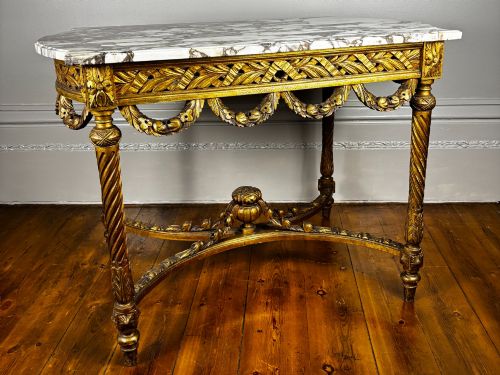
A vintage marble wall table is typically built as a console designed to anchor against a vertical surface, often paired with a matching wall mirror. These pieces span the eighteenth, nineteenth, and early twentieth centuries, drawing on regional European designs from French provincial workshops to grander Neoclassical salons.
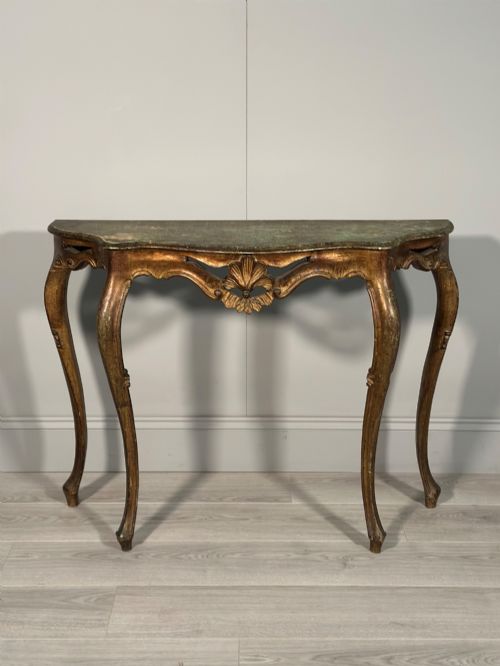
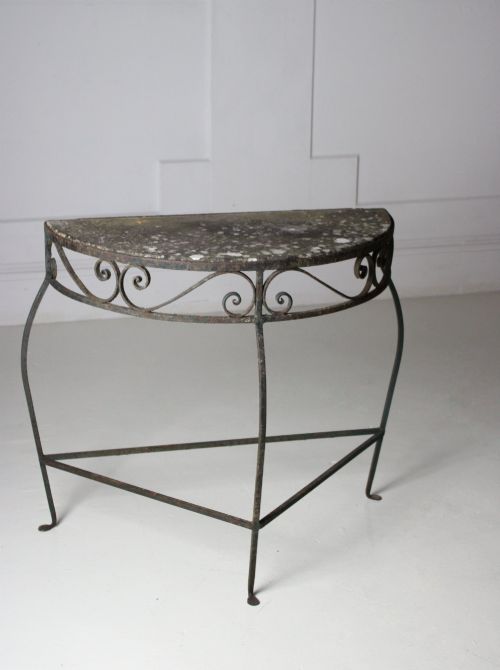
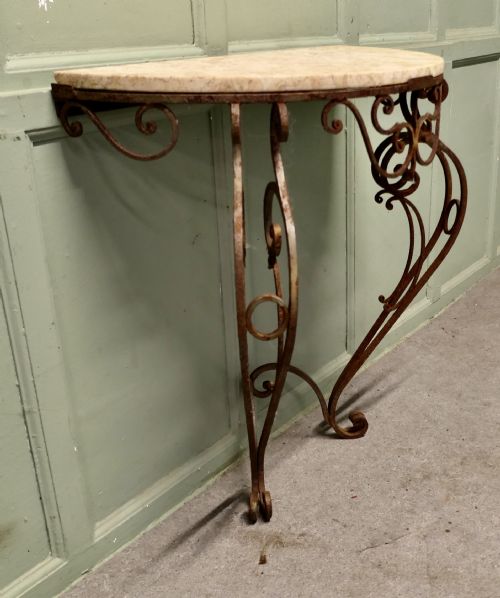
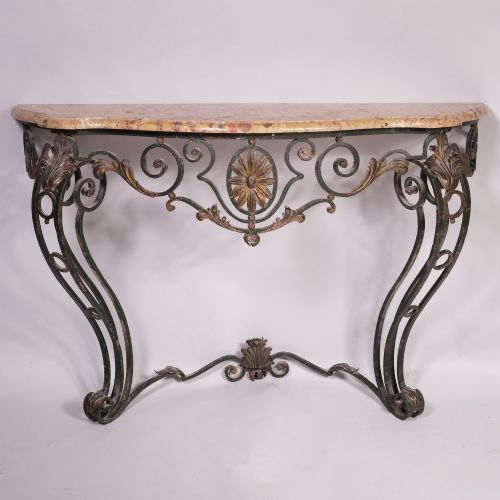
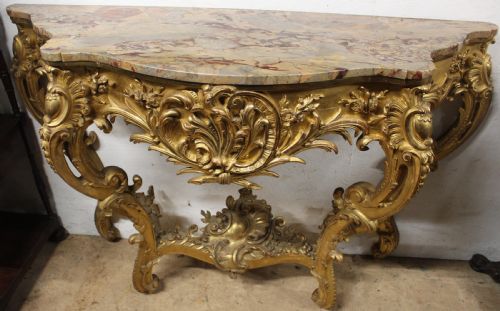
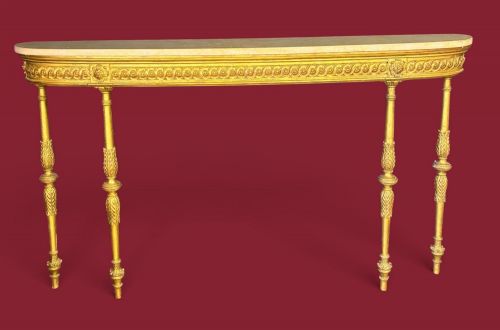
The most frequent examples encountered here are nineteenth century console tables featuring shaped marble slabs supported by carved giltwood, wrought iron, or walnut frames. Forms range from rustic iron supports to serpentine outlines reflecting earlier Louis XVI styles.
Buyers select these items to serve as narrow side tables in hallways or principal reception rooms where floor space is at a premium. The combination of heavy stone tops and decorative underframes provides a solid display surface without projecting too far into the room.
How they were made
Construction relies on pairing heavy stone with carved timber, gesso, or forged metal underframes designed to bear significant vertical weight. Marble tops are cut, shaped, and polished separately before resting directly upon wooden rails or metal brackets.
Wooden frames utilise traditional joinery, often enhanced with carved gesso details finished in gold leaf or painted pigments to imitate richer materials. Wrought iron variants are shaped by hand, creating rigid structural bases capable of supporting thick stone slabs without wall legs.
Vintage Marble Wall Table Retail Price Guide 2026
Typical asking prices for vintage marble wall table among the pieces listed under this phrase on Sellingantiques today, from the lower quarter to the upper quarter. They describe what is for sale here now, not the wider market.
Listings feature pieces spanning the eighteenth century through to the 1930s, utilising materials such as wrought iron, walnut, mahogany, and giltwood.
What varies in quality
Quality rests in the harmony between the stone top and the structural base, particularly where serpentine curves require precise masonry work. Finer examples display deeply carved timber enrichment or hand-forged ironwork rather than simpler commercial casting.
The choice of secondary woods such as walnut and mahogany alongside genuine fire-gilt or leaf-applied gilding indicates a higher grade of workshop production. The thickness and natural figuring of the marble itself also distinguish utilitarian pieces from formal salon furniture.
The Vintage Marble Wall Table Glossary
- Console table
- A table designed to be fixed against a wall, traditionally supported by front legs or brackets while relying on the architecture for total stability.
- Serpentine outline
- A curved edge that bends inward centrally and outward at the ends, creating a flowing wave shape along the front of the marble and its frame.
- Giltwood
- Timber coated with a thin layer of gold leaf or powder over a prepared gesso ground, frequently seen on formal nineteenth-century frames.
- Neoclassical
- A decorative style reviving classical Roman and Greek motifs, characterised by symmetry, straight lines, and restrained ornamentation.
- Wrought iron
- Iron shaped by hammering while hot, producing sturdy, organic scrollwork and structural supports for heavy stone tops.
Vintage Marble Wall Table: Frequently Asked Questions
How do I secure a wall table safely?
Because these pieces carry heavy stone tops and often feature narrow footprints, they must be anchored securely to the wall structure using proper brackets.
Most historic console tables rely partially on the wall for balance, meaning freestanding placement is neither safe nor intended by the original makers.
Can I place these tables in narrow hallways?
The shallow depth of a console design makes them ideal for corridors, entrance passages, and small landings where standard tables obstruct movement.
Measuring the clearance between the widest point of the serpentine marble and opposing doors ensures the walkway remains functional.
How do I identify a nineteenth-century piece?
Examination of the timber construction methods, tool marks on the underside of the stone, and the application of gesso reveals the manufacturing era.
French provincial and Neoclassical revival pieces from this period often blend eighteenth-century stylistic cues with nineteenth-century joinery techniques.
What is the best way to clean marble tops?
Routine maintenance requires only a damp cloth and mild, neutral soap to prevent staining the porous stone surface against acidic liquids.
Avoiding harsh chemical cleaners preserves the historic polish and natural veining developed over centuries of use.