


Vintage Marble Top Vanity
A vintage marble top vanity brings practical stone surfaces and period timber to the bedroom.
Vintage Marble Top Vanity
When you search for a vintage marble top vanity, you are looking at functional bedroom furniture designed for washing and grooming, predominantly taking the form of washstands, dressing tables, and dressing stands. These pieces date across the nineteenth and early twentieth centuries, spanning the Victorian, Edwardian, Arts and Crafts, and Art Nouveau periods.
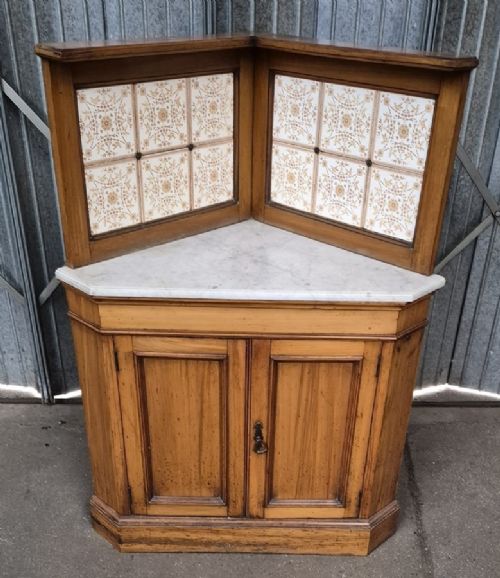
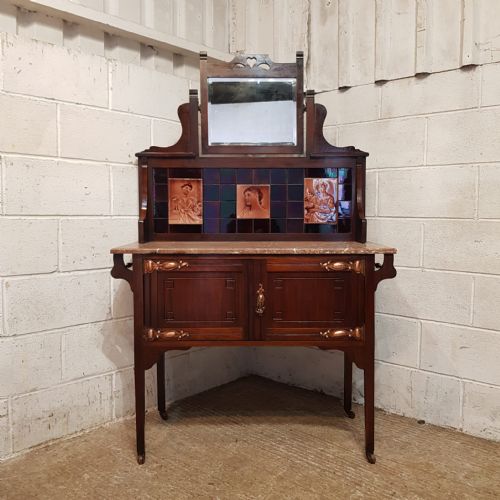
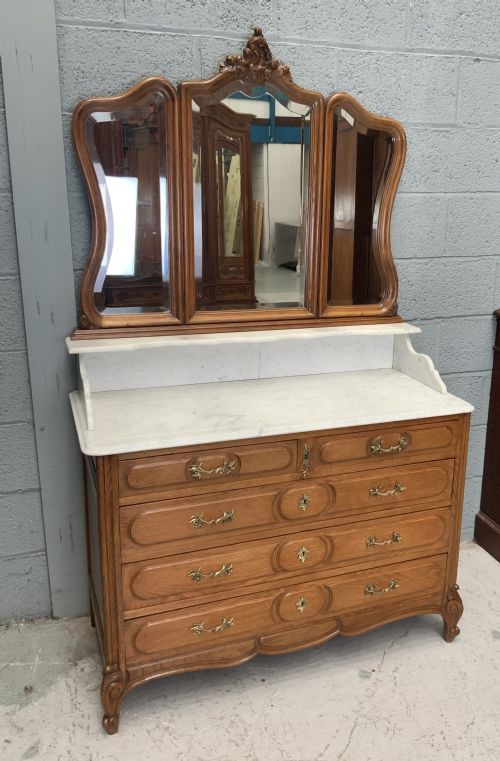
The version you are most likely to meet on this page is an Edwardian or Victorian washstand featuring a fitted stone slab and a wooden frame, often accompanied by tiled backs or ceramic components. French regional variations in mahogany and oak also appear regularly alongside English examples.
Makers utilised these sturdy stands in bedrooms before plumbed bathrooms became standard domestic fixtures. Today, buyers repurpose them as bathroom sink surrounds or decorative hallway furniture.
Materials and construction
Cabinetmakers built these pieces using solid and veneered timbers including mahogany, walnut, oak, satinwood, and pine. Frames were frequently carved, inlaid, or painted, depending on the prevailing style of the workshop.
Slabs of white, grey, or rouge marble were fitted to the top surfaces to provide a water-resistant counter for jugs, basins, and grooming equipment. Brass handles, glass fittings, and ceramic tiles were often integrated into the superstructure.
Listings feature pieces spanning the Victorian and Edwardian eras, alongside 1920s French Provincial and Art Deco interpretations.
Variations in quality
The distinction between standard domestic furniture and superior examples lies in the selection of timbers and the refinement of the carving or inlay. Dense hardwoods like mahogany and figured walnut indicate a higher tier of production than simple painted pine.
Finer pieces incorporate thick, well-figured marble slabs, often paired with decorative tile backs, brass hardware, and secondary woods such as satinwood. The crispness of the joinery and the balance of the proportions separate workshop pieces from mass-produced items.
Gillows
The Vintage Marble Top Vanity Glossary
- Washstand
- A piece of bedroom furniture designed to hold a basin and jug for washing before indoor plumbing. These frequently feature marble tops to protect the wood from water splashes.
- Satinwood
- A pale, lustrous hardwood prized by cabinetmakers for fine veneers and stringing inlay. It appears on select Edwardian and Victorian pieces.
- Rouge marble
- A deep red variety of limestone with white or grey veining used for ornamental furniture tops. It denotes a more decorative specification.
- Arts and Crafts
- A design movement valuing handcraftsmanship and simple construction over industrial ornamentation. Pieces from this tradition often display honest joinery and vernacular materials.
- Faux bamboo
- A decorative finish where wood is carved or painted to resemble segmented bamboo stalks. This style gained popularity during the late nineteenth century.
Vintage Marble Top Vanity: Frequently Asked Questions
What were vintage marble top vanities used for?
These pieces served as the primary washing and grooming stations in bedrooms before the widespread installation of running water. They held ceramic basins, water jugs, and toiletries on impervious stone surfaces.
Over time, they evolved to include dressing mirrors and storage cupboards. Modern owners frequently adapt them to house contemporary basin plumbing in bathrooms.
How do I clean a marble top?
Stone surfaces require gentle maintenance using warm water and pH-neutral soap. Harsh chemicals and acidic cleaners will etch or dull the polish.
Regular wiping prevents staining from cosmetics and water. A mild stone sealer can be applied periodically to protect the porous material.
Are these pieces suitable for modern bathrooms?
Many buyers repurpose washstands as vanity bases for modern sinks. The timber frames and stone slabs accommodate plumbing modifications with professional joinery.
Care must be taken to seal exposed wood against bathroom moisture. The natural stone top provides a durable, water-resistant counter.
How do I date a piece?
Dating relies on stylistic clues, construction methods, and timber choices. Victorian pieces tend to use heavier mahogany or walnut with elaborate turnings, while Edwardian examples often feature lighter satinwood inlay or painted pine.
Art Nouveau and Arts and Crafts pieces display characteristic motifs and linear forms specific to their eras. Hardware types and drawer construction also offer chronological indicators.