
Carved Vanity Desk
A carved vanity desk brings tactile warmth to a bedroom through figured timbers and traditional cabinetmaking.
Carved Vanity Desk
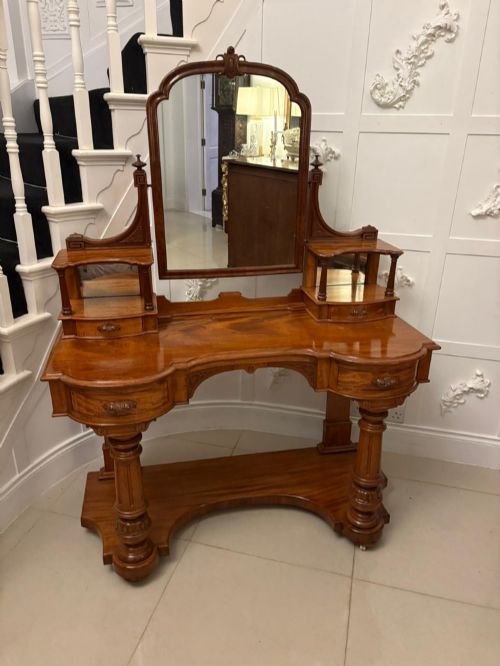
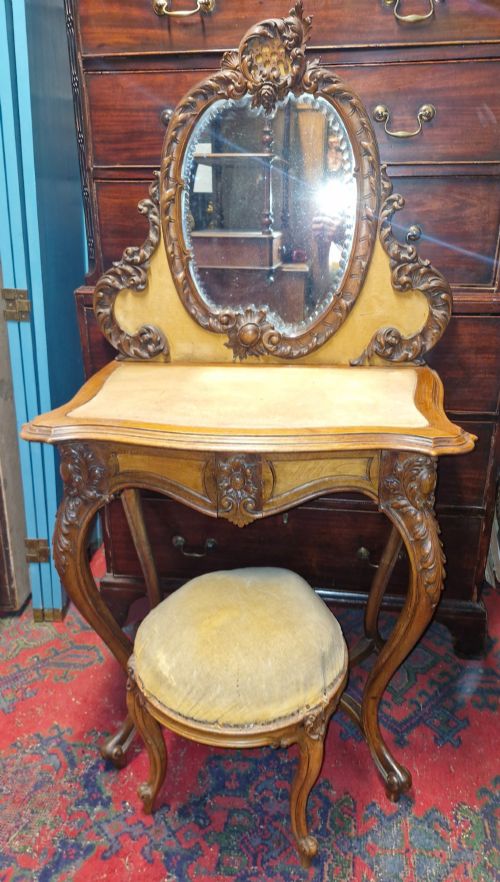
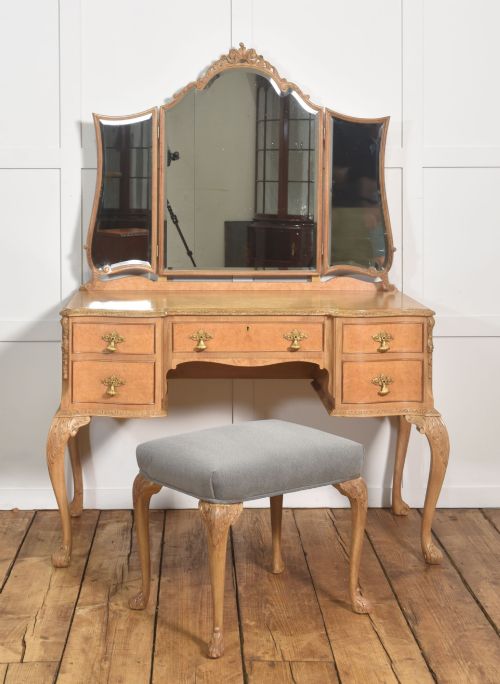
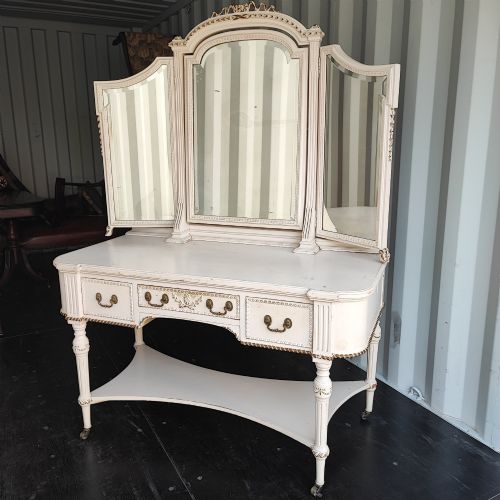
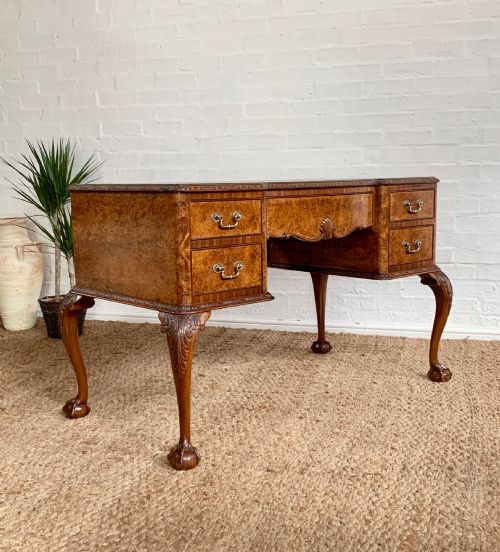
A carved vanity desk functions as a dedicated place for personal grooming and writing, combining timber surfaces with specialised storage. These pieces bridge the gap between a domestic writing table and a bedroom dressing chest.
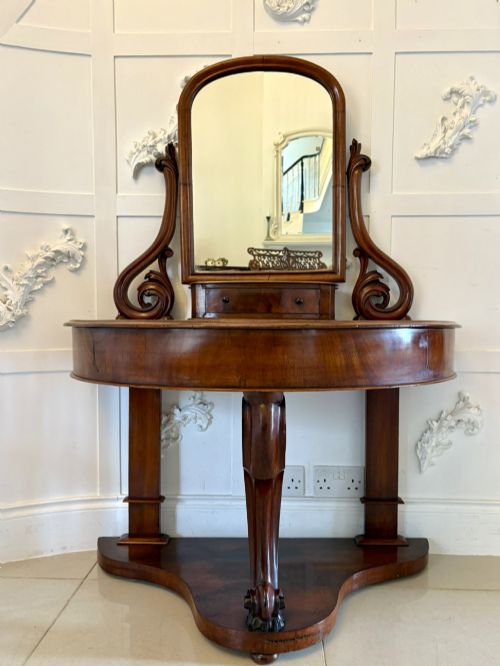
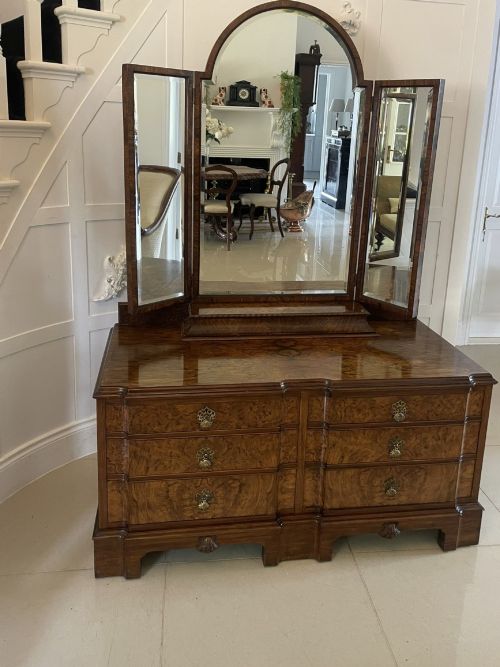
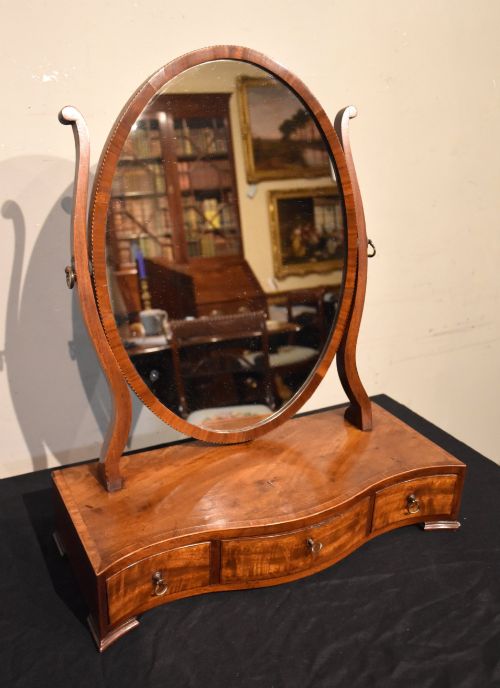
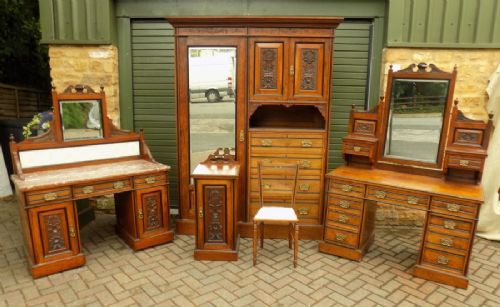
Victorian and Edwardian examples dominate the selection, frequently utilising rich mahogany and burr walnut veneers. Makers incorporated pivoted mirrors, compartments, and matching stools into the primary design.
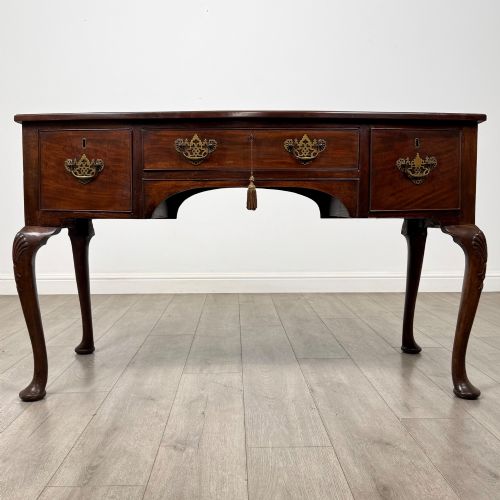
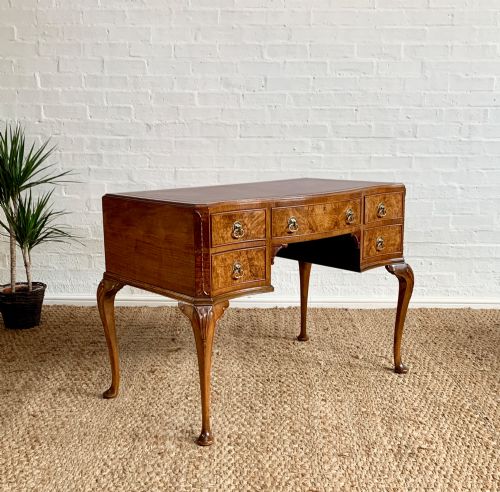
Earlier iterations draw upon Queen Anne and Georgian influences, showing restrained cabriole legs and serpentine fronts. Later twentieth-century variants maintain traditional forms while simplifying the decorative carving.
Materials and construction
Cabinetmakers selected dense hardwoods like mahogany and walnut for their stability and capacity to hold crisp carved details. Burr walnut veneers provided intricate patterning across drawer fronts and primary panels.
Secondary structural elements incorporated oak and pine, while brass hardware secured internal compartments and adjustable mirrors. Glass formed the central pivoting looking glasses, often supported by carved wooden frames.
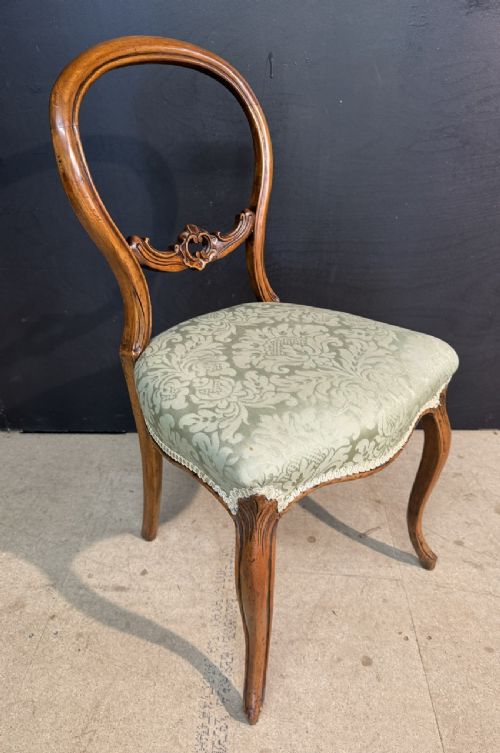
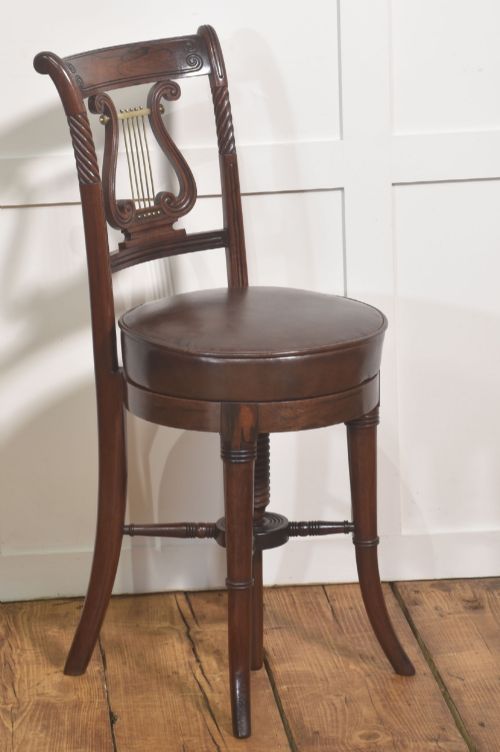
Several tables arrive with their original matching stools, proving that Victorian vanity sets enjoyed staying together after all.
Evaluating craftsmanship
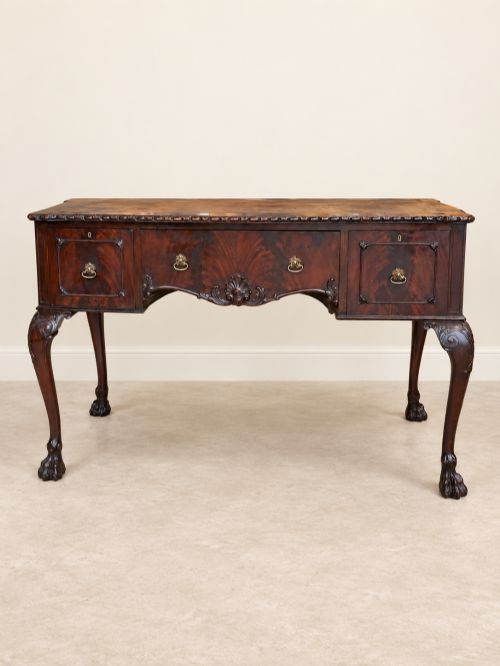
The sophistication of the hand carving dictates the visual hierarchy of the piece, separating standard workshop production from ambitious cabinet work. Crisp relief work on cabriole legs and drawer surrounds indicates careful execution.
Timber selection dictates the longevity and aesthetic impact, with highly figured burr walnut and flame mahogany sitting at the upper end of the scale. The integration of original brass fittings and matching stools completes a cohesive ensemble.
Maples of London and Paris·Wylie & Lochhead Glasgow·Heals
The Carved Vanity Desk Glossary
- Cabriole leg
- A furniture leg that curves outward at the knee and tapers inward toward the ankle, ending in a pad or scroll foot. This shape derives from ancient Chinese forms and gained popularity during the eighteenth century.
- Burr walnut
- Timber sliced from the abnormal growth or burl of a walnut tree, yielding swirling patterns prized by cabinetmakers. It appears extensively on decorative drawer fronts and tabletops.
- Kneehole desk
- A freestanding desk or dressing table featuring a central recessed space for the legs, flanked by pedestals of drawers. This configuration allows a comfortable seated position.
- Lowboy
- A small seventeenth or eighteenth-century dressing table or side table with one or more rows of drawers beneath the top surface. These stands typically rest on four slender legs.
- Serpentine front
- A furniture facade characterised by a concave central section flanked by two convex ends, creating a gentle undulating line. Cabinetmakers used this technique to add visual movement to walnut and mahogany case pieces.
Carved Vanity Desk: Frequently Asked Questions
What distinguishes a vanity desk from a standard writing table?
A vanity desk typically incorporates integrated mirrors, smaller cosmetic drawers, and a lower working height suited for grooming.
Many examples include matching low stools and specialised compartments designed for personal care items rather than heavy correspondence.
How do I date a carved wooden desk?
Dating relies upon examining the timber species, structural joinery, and the prevailing decorative style of the period.
Victorian and Edwardian pieces utilise distinct veneer thicknesses and hardware types that separate them from eighteenth-century Georgian antecedents.
Are original mirrors common on antique dressing tables?
Many surviving tables retain their original pivoting glass plates, secured within matching carved wooden frames.
Replacements do occur due to the fragile nature of vintage mirror glass, making the bevel and silvering important points of observation.
Where should I place a kneehole vanity desk?
These pieces function effectively in bedrooms as dedicated dressing spaces or in studies as compact writing surfaces.
Freestanding models with finished backs also suit placement in the centre of a room rather than against a wall.