


Carved Oak Bedroom Vanity
These carved oak bedroom vanity pieces bring solid timber character and period craftsmanship straight into a modern dressing room.
Carved Oak Bedroom Vanity
A carved oak bedroom vanity unites centuries of cabinet-making traditions, appearing in forms such as dressing tables, dressing chests, and lowboys. When buyers search for carved oak bedroom vanity pieces, they encounter a range spanning the eighteenth century through to the art deco era, with Edwardian and nineteen-twenties examples appearing most frequently.
The selection here encompasses diverse regional and stylistic expressions, including Ipswich oak, French carved pieces, and iconic Arts and Crafts designs. Alongside standard dressing tables, the inventory includes complementary items like slipper chairs, side tables, and complete bedroom suites sharing matching timber characteristics.
Makers and retailers represented across the stock range from provincial workshops to notable firms such as Heal's, Shapland and Petter, and Arnott and Co of Dublin. Buyers find both simple vernacular pieces and heavily ornamented items featuring barley twist supports or elaborate panel carvings.
Materials and construction methods
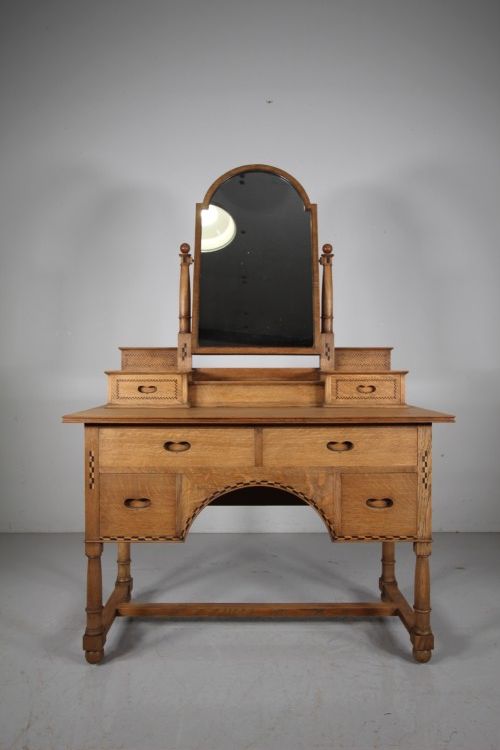
Makers built these pieces primarily using solid oak, frequently enhanced with wood inlay to accentuate drawer fronts and mirror surrounds. Secondary materials include brass for handles and fixtures, mirrored glass for tilting or fixed dressing plates, copper, and occasional marble tops.
The inventory includes pieces spanning the 18th Century, Victorian, Edwardian, 1920, and 1930 periods, executed in oak, brass, glass, and marble.
Judging quality and craftsmanship
Distinctions across the range depend largely on the depth and execution of the carving, alongside the integrity of the original timber framing. Pieces bearing workshop labels or retailer stamps from established makers demonstrate superior provenance compared to unmarked vernacular items.
The sophistication of secondary materials, such as heavy bevelled glass mirrors and original brass or copper hardware, separates standard production furniture from high-end artistic commissions of the Arts and Crafts and Art Deco periods.
Heals·Shapland and Petter·Arnott and Co Dublin
The Carved Oak Bedroom Vanity Glossary
- Lowboy
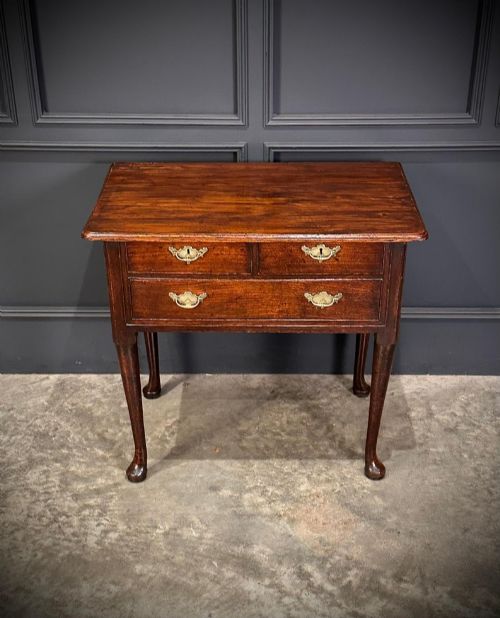
- A small oak table with drawers, typically originating in the eighteenth century and serving as a dressing or side table. This form predates the dedicated dressing table with attached mirror.
- Arts and Crafts
- A design movement prioritising handcraftsmanship and simple vernacular forms over mass production. Pieces from this tradition often display exposed joinery and subtle carved details.
- Barley twist
- A type of furniture turning resembling a twisted rope or spiral. This technique was popular in seventeenth-century English joinery and saw revivals in later periods.
- Dressing chest
- A combination of a chest of drawers and a dressing table, usually featuring a fixed or pivoting mirror mounted above the top surface.
Carved Oak Bedroom Vanity: Frequently Asked Questions
What is a lowboy?
A lowboy is a small table equipped with one or more rows of drawers, commonly used as a dressing table in the eighteenth century.
These pieces typically stand on four legs and offer a compact alternative to larger dressing chests.
How do I date an oak dressing table?
Dating relies on observing construction methods, hardware types, and stylistic indicators such as Edwardian inlay or Art Deco geometry.
Maker labels and stamps also provide definitive chronological markers for specific pieces.
Are mirrors original to these pieces?
Many dressing tables retain their original pivoting glass mirrors and supporting wooden arms, often secured with brass hardware.
Replacements do occur over time due to the fragile nature of antique glass.
How do I care for antique oak?
Antique oak benefits from regular dusting with a dry cloth and occasional application of appropriate beeswax to nourish the timber.
Keeping pieces away from direct heat sources prevents the solid wood from splitting.